

AI, cameras and drones: Texas DPS' 5-year enforcement plan rooted in surveillance
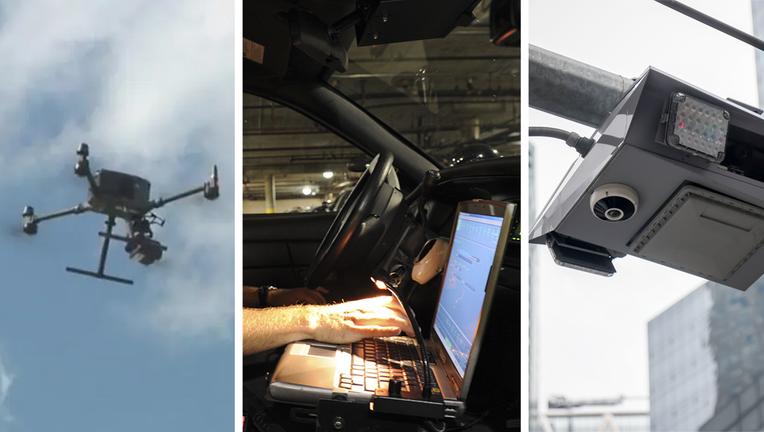
Drone, police cruiser computer, and traffic camera.
AUSTIN, Texas - The Texas Department of Public Safety has released their five-year plan for homeland security in the state, largely focusing on surveillance, prediction and preemptive law enforcement.
The plan largely involves the use of artificial intelligence tools, drones, flock cameras and other technology to react to crimes as fast as possible — in some cases, before they even happen.
Texas DPS 5-year plan
The document the department released Tuesday lays out the plan for securing the state from 2026 to 2030.
The plan revolves around six goals:
- Prevent terrorist and hostile foreign nation attacks and organized criminal activity in Texas.
- Reduce the state's vulnerability to terrorist, criminal, and hostile foreign nation attacks and natural and technological disasters.
- Minimize the impact of terrorist, criminal, and hostile foreign nation attacks and natural and technological disasters through proactive mitigation planning and programs.
- Increase the capability of the state's response system to minimize damage and loss of life from terrorist, criminal, and hostile foreign nation attacks and natural and technological disasters.
- Ensure rapid, effective, and comprehensive community recovery following terrorist, criminal, and hostile foreign nation attacks and natural or technological disasters.
- Develop and enhance the enabling capabilities needed to support statewide efforts across all homeland security mission areas.
Numerous changes and tactical expansions will be made to the department's operations to achieve these goals. The following changes may be the most noticeable to the public over the next five years.
AI and predictive enforcement
State law enforcement officials will use new technology to try to identify threats sooner, including AI analysis, intelligence platforms, and "fusion centers," which "establish priorities for intelligence gathering, conduct analysis, and ensure sharing of relevant information." DPS plans to better monitor online activity and digital communication to predict crime.
Residents may notice investigations and arrests before crimes occur, such as in preventing possible shootings and other violent crimes. This may also manifest in increased law enforcement presence at large events.

Texas road surveillance increased to 'crack down' on illegal dumping
New areas being outfitted with the investigation points include El Paso, Dallas and Houston districts of TxDOT.
New threat assessment teams
New Behavioral Threat Assessment and Management (BTAM) and Threat To Life (TTL) teams will begin rolling out, which will involve police, schools, social services and mental health professionals. These teams will be tasked with implementing new processes for intervening when warning signs are detected before violent crimes happen.
Residents may notice faster police response, more investigations involving schools, workplaces or families, and a larger drive for civilians to report suspicious behavior.
More surveillance
DPS plans to increase the use of surveillance technology, mostly in the form of drones and fixed cameras. Drones will be used for searches, tracking, disaster response, and crowd monitoring. Fixed cameras will be more focused on traffic and border monitoring.
Residents may notice more drones at protests, the border, large public events, and crime scenes. You may also see more monitoring at power plants, water systems and ports.

Texas DPS helicopters can now detect drones and operators
The agency is the first in the nation to deploy the new technology.
Statewide agency coordination
The plan includes the intent to coordinate more with law enforcement agencies on the state, local and federal level to monitor and respond to widespread crime. This will include expanded "surge operations" in high crime areas.
Residents may notice spikes in law enforcement activity at times, as well as a mix of officials from different agencies during responses.
Border enforcement
The operation at the border will remain aggressive and technology-driven, the plan says, with ongoing tactics seen during Operation Lone Star. DPS plans to continue implementing barriers, surveillance and joint operations.
Residents may notice a large presence in law enforcement at the border, as well as air, land and sea patrols at the border and the coast.

DHS Secretary Kristi Noem visits U.S.-Mexico border during Arizona trip
Department of Homeland Security Secretary Kristi Noem is in southern Arizona on Wednesday where she will visit the U.S.-Mexico border.
Reliance on residents
DPS plans to expand the iWatchTexas tool and other related methods of resident-reporting options. They plan to put out more alerts for targeted violence, foreign intimidation, school threats and workplace violence.
Residents may notice more encouragement to report suspicious behavior, as well as follow-ups by law enforcement after tips are submitted.
The Source: Information in this article comes from the Texas Department of Public Safety.