

Here's how much sleep doomscrolling is costing your kids
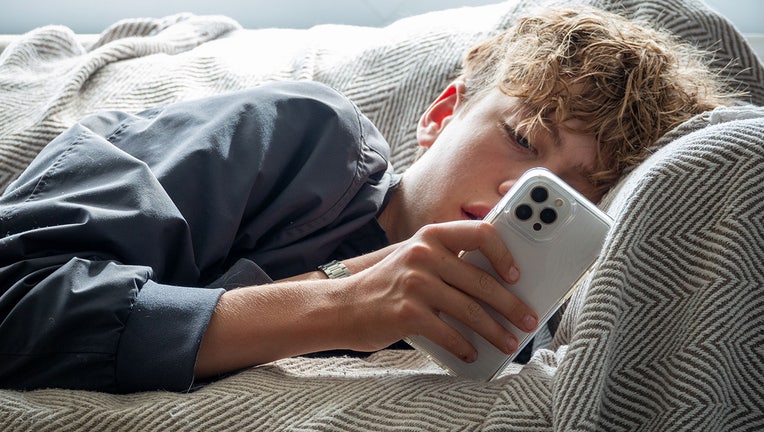
A 14-year-old teenage boy looks at an iPhone smartphone screen as lies on a sofa at home on September 12, 2026 in Radstock, England. (Photo by Anna Barclay/Getty Images)
A new study supports what parents have long suspected: that their teens’ late-night smartphone sessions not only keep them up at night but also disrupt the next day.
Big picture view:
Researchers found a correlation between teens using their phones after 10 p.m. and them waking up later. Despite the fact that the teen may be getting extra sleep in the morning, it is not enough to offset how much was lost the night before, the study indicated.
What they're saying:
"These findings suggest that reducing evening smartphone use, particularly after 10 pm and immediately before bedtime, may help improve sleep health in adolescents," the authors wrote in the paper, which was published in the Journal of the American Medical Association.
Dig deeper:
The study found that, for every 10 extra minutes someone used their phone past 10 p.m., they would stay up between eight and nine minutes longer, on average, and wake up the next day about four minutes later. Overall, researchers linked the effects of doomscrolling and other late-night phone use to a loss of approximately five minutes of overall sleep that night.
In addition to determining that how long a phone was used at night could play a part in how soon a person falls asleep, how long of a gap between when someone stopped using their phone and when that individual went to bed played a role in how much sleep they got. Those who put the phone down and rolled over to fall asleep less than five minutes later were more likely to experience more time awake that night. That effect had mostly dissipated by the time the gap reached the 20-minute mark.
RELATED: Customer concern growing as US retailers adopt next-generation pricing tools
Pitfalls of late-night screen use
"Our findings are consistent with prior evidence of association between late-evening screen use and poorer sleep health among children and adolescents," the authors wrote. "Previous interventions restricting evening smartphone use have improved sleep timing and duration, which aligns with our findings about cumulative smartphone use at night using a diverse national sample with objective data for both exposure and outcomes."
By the numbers:
For their research, the study’s authors tracked 425 boys and girls whose ages averaged just under 15 years old. They used Fitbit products to determine when the test subjects fell asleep, woke up in the morning, how long they slept, and how many times they woke up in the middle of the night.
The Source: Information for this article was taken from the Journal of the American Medical Association. This story was reported from Orlando.