

Maine mass shooting survivors, victims' relatives sue federal government claiming negligence

Maine murder suspect Robert Card found dead
Breaking news: After a two-day manhunt, mass shooting suspect Robert Card has been found dead in Maine.
Eighteen people were killed and 13 others injured in Lewiston, Maine, in October 2023 when Army reservist Robert Card opened fire at a bowling alley and a bar and grill. Nearly two years later, survivors and relatives of victims are suing the U.S. government, saying the Army failed to stop what they call "one of the most preventable mass tragedies in American history."
The lawsuit, filed Wednesday in federal court, accuses the Army and the Department of Defense of negligence. It argues officials knew Card’s mental health was deteriorating, but failed to intervene or restrict his access to weapons. Card was found dead by suicide two days after the shootings.
Why survivors say the Army is responsible
Attorneys representing more than 100 survivors and family members said Army officials ignored repeated warning signs, including a "hit list" Card created and his hospitalization during training in New York in July 2023.
"By March 2023, the United States and its personnel knew Card was paranoid, delusional, violent, and lacked impulse control," the lawsuit states. "The Army promised to remove his guns but did not fulfill that promise."
Cynthia Young, whose husband and 14-year-old son were killed in the attack, spoke at a news conference in Lewiston.
"We trusted those in power to protect our loved ones and their inaction cost us everything," Young said, according to the Associated Press.
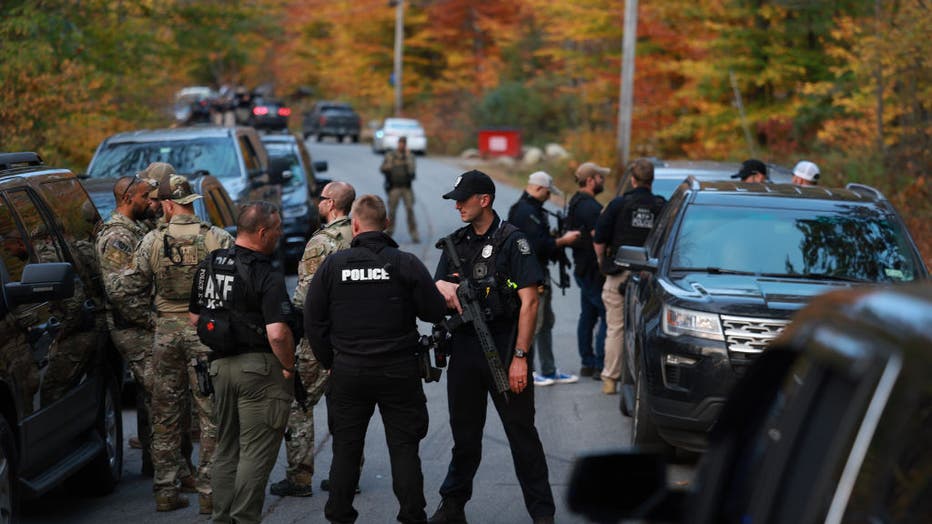
FILE - Law enforcement officials gather in the road leading to the home of the suspect being sought in connection with two mass shootings on October 26, 2023 in Bowdoin, Maine. (Photo by Joe Raedle/Getty Images)
What we know:
The lawsuit alleges the Army misled local law enforcement and failed to follow its own protocols.
- A fellow reservist warned in a September 2023 text message: "I believe he’s going to snap and do a mass shooting."
- Card’s mental health issues, including paranoia and delusions, were documented months before the shootings.
- Three Army Reserve leaders were later disciplined for dereliction of duty after an internal investigation.
The Department of Defense and the Army declined to comment on the pending litigation, the AP reported.
What we don't know:
It remains unclear how long the lawsuit may take to move through federal court or whether it could lead to policy changes in the Army. Officials have not said whether further disciplinary action is being considered.
The backstory:
After the Lewiston shootings, an independent commission appointed by Maine’s governor found multiple missed opportunities for intervention by both the Army and civilian law enforcement. The Army issued a statement last year saying it was committed to making changes to prevent future tragedies.
The mass shooting also spurred new gun laws in Maine, which remain a source of political and legal debate in the state.
What's next:
Attorney Travis Brennan, who represents the plaintiffs, said families deserve accountability.
"The families and the victims deserve answers and accountability. They deserve resolution and peace," Brennan said at the news conference, according to the AP.
Ben Dyer, who was shot multiple times and lost the use of one arm, said the case is about preventing future tragedies.
"We’re a strong group," Dyer said, before correcting himself. "No, we’re a strong family."
What's next:
The lawsuit could take years to resolve, but survivors say their goal is not financial compensation. Instead, they want to ensure similar warnings are not ignored in the future.
The Source: This report is based on information from the Associated Press. Additional details were provided by public statements from attorneys representing survivors and families.