

Space shuttle Challenger explosion remembered, 40 years later

Full episode: The Challenger disaster stuns the nation
The myth of "routine" spaceflight was tragically shattered in 1986 as thousands of schoolchildren watched space shuttle Challenger explode on live television.
CAPE CANAVERAL, Fla. - The space shuttle Challenger explosion wasn't the first time that astronauts died, and it wouldn’t be the last. But it's the tragedy that people remember most vividly: The image of the expanding fireball contrasted against the blue morning sky is burned into the memories of millions who watched the launch.
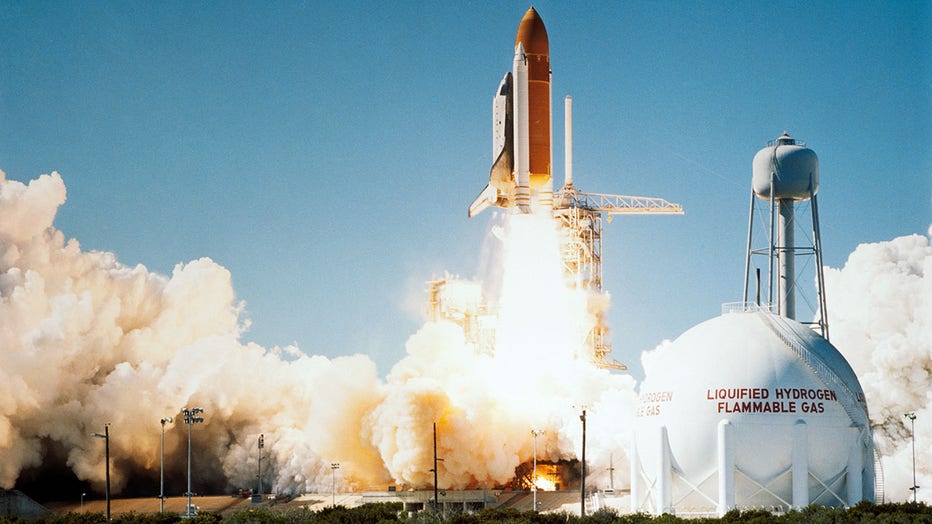
The space shuttle Challenger lifted off from Pad 39B Jan. 28, 1986 at 11:38 a.m. (NASA)
Forty years later, the story is still familiar to many. Seven astronauts were killed, including the woman who was supposed to be America's first teacher in space. Schoolchildren around the U.S. watched live as the horrific scene unfolded before their eyes on classroom televisions.
The accident was technically caused by a rubber seal inside a booster rocket that failed in the unusually cold Florida air, but investigators also blamed NASA for their schedule-induced 'launch fever.' It would be two and a half years before flights were cleared to resume.
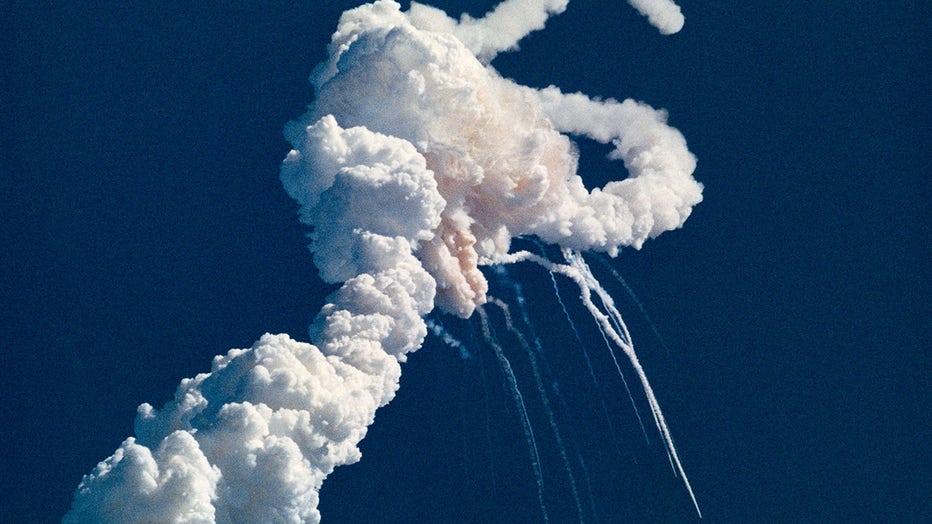
Main engine exhaust, solid rocket booster plume and an expanding ball of gas from the external tank is visible seconds after the space shuttle Challenger accident on Jan. 28, 1986. (NASA)
Challenger explosion explained
Timeline:
Challenger’s liftoff on mission 51-L appeared normal at first. But no one immediately knew that the shuttle and crew were likely doomed from the moment that the booster rockets ignited.
- Liftoff: Less than 1 second after ignition, smoke puffs from the right-hand booster rocket, indicating an O-ring seal has failed.
- 58 seconds after liftoff: A plume of flame erupts where the smoke had appeared, quickly burning a hole in the shuttle’s external fuel tank.
- 72 seconds after liftoff: The plume of flame burns through the strut connecting the booster to the external tank. The booster pivots and the entire external tank ruptures; liquid hydrogen and liquid oxygen burn explosively.
- 73 seconds after liftoff: Challenger is engulfed in the explosion and breaks apart into several sections. The crew cabin, wing, and engines can be seen among the debris falling from the sky.
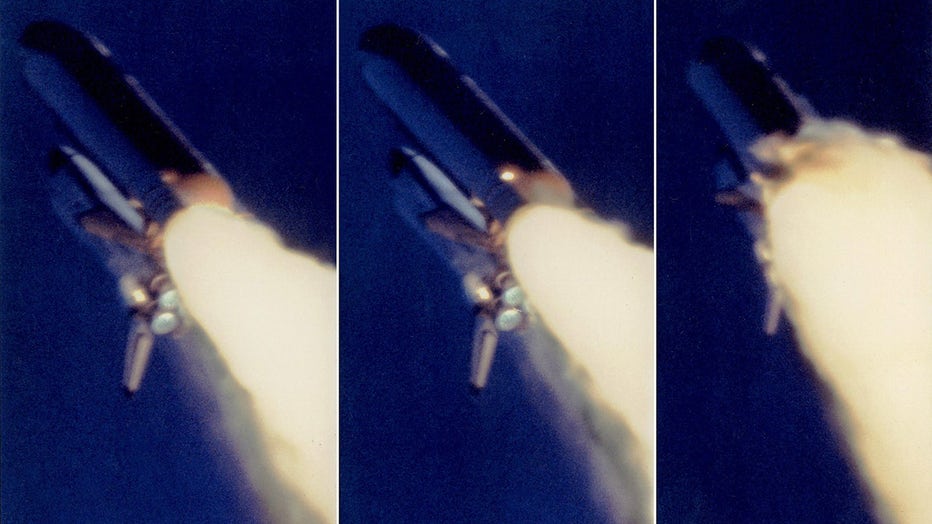
Sequential photos, released by NASA, show a fiery plume escaping from Challenger's right solid rocket booster and growing toward an explosion. (NASA/AFP via Getty Images)
The technical cause:
Investigators determined that the rubber O-ring seal failed because of the unusually cold weather – it was 36 degrees at the time of launch. That failed seal acted like a blow torch that eventually cut through the external fuel tank and led to the explosion.
The institutional cause:
Engineers with Morton Thiokol, the manufacturer of the boosters, had warned about the O-ring seals failing in cold weather after seeing evidence on previous flights. But managers at Thiokol and NASA overruled the whistleblowers’ objections, fearing that a delay on the high-profile ‘Teacher in Space’ mission would reflect badly on the program and disrupt the busy launch schedule.

Students at Concord High School watch the Challenger explosion, uncertain about what is happening. (FOX archives)
"I knew something was terribly wrong"
What they're saying:
In the hours and days after the explosion, everyone from experts to schoolchildren struggled with what they had witnessed.
Red Huber, Orlando Sentinel photographer: "As it cleared the tower, I felt relief, because that's a big hurdle. And then, the ascent, a number of seconds later, it started to, well, I couldn't believe, first of all, I couldn't believe what I was seeing. Because I knew when that solid rocket booster was trailing off, I knew something was terribly wrong."
June Scobee, wife of astronaut Dick Scobee: "We were gathered at the top of the Mission Control Center, all huddled together, wrapped in our coats to watch that launch. We cheered, it was so exciting. But then the unthinkable happened…Just numb, we were frozen in shock. It was a while before we learned that no one survived."
Student at Concord High School, where Christa McAuliffe taught: "I just didn't believe it at first when it blew up. I was pretty shocked. Then I found out why everyone was quiet; the teachers were upset."

From 1986: Students watch Challenger disaster
Teachers did their best to explain the Challenger disaster to young students, many of whom were watching the event unfold live. Originally aired on KMSP-TV; January 28, 1986.
What happened to the astronauts?
Dig deeper:
Analysis later determined that the initial blast, while rough, was survivable. Evidence shows at least some of the crew were alive and began emergency procedures, including activating backup air supplies and attempting to restart electrical power.
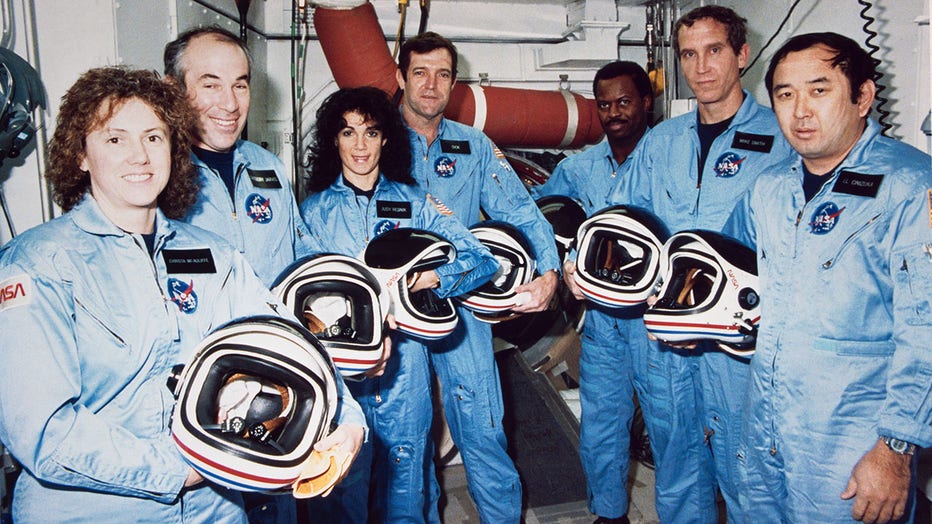
NASA's STS-51L crew members pose for photographs during a break in countdown training at the White Room, Launch Complex 39, Pad B. Left to right are Teacher-in-Space payload specialist Sharon Christa McAuliffe; payload specialist Gregory Jarvis; and
The crew cabin slammed into the ocean at 200 mph, killing the astronauts and obliterating much of the key evidence. NASA’s report on the topic made three conclusions, quoted verbatim here:
- The cause of death of the Challenger astronauts cannot be positively determined;
- The forces to which the crew were exposed during orbiter breakup were probably not sufficient to cause death or serious injury; and
- The crew possibly, but not certainly, lost consciousness in the seconds following orbiter breakup due to in-flight loss of crew module pressure.
The crew’s remains were recovered in March of 1986 and returned to shore under cover of darkness. An honor guard met the USS Preserver at Port Canaveral and military ambulances transported the astronauts’ remains from the port for autopsies.

From 1986: Challenger crew remains recovered
A look at the efforts to recover the Challenger astronauts and find out what went wrong. Originally aired on KMSP-TV; March 13, 1986.
Where is Challenger now?
Present day:
Around 118 tons of debris – less than half of the shuttle vehicle – was recovered from the Atlantic, and some pieces continue to be found decades later. Following the investigation, the wreckage was buried in two abandoned missile silos at what is now Cape Canaveral Space Force Station.
Years later, one piece – an iconic left-side panel bearing the American flag – was put on display at a Kennedy Space Center's visitor complex memorial. It sits next to the singed front window frame from space shuttle Columbia, which was destroyed during reentry in 2003. Another seven astronauts died in that disaster, which had echoes of the decision-making that led to Challenger’s destruction.
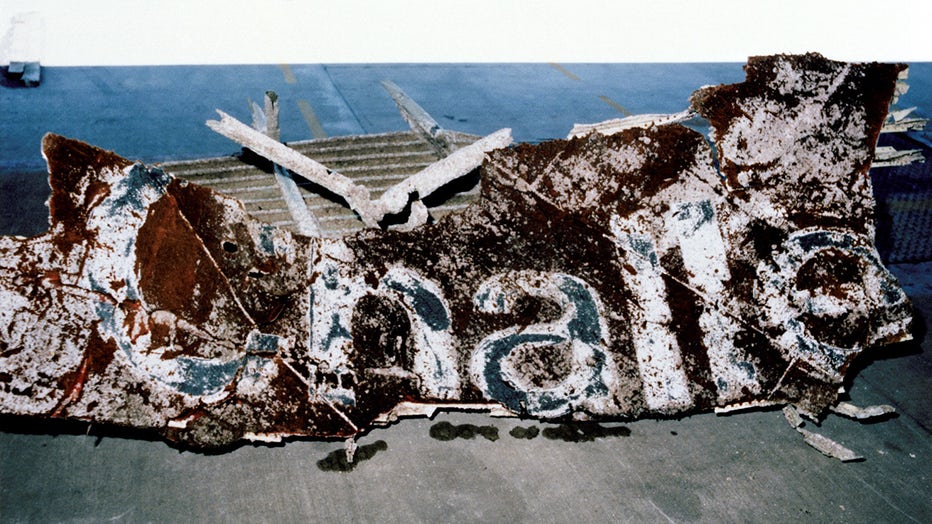
A 9'7" x 16' segment of Challenger's right wing is unloaded from the rescue and salvage ship USS Opportune after being found about 12 nautical miles northeast of Cape Canaveral in 70 feet of water. (NASA)
Reflections
What they're saying:
In the months and years since the disaster, those involved have reflected on what it meant for them and for the country.
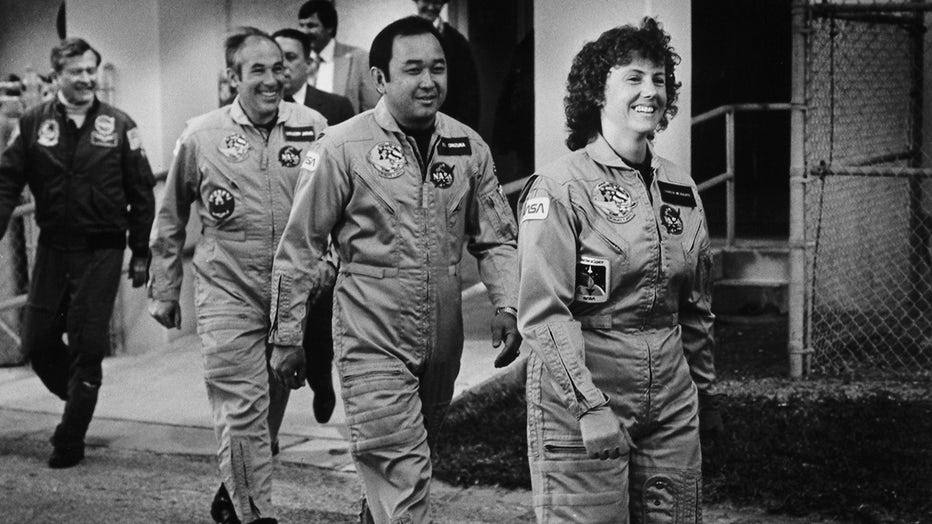
Four crew members of the space shuttle Challenger walk from their quarters at Kennedy Space Center in Florida, en route to the launch pad in Cape Canaveral, FL on Jan. 28, 1986. (Photo by Janet Knott/The Boston Globe via Getty Images)
Lorna Onizuka, wife of astronaut Ellison Onizuka: "Nothing is without risk. Nothing is perfect. History proves that to us. That’s why our nation is so unique."
Rich Scobee, son of Dick Scobee: "Anybody who's lost somebody that they love, they know what it's like. Whether it's a long illness or something that's unexpected, that feeling of loss is the same. Ours was just very public; we shared it with the nation, who was in mourning with us. We derive a lot of strength from that. There are great people in this country and we are lucky to be a part of it."
Red Huber, Orlando Sentinel photographer: "What really sticks to my mind when I think about all the images, when I photograph the whole story of the Challenger disaster, I think back of those astronauts' faces, and I think about how they smiled, how they were excited about going into space. Not just Christa McAuliffe to being the first teacher, but these astronauts. They are trained and they know the risk, but they want to better human spaceflight."
The Source: Information in this story came from NASA, the Rogers Commission, previous FOX Local reporting, archived television news coverage of the disaster, the Associated Press, and interviews with those who witnessed it.