

Gov. Abbott targets 'out-of-control' property taxes with new five-point tax relief plan
HOUSTON - Texas Gov. Greg Abbott laid out a five-point plan to overhaul the state’s property tax system Tuesday during a Taxpayer Empowerment event in Houston, arguing that previous tax relief efforts have not delivered lasting results for homeowners.
The five-point plan is intended to overhaul the state’s property tax system, proposing stricter limits on local government spending, tighter caps on property appraisals and a pathway to eliminate school district property taxes for homeowners.
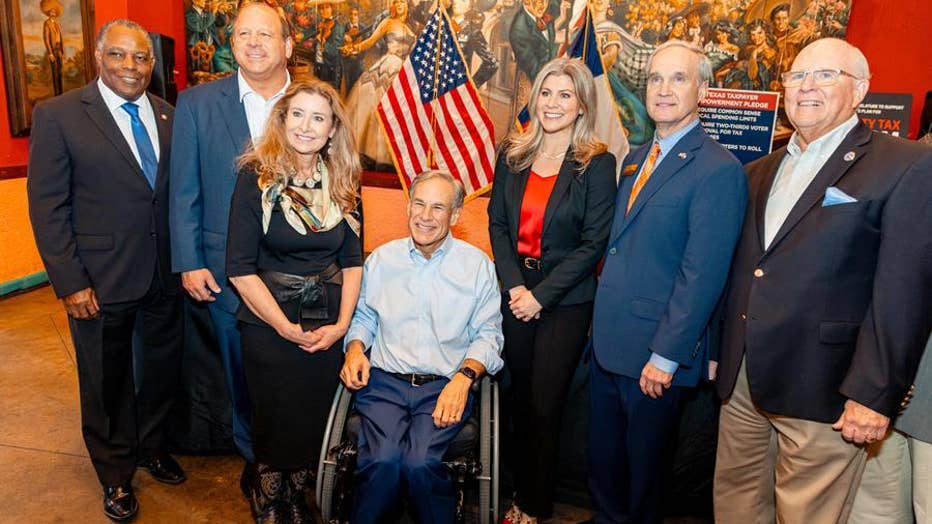
Taxpayer Empowerment Event
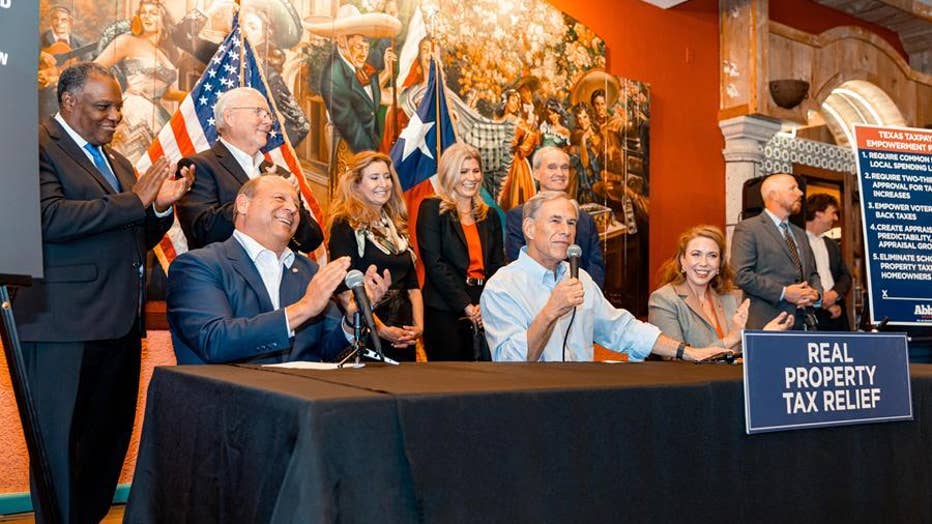
Courtesy: Texans for Greg Abbott 2/11/2026
Local perspective:
For the event, Abbott was joined by several GOP state lawmakers and Genevieve Collins, the state director for Americans for Prosperity, a conservative advocacy group.
Collins said property taxes "only go one way, and that is up," and called for permanent reforms to rein in local government spending.
Abbott, who has served as governor since 2015, said his plan would protect taxpayers from what he described as "out-of-control" local tax increases and ensure that relief enacted by the state is not offset by higher local spending.
The governor said the state has already delivered on what he described as the largest property tax relief package in U.S. history. But with $51 billion of relief this past legislative session, he says more structural reforms are needed to prevent local governments from raising taxes in the future.
Gov. Abbott’s Five-Point Property Tax Relief Plan
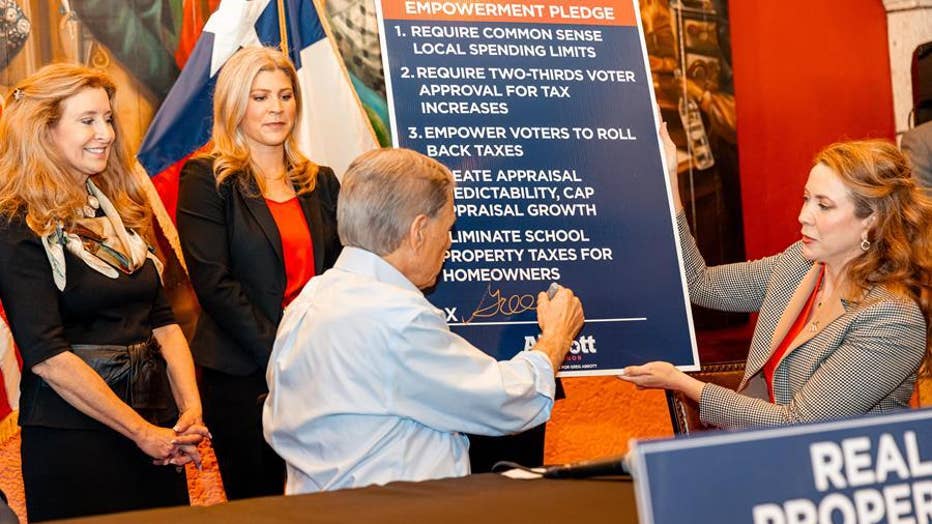
Courtesy: Texans for Greg Abbott 2/11/2026
By the numbers:
Abbott’s five-point plan proposes a sweeping overhaul of the state’s property tax system, including:
1. "Common sense" local spending limits
In the first step, Abbott said imposing "common sense" local spending limits would ensure cities, counties and other taxing entities "live within their means."
Under his proposal, local government spending growth would be limited to population growth plus inflation or 3.5%, whichever is lower.
Abbott pointed to Harris County, claiming it increased property taxes by nearly 14% over the past two years.
"What I say we have to do is ensure that every property taxing jurisdiction in the state of Texas must live within spending limits also. Let's apply this to Harris County, Texas. In Harris County, Texas, that entity alone increased your property taxes by almost 14% in just the last two years," said the governor.
2. State-mandated voter approval for tax increases
The next step in the plan would require two-thirds voter approval for all local property tax increases before they could take effect.
Abbott said no property tax increase should take effect without voter approval.
"No property tax increase should ever be put into place without first being voted on by the voters, and it has to get a two-thirds vote to be able to pass," he said.
Currently, certain property tax measures require supermajority approval and Abbott’s proposal would expand that requirement statewide.
3. Empowering voters to roll back taxes
In addition to the state-mandated voter approval, the governor proposed allowing voters to roll back local property taxes if 15% of registered voters in a jurisdiction sign a petition triggering an election.
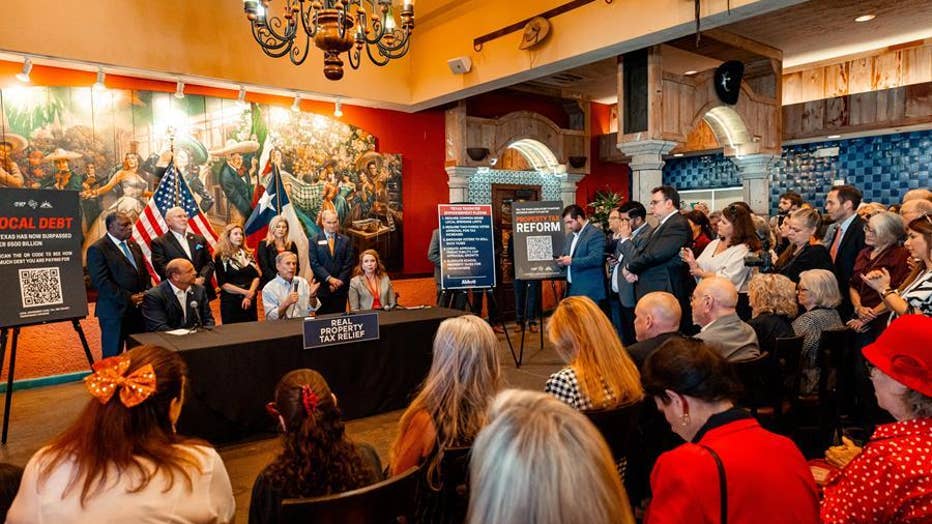
Courtesy: Texans for Greg Abbott 2/11/2026
4. Create appraisal predictability, cap appraisal growth
In his fourth step, Abbott also called for changes to the appraisal process, which he said contributes to unpredictable tax bills. His plan would require that properties be appraised once every five years instead of annually. It would lower the cap on annual homestead appraisal growth from 10% to 3% and extend appraisal caps to all properties, including rental and commercial properties.
Currently, Texas law limits homestead appraisal increases to 10% per year. Abbott said reducing that cap would provide greater predictability for homeowners and help keep people, particularly those on fixed incomes, from being priced out of their homes.
5. Eliminate school property tax for homeowners
Lastly, the final step of the proposal would allow voters to decide, through a constitutional amendment, whether to eliminate school district property taxes for homeowners.
Abbott said the largest portion of most property tax bills goes toward public education and argued the state should assume that responsibility.
"The state should pay for public education, not your homestead," he said, adding that his plan would eliminate the school district portion of homeowners’ property tax bills and have the state fully fund public education.
He said that change alone would cut property tax bills by more than half.
Support for permanent tax reform
What they're saying:
Abbott urged voters to hold state lawmakers accountable in the next election cycle if they oppose his proposal.
"You need to hold accountable every state representative, every state senator, and make sure they support my plan," he said.
"We are here to cut taxes for families and small businesses and ensure they can keep more of their hard-earned money. That is why we passed a $125,000 property tax exemption so small businesses can keep more of their money, hire more employees, expand their operations, and get relief from skyrocketing local property taxes."
Courtesy: Texans for Greg Abbott 2/11/2026
What's next:
Property taxes remain a top concern among Texas voters and are expected to be a central issue in the 2026 gubernatorial race.
Abbott indicated he plans to campaign statewide to build support for the proposal, comparing it to his previous push for school choice legislation.
The Source: Information in this article was provided by Texas Governor Greg Abbott and live event coverage from Abbott's Texas Taxpayer Empowerment Event in Houston.