

K9 alert leads to $19,000 cash seizure from Dominican Republic-bound travelers in Philadelphia
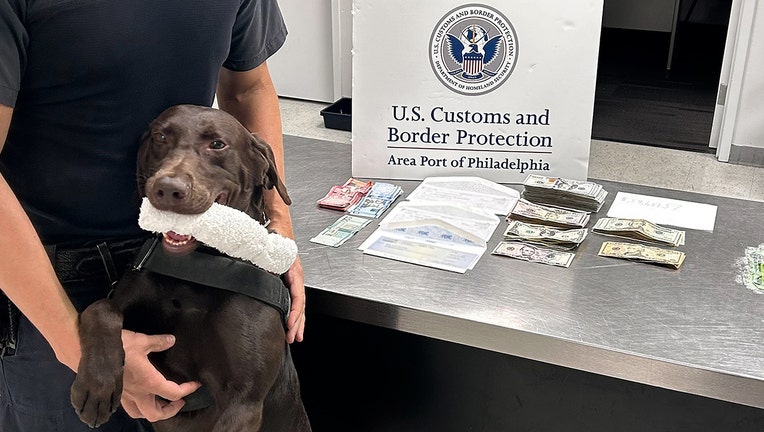
CPB K9 Nitro with the cash that was discovered when officers were conducting outbound passenger enforcement. (U.S. Customs and Border Protection)
A man and a woman traveling Monday from Philadelphia International Airport to the Dominican Republic ended up traveling a little lighter after a U.S. Customs and Border Protection (CBP) currency detector K9 alerted officers to thousands of dollars of undeclared currency.
What we know:
CPB says on Monday, officers were conducting outbound passenger enforcement when K9 Nitro, a 3-year-old male chocolate Labrador retriever trained to detect bulk currency, firearms, and ammunition, alerted officers to two travelers who were attempting to board a flight separately to Santo Domingo. CPB says when officers asked each of the travelers how much currency they possessed, a 63-year-old woman declared $9,000 and a 79-year-old man declared $5,000.
Officers then escorted them to CBP’s inspection station where they initially claimed they were not traveling together but had matching luggage. CBP says they later admitted they were traveling together.
A total of $19,681 was discovered and CBP says officers, for humanitarian purposes, returned $681 to the couple and seized the remaining $19,000. The travelers were then released.
RELATED: K9 alert leads to $44,000 cash seizure from Mexico-bound traveler in Philly
What they're saying:
"This couple attempted to evade federal currency reporting laws by structuring their currency and claiming to be traveling separately, but a keen canine and observant officers easily detected the currency and broke their story," said Acting Area Port Director Elliott Ortiz, CBP’s Area Port of Philadelphia, in a release. "Customs and Border Protection urges travelers to truthfully report all currency they possess to a CBP officer during inspection or face severe consequences as these travelers learned."
Rules for traveling internationally with currency and monetary instruments
When it comes to traveling internationally into or out of the United States, federal law mandates that you must report currency or monetary instrument amounts exceeding $10,000 to U.S. Customs and Border Protection (CBP). This reporting requirement applies whether you are:
- Traveling for business,
- Sending money abroad, or
- Bringing savings back home.
To report the international transportation of currency or monetary instruments, submit an Electronic File on the FinCEN Form 105.
What happens if you don't file FinCEN Form 105?
CBP says an individual who fails to file a report or submit false or fraudulent information, risks having their currency or monetary instruments forfeited and seized. In some instances, CBP says they may face civil or criminal penalties such as fines or imprisonment.
The Source: Information in this article was provided by U.S. Customs and Border Protection (CBP). This story was reported from Orlando.