

New hepatitis B drug may be a 'functional cure' for some people
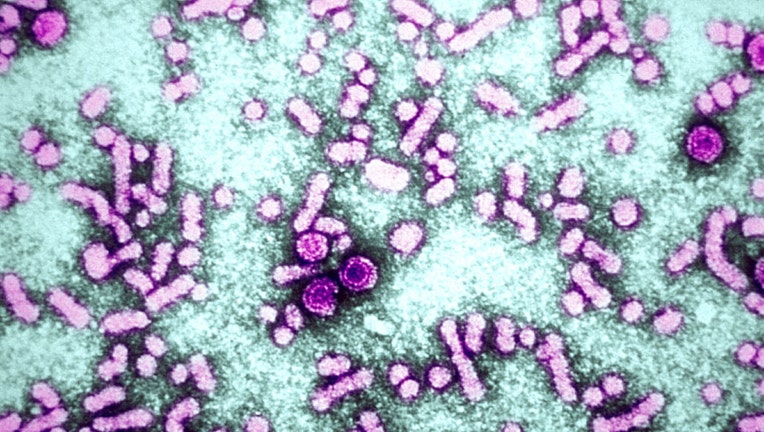
FILE-This electron micrograph reveals the presence of Hepatitis B Virus HBV "Dane Particles", or Virions. (Photo By BSIP/UIG Via Getty Images)
A new hepatitis B drug is letting some patients stop treatment without showing signs of the virus in what researchers are calling a "functional cure."
The Associated Press reported that in two studies, roughly 1 in 5 patients given the first-of-its-kind drug experienced their virus decline to levels small enough for the immune system to keep in check.
Data from the studies was also published on Thursday in the New England Journal of Medicine. Chronic hepatitis B can cause liver cancer or liver failure and kills roughly 1.1 million people worldwide annually.
New hepatitis B drug tested
Why you should care:
The drug is bepirovirsen, nicknamed "bepi" and was developed by GSK and Ionis Pharmaceuticals. According to the Associated Press, "bepi" is being reviewed by the U.S. Food and Drug Administration, with a decision expected in October.
RELATED: US drops number of vaccines it recommends for every child: What to know
GSK Vice President Melanie Paff told the AP that bepi attacks hepatitis B by binding to its genetic components, suppressing viral replication as well as a key protein, the "S" or surface protein, and stimulates the immune system.
Scientists conducted clinical trials with 1,838 patients to receive either a bepi shot or a dummy shot weekly for six months, in addition to their regular pills.
Citing researchers, the AP reported that if the virus was undetectable for six months after stopping the shots, patients could stop using their regular pills. For 20% of the bepi recipients, the hepatitis B remained undetectable for six more months after they stopped all treatment — that "functional cure" — something no patients given the dummy shots accomplished.
What is hepatitis B?
Dig deeper:
Hepatitis B is a serious liver infection caused by HBV. According to the Centers for Disease Control and Prevention (CDC), HBV is transmitted when blood, semen, or another body fluid from a person infected with the virus enters the body of someone who is uninfected.
The CDC noted that hepatitis B can range from a mild, short-term, acute illness lasting a few weeks to a severe, long-term, chronic infection.
Many individuals infected with hepatitis B virus won’t experience symptoms. If symptoms happen during acute infection, they often begin 90 days after exposure, according to the CDC.
Although the symptoms of acute HBV infection and chronic HBV infection may be similar, most people with chronic infection do not have symptoms until much later in life, often decades after exposure.
For individuals who are infected, many have an "acute" illness that lasts several months. But for some — about 1.7 million people in the U.S. and over 250 million globally— it becomes a chronic form that gradually damages the liver.
The Associated Press reported that standard treatments reduce levels of hepatitis B and prevent liver damage. Hepatitis B also has an uncanny ability to hide in the body if therapy stops.
The Source: Information for this story was provided by The Associated Press and the Centers for Disease Control and Prevention. This story was reported from Washington, D.C.