

Texas bans popular Chinese apps including Shein, Temu on state-issued devices

AUSTIN, Texas - Texas Gov. Greg Abbott expanded the state’s list of technologies barred from use on state networks and government-issued devices. He added dozens of companies and products linked to China as state officials escalate efforts to limit foreign access to Texans’ data.
Targeted tech and brands
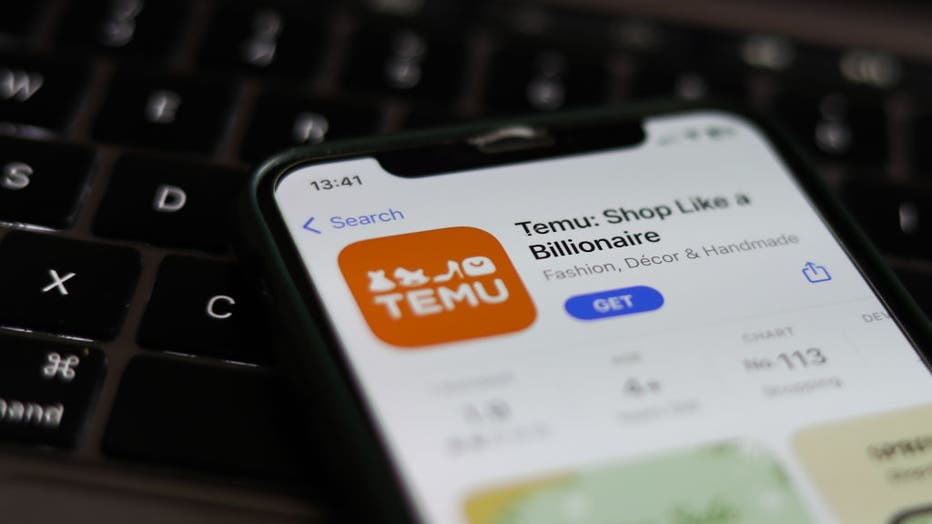
A laptop keyboard and Temu on App Store displayed on a phone screen are seen in this illustration photo taken in Krakow, Poland on March 27, 2023. (Photo by Jakub Porzycki/NurPhoto via Getty Images)
What we know:
The updated list that was announced on Monday, includes restrictions on physical hardware, software and artificial intelligence tools affiliated with the People’s Republic of China and the Chinese Communist Party.
The following were added to the prohibited technology list after a threat assessment executed by Texas' leading cybersecurity agency:
- SenseTime
- Megvii
- CloudWalk
- Autel
- CATL
- Wuhan Geosun LiDAR
- Yitu
- iFlytek
- Uniview
- Zhipu (Z.ai)
- Beijing Academy of Artificial Intelligence (BAAI)
- Alibaba
- Xiaomi
- Gotion High Tech
- Baidu
- RoboSense LiDAR
- TP-Link
- Hisense
- TCL
- Baichuan
- StepFun
- MiniMax
- PDD (Pinduoduo, Temu)
- Shein
- Moonshot AI
- NucTech
Guarding Texans' data

(Photo by Jakub Porzycki/NurPhoto via Getty Images)
While Abbott’s prohibited technology list applies to state agencies and employees, not private consumers, officials say both efforts reflect growing concern that advanced consumer technology and artificial intelligence tools can be used to mass-collect data and expose Texans to exploitation by foreign actors and cyber threat actors.
What they're saying:
Abbott said the move is intended to reduce the risk that foreign adversaries could exploit technology used by Texans to harvest data or compromise cybersecurity systems.
"Hostile adversaries harvest user data through AI and other applications and hardware to exploit, manipulate, and violate users," Abbott said in a statement announcing the update.
Role of the Texas Cyber Command
Big picture view:
In a Jan. 20 letter to the heads of the Texas Department of Public Safety, the Department of Information Resources and the Texas Cyber Command, Abbott formally designated the Texas Cyber Command as the lead agency responsible for identifying additional technologies that pose a threat to the state’s sensitive information. The designation expands on a model security plan first ordered in 2022 and updated in January 2025 to address emerging threats tied to companies with links to the Chinese Communist Party.

The Texas Cyber Command was established following the 89th Texas Legislative Session last year. The Texas Cyber Command is based in San Antonio and is described as the nation’s largest state-level cybersecurity agency, created to counter increasingly sophisticated cyber threats and improve statewide coordination.
Vice Adm. TJ White, a retired U.S. Navy officer and chief of the Texas Cyber Command, said the agency’s mission is to prevent cyber intrusions that could lead to the exfiltration of sensitive information.
Under Abbott's directive, the Texas Cyber Command will take primary responsibility for evaluating apps, services, hardware and software that may warrant prohibition, while DPS and DIR will continue supporting roles.
Previous legal action against smart TVs
The backstory:
Texas officials’ heightened focus on Chinese-linked technology comes as Attorney General Ken Paxton continues to pursue lawsuits against major smart TV manufacturers over data collection practices.
In December, Paxton sued Sony, Samsung, LG, Hisense and TCL, alleging their televisions used automated content recognition software to collect viewing data and other personal information without proper consumer consent.
Paxton has argued that the lawsuits raise not only privacy concerns but also national security risks, particularly involving companies based in China.
Courts have issued temporary restraining orders against some manufacturers, including Hisense, though a restraining order announced against Samsung was later vacated by a Collin County judge.
Texas court vacates restraining order against Samsung
One day after issuing a temporary restraining order against tech giant Samsung, a Texas court set that order aside, rendering it null.
The Source: Information in this article was provided by the Texas Governor's Office and previous FOX 4 coverage.