

Austin weather: Extreme Heat Warning for most of Central Texas
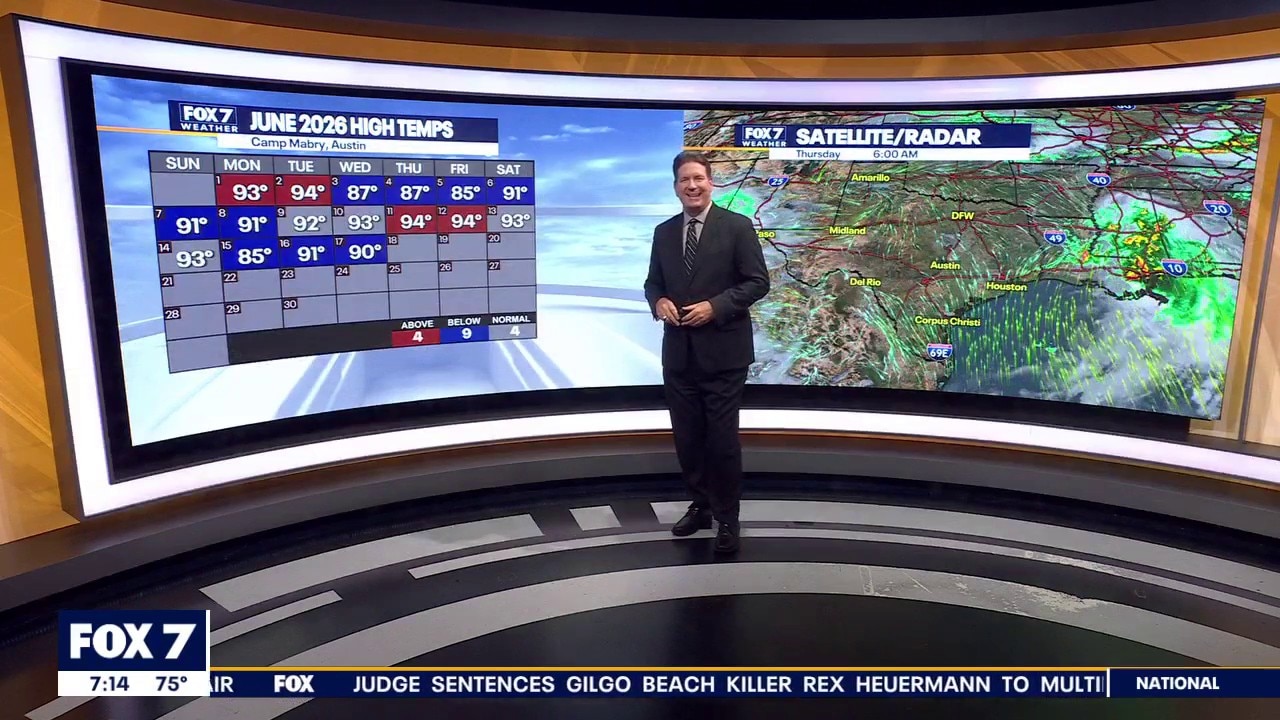
Austin weather: Extremely steamy heat today
It's going to be a very hot day today. Zack Shields has all the details in his full forecast.
AUSTIN, Texas - With the temperatures climbing along with the moisture levels, we have dangerous heat indices on the weather menu.
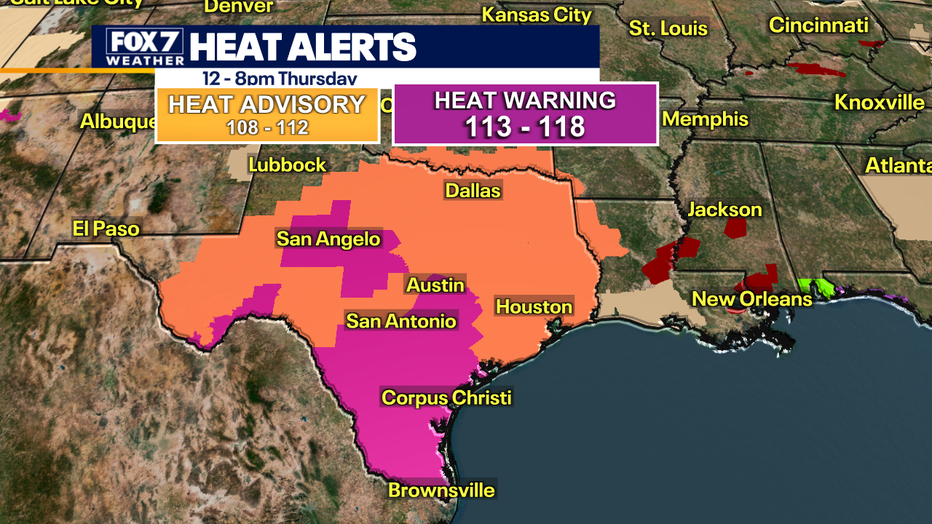
More than three quarters of the state is under a heat alert.
An Extreme Heat Warning has been issued for most of Central Texas.
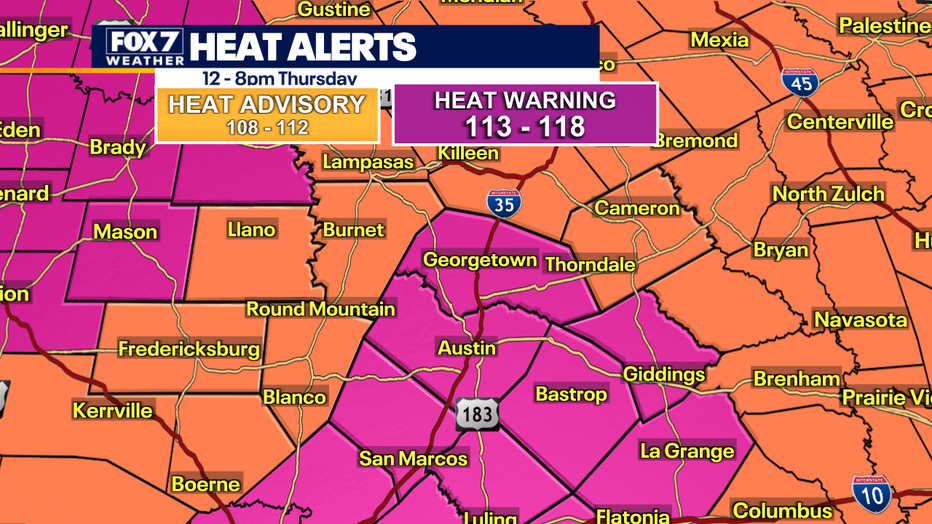
Counties included in the alert include Williamson, Hays, Travis, Bastrop, Caldwell, Fayette and Bexar.
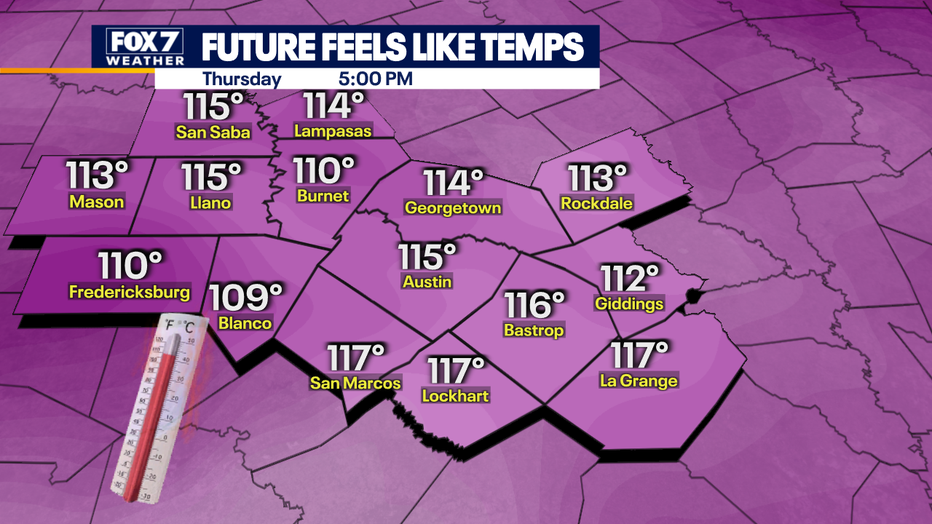
The National Weather Service says heat index values are expected between 113 to 118.
What you can do:
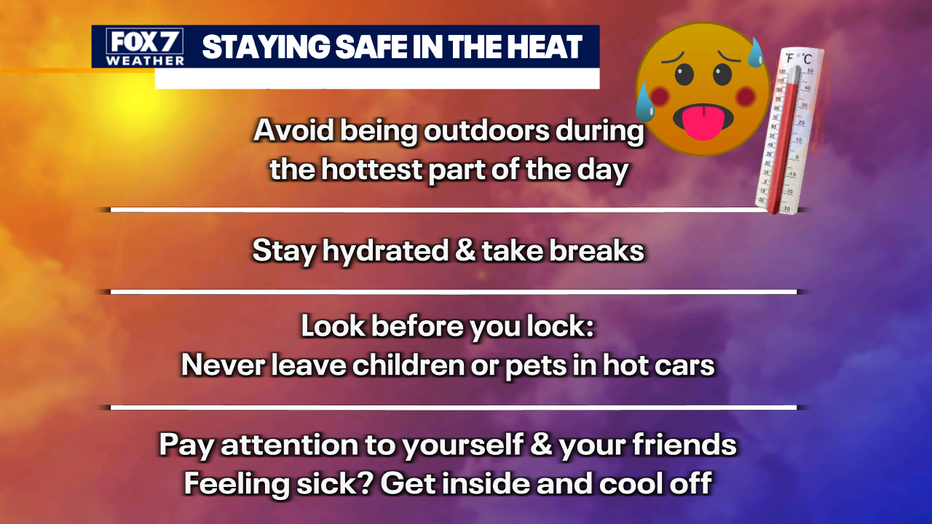
First responders gave some tips on how you can protect yourself from the heat:
- Pre-hydrate ahead of going out in the heat
- Wear sunscreen
- Wear light-colored, loose-fitting clothing
- Limit activities to early morning and evening
Officials are also reminding residents to be sure to look before you lock your vehicles to make sure you aren't leaving behind children or pets.
What's next:
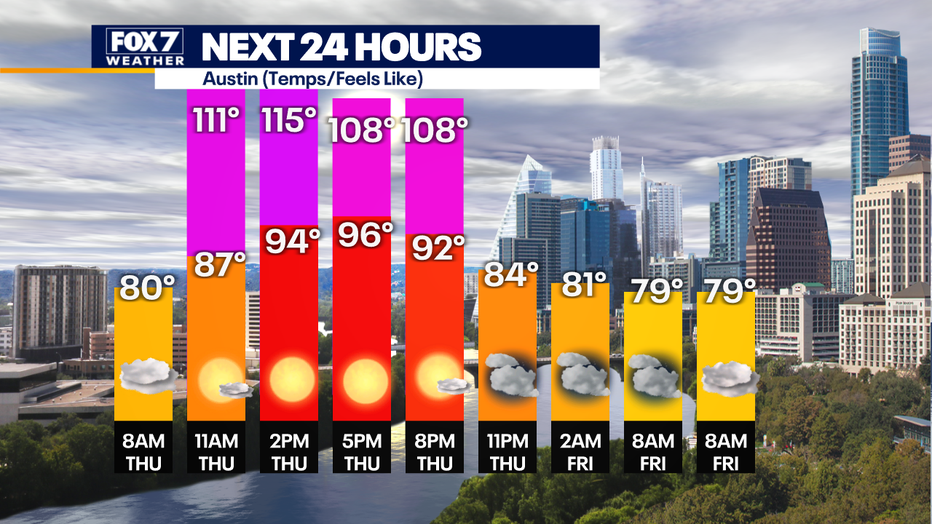
The extreme heat won't last too long with rain chances increasing Friday and Saturday taking the edge off the steamy heat.
Dig deeper:
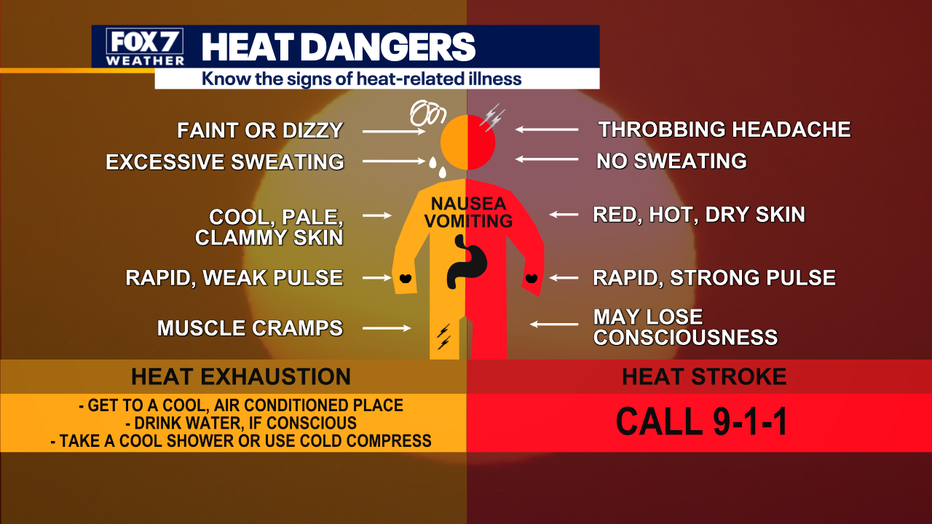
Symptoms of heat stroke and exhaustion
Exposure to heat puts everyone at risk for heat-related illnesses, and in some cases, the illnesses can lead to a heat stroke and become deadly.
It is essential to know the signs and symptoms of heat exhaustion, heat stroke, and heat cramps.
Heat exhaustion symptoms include:
- Cool, pale, clammy skin
- Weakness
- Dizziness
- Heavy sweating
- Nausea or vomiting
- Fast, weak pulse
What to do for someone experiencing heat exhaustion:
- Cool them and move them
- Move the person to a cooler area immediately
- Loosen clothing
- Sip cool water slowly

Impact of extreme heat on mental health
Doctors say extreme temperatures can have significant impacts on our mental wellbeing including our ability to think clearly and make decisions. FOX Medical Team's Dr. Mike joins us with more.
If symptoms do not improve, they last longer than an hour, or the victim begins vomiting, you should seek medical help. Heat exhaustion can quickly lead to heat stroke within minutes.
Heat stroke symptoms include:
- Hot, red, dry or damp skin
- Rapid and strong pulse
- Throbbing headache
- Confusion
- Nausea or dizziness
- Body temperature above 103 F
- Lethargy or loss of consciousness
Heat stroke is a severe medical emergency that can cause death or permanent damage if emergency treatment is not given promptly. If you or someone you are with experiences symptoms of heat stroke, move them, cool them, and call 911:
- Move the person to a cooler area, preferably air-conditioned
- Reduce their body temperature with cool clothes or baths
- Do not give fluids or anything by mouth to a person experiencing heat stroke
The Source: Information from meteorologist Zack Shields, National Weather Service and previous reporting.