

Amazon issues scam warning to millions of customers. What we know
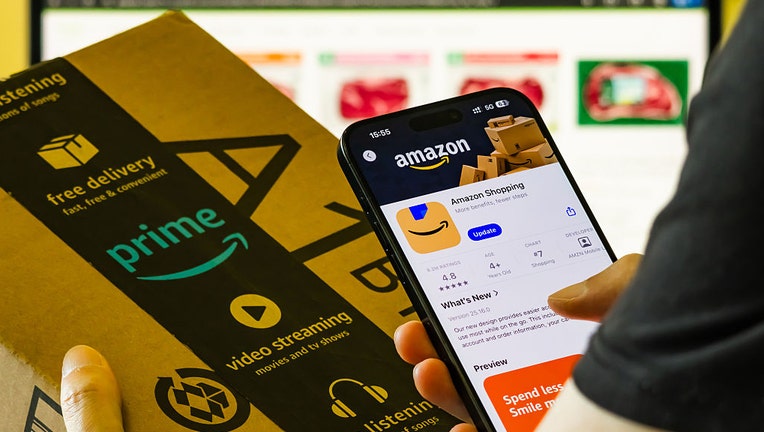
FILE-In this photo illustration, a person holds a smartphone displaying the Amazon Shopping app page in the Apple App Store in one hand and an Amazon Prime-branded delivery box in the other hand. (Photo illustration by Cheng Xin/Getty Images)
Amazon is informing millions of its active users about impersonation scams involving someone illegally obtaining their personal information.
Amazon consumer warning
Why you should care:
In a Nov. 24 email from Amazon obtained by Forbes, the company noted that in these impersonation scams, thieves are targeting Amazon users by reaching out to try and get "access to sensitive information like personal or financial information, or Amazon account details."
Earlier this month, Amazon distributed an email about the impersonation scams to their customers in the U.S.
RELATED: Amazon app store to shut down on Androids Aug. 20. What it means for users
Amazon in their email also advised consumers of the type of impersonation scams some individuals may attempt, which are listed below:
- Fake delivery or account issue messages.
- Third-party adverts, including those on social media, offering amazing deals.
- Messages sent through unofficial channels requesting account or payment information.
- Ditto, but via unfamiliar links.
- Unsolicited tech support phone calls.
Amazon also offers helpful steps consumers can take to protect themselves from scams:
- Only use the Amazon mobile app or website for services including: customer service, account changes, delivery tracking, and refunds.
- Customers should use two-factor authentication when available and/or use a passkey.
How can I identify impersonation scams?
Local perspective:
Amazon advises that impersonation scams can happen when a scammer pretends to be a trusted organization or individual to steal an unsuspecting consumer's money or personal information.
According to the company, these scams can be carried out in a myriad ways, including by phone, email, text, or even by messaging you on social media.
RELATED: Amazon is refunding customers for purchases made years ago
The scammer's objective is to influence the person to make a payment, share their personal information, or give them access to your computer.
Amazon says on its website that there are certain red flags to watch for in these scams:
- False urgency
- Asking for personal information.
- Purchases outside of Amazon.
- Payment via gift cards
- Unexpected order
The company also offers tips on ways customers can avoid impersonation scams.
Reporting scams
Big picture view:
Amazon also provides guidance on reporting scams and identifying scams on its website.
Customers can report suspicious communication to Amazon at reportascam@amazon.com. The company explains on its website that sending the suspicious communication as an attachment is the best way for us to track it.
The company noted that Amazon users can also report suspicious phone calls or SMS/text messages to the Federal Trade Commission (FTC), by visiting https://reportfraud.ftc.gov
Amazon users with security concerns about their account can review the Protect Your System Help page. And to report suspicions of a product, seller, or other activity, go to Report Suspicious Activity.
The Source: Information for this story was provided by Forbes, which obtained an email from Amazon about the scam warning, and Amazon's website. This story was reported from Washington, D.C.