

Childhood cancer risk may be higher after some fertility treatments, study finds
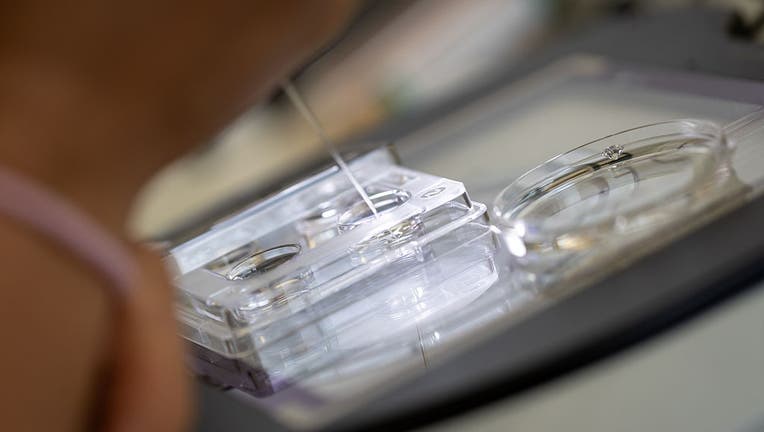
Intracytoplasmic sperm injection (ICSI) is prepared at the Kinderwunsch Bremen practice in Bremen-Schwachhausen by placing eggs in a dish using a pipette (Photo by Focke Strangmann/picture alliance via Getty Images)
Children conceived through certain assisted reproductive technologies may face a modestly higher risk of developing cancer during childhood, although the overall risk remains low, according to a large study from Denmark.
Dig deeper:
Researchers examined health data from more than 1 million children born in Denmark between 1996 and 2012. About 37,000 were conceived using assisted reproductive technology, including in vitro fertilization, intracytoplasmic sperm injection and frozen embryo transfer.
By the numbers:
During a median follow-up period of 20 years, children conceived without fertility treatment developed cancer at a rate of 18.3 cases per 100,000 person-years. Among children conceived using assisted reproductive technology, the rate was 23.6 cases per 100,000 person-years.
RELATED: Most popular baby names of 2026 revealed, according to new data
The researchers found the highest rates among children conceived after frozen embryo transfer, in which a previously frozen embryo is thawed and placed in the uterus. The cancer rate in that group was 41.1 cases per 100,000 person-years.
Children conceived through intracytoplasmic sperm injection, or ICSI, also had a higher cancer rate of 27.9 cases per 100,000 person-years. During ICSI, a single sperm is injected directly into an egg.
Connecting Cancer Survivors with Practical Resources
Shannon Miller, CEO of Salto Health, joined Ryan Schmelz on LiveNOW from FOX to discuss empowering cancer survivors during recovery. Her company provides a specialized gift registry designed to give patients practical support from loved ones throughout their treatment.
Why you should care:
The study did not find an increased cancer risk among children conceived through standard in vitro fertilization, or IVF, where an egg and sperm are combined in a laboratory before the embryo is transferred to the uterus.
The researchers observed associations between frozen embryo transfer and several cancer types, including leukemia, lymphoma and soft tissue sarcoma. ICSI was associated with lymphoma, soft tissue sarcoma and tumors affecting the central nervous system.
However, the authors emphasized that the findings do not prove fertility treatments cause cancer. Childhood cancers are rare, and some of the cancer categories included only a small number of cases, making those results less certain.
RELATED: These are the best US cities for children, according to new data
The researchers compared the children with those born to women who had a history of infertility but did not undergo fertility treatment for that pregnancy. The results remained similar, suggesting that factors connected to the procedures themselves — rather than infertility alone — may warrant further investigation.
Possible explanations include changes linked to freezing and thawing embryos, laboratory handling, hormone treatments or the way sperm is selected during ICSI. The researchers said more studies are needed, particularly because fertility-treatment methods have changed since many of the children in the study were conceived.
What we don't know:
The study also had limitations, including the possibility that other factors were not fully accounted for. The authors said the results reflect treatments used from 1996 through 2012 and may not apply exactly to current fertility procedures.
Overall, the researchers said the increased risk was modest in absolute terms and that the benefits of assisted reproductive technology must be considered alongside the potential risks.
The Source: The information in this story came from a large Danish study that examined health data from more than 1 million children born between 1996 and 2012, including about 37,000 conceived through assisted reproductive technology. This story was reported from Los Angeles.