

Fatal disease detected at Texas facility linked to 'ghost deer' smuggling ring
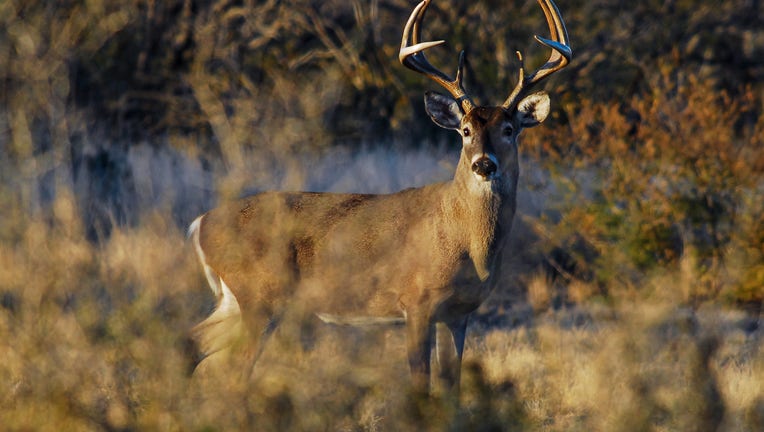
White-tailed deer. Photo courtesy of Texas Parks and Wildlife. (Texas Parks and Wildlife.)
SAN ANGELO, Texas - Two cases of Chronic Wasting Disease (CWD) have been confirmed in white-tailed deer at a breeding facility in Tom Green County, marking the first detection of the fatal neurological disease in the county, according to the Texas Parks and Wildlife Department (TPWD).
Chronic Wasting Disease Found
The positive samples, confirmed by both state and federal laboratories, were taken from deer at a facility owned by Ken Schlaudt, 64, of San Antonio. Schlaudt is tied to the ongoing "Ghost Deer" investigation, which authorities describe as one of the largest deer smuggling networks in state history.
The CWD detection brings renewed urgency to the case, as officials warn that intentional testing violations and negligent recordkeeping associated with Schlaudt’s operation make it unknown exactly how many CWD-exposed deer may have been moved, or what other ranches and facilities across the state may be affected.
Link to "Ghost Deer" Investigation
The backstory:
The investigation was triggered when a Montgomery County Game Warden conducted a traffic stop and discovered Schlaudt and his business partner illegally transporting seven deer without required documentation or identification. They were allegedly trying to smuggle the deer from East Texas to Brazoria and Duval counties to release them into the wild on private property.
Schlaudt, along with facility manager Bill Bowers, 55, of San Angelo, surrendered to the Travis County District Attorney’s Office in August on charges of felony tampering with a governmental record. Both men are accused of entering false information into the Texas Wildlife Information Management System (TWIMS) to facilitate illegal smuggling of white-tailed breeder deer. They also face more than 100 misdemeanor charges related to unlawful breeder deer activities in Tom Green County.
Due to violations linked to Schlaudt’s facility, including violation of disease monitoring protocols, all deer at the location were removed and submitted for disease testing. Samples were sent to the Texas A&M Veterinary Medical Diagnostic Laboratory before the two positive results were confirmed.
The larger "Ghost Deer" investigation, which began in March 2024, has uncovered widespread, illegal deer breeding activities, resulting in 24 suspects and approximately 1,400 charges filed across 11 Texas counties.
The charges include:
- Smuggling captive breeder deer and free-range white-tailed deer between facilities and ranches.
- Violations of mandatory CWD testing and license requirements.
- Misdemeanor and felony drug charges related to the possession and mishandling of prescribed sedation drugs.
Proper procedure requires captive-raised deer to undergo CWD testing before being moved, and state law mandates that every deer be individually identified and movement records submitted to the state database—all measures designed to limit CWD spread. The TPWD remains committed to enforcing these regulations to protect the health of both captive and free-ranging deer populations.
What they're saying:
"These intentional acts jeopardize the health and wellbeing of every deer in the state by circumventing the laws in place to prevent the spread of CWD," said TPWD Law Enforcement Director Col. Ronald VanderRoest. "Preventing scenarios like this is why these requirements exist in the first place, and underscores why Texas Game Wardens diligently investigated this case."
"With many rural Texans depending on hunting as their full or supplemental income, a large-scale outbreak of CWD could pose a significant threat to white-tailed deer hunting, which has a $9.6 billion annual economic contribution and could irreversibly alter Texas’ rich outdoor heritage," said TPWD Executive Director David Yoskowitz.
What is Chronic Wasting Disease?
Chronic Wasting Disease (CWD) is a fatal neurological disease and can devastate deer populations by silently spreading through direct animal contact and contaminated environments. Without close monitoring, illegal movement of captive deer increases the risk of introducing CWD to areas it is not known to exist, potentially leading to widespread outbreaks which will impact more than just the health of Texas deer.
The Source: Information in this article is from the Texas Parks and Wildlife Department.