

World's most powerful telescope being built in Chile has Texas ties
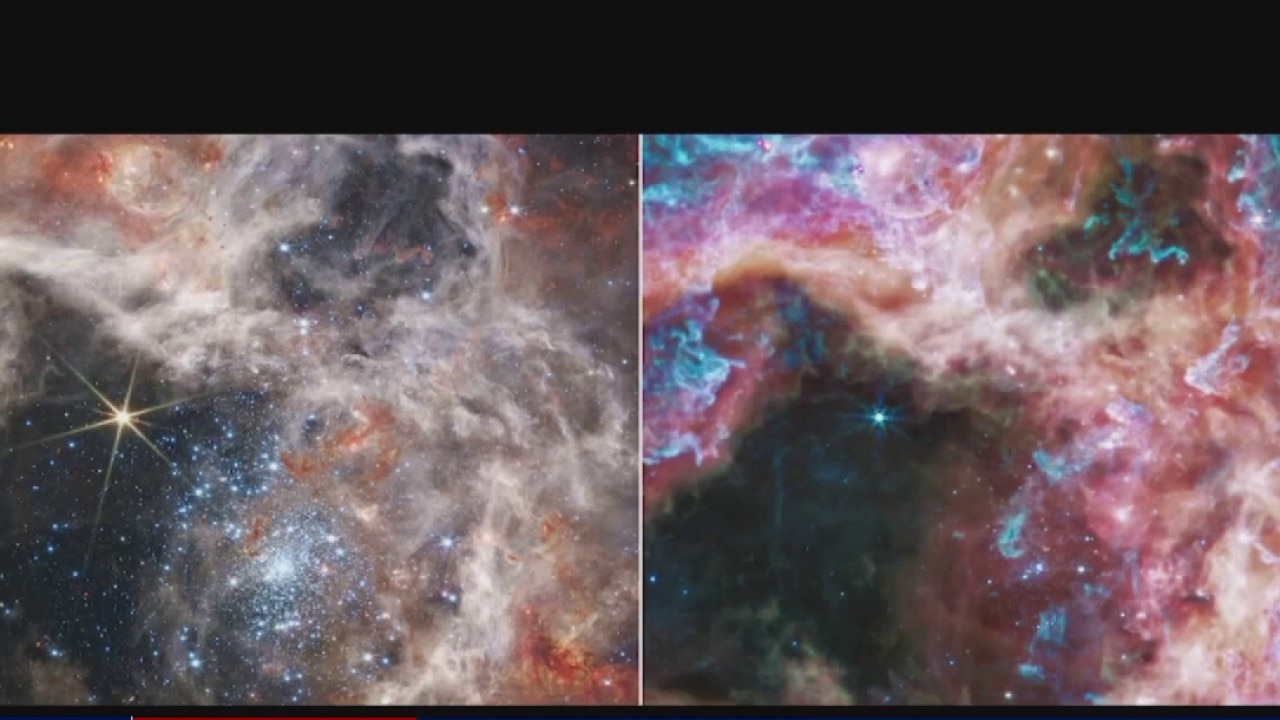
Texas plays part in making world's most powerful telescope
The world's most powerful telescope may live in Chile, but parts of the project will call Texas home.
AUSTIN, Texas - The world's most powerful telescope may live in Chile, but parts of the project call Texas home.
The Giant Magellan Telescope will be the largest Gregorian optical-infrared telescope in history and will be completed in the 2030s.
What they're saying:
Dr. Dan Jaffe, president of the Giant Magellan Telescope and UT Austin astronomy professor, says the telescope will help researchers and astronomers see fine details on faraway celestial bodies.
"This is an instrument to study the atmospheres of planets around other stars so that we can look for signatures and signs of life on those planets. So it's a very exciting phenomenon," Jaffe said.
Jaffe says that over the last 30 years, astronomers have detected thousands of planets around other stars using a variety of techniques.
"But these planets are very faint, and they're sitting right next to very bright objects, their host stars," Jaffe said. "So it's very difficult to study them directly. But with a spectrograph that can divide the light up into very, very fine units by the wavelength of the light, you're able to detect the fingerprint of the molecules in the atmospheres of these planets."
Jaffe says so far, researchers have found water, carbon monoxide and methane in those planets' atmospheres, but the Near-Infrared Spectrograph that he is developing will divide the light up more finely.
"We'll be able to look for key molecules that could be indicators of the presence of biological activity. And that's what's really exciting," Jaffe said.
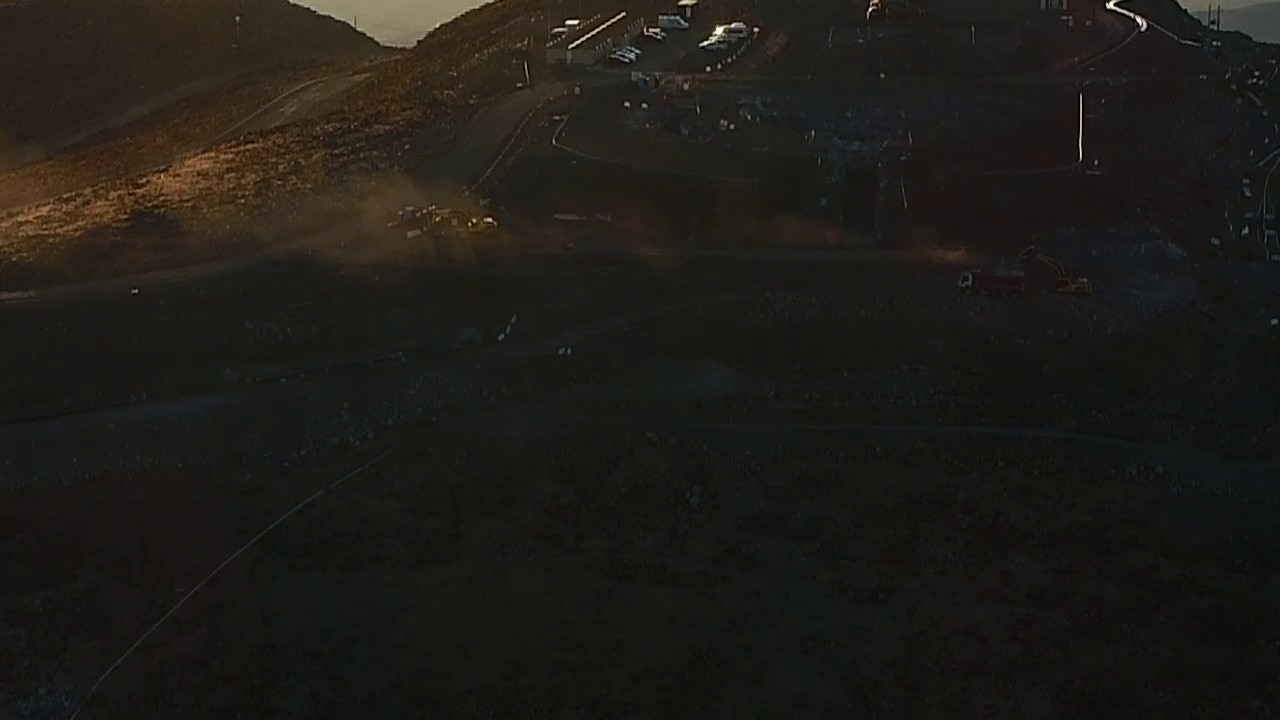
Drone footage of site for Giant Magellan Telescope
This is drone footage of the site for the Giant Magellan Telescope in Chile. The telescope will be the world's most powerful and is slated to be finished in the 2030s. (Courtesy: Giant Magellan Telescope – GMTO Corporation)
The telescope is currently being built at Las Campanas Observatory in the Atacama Desert in Chile.
"Chile has a couple of advantages as a site. It's dark, as it is in West Texas, because of the way the mountains lay out very close to the coast, the air flows over them very smoothly, so the stars don't twinkle as much. They don't jump around as much, which makes it easier to use the techniques we use to get the very high spatial resolution, to see the very fine detail that we want to see," Jaffe said. "It's clear about over 300 nights a year there, which is a remarkable feat because it's just at the southern edge of the Atacama Desert, the site for the telescope."
The Giant Magellan Telescope joins the Rubin Telescope and the Atacama Large Millimeter/submillimeter Array or ALMA Radio Telescope in the area.
By the numbers:
Dr. Jaffe says the telescope is one of the next generation of extremely large telescopes.
Telescopes in use today are around 38 feet in diameter, or about the length of the average school bus.
The Giant Magellan Telescope will be almost 80 feet in diameter, or about the length of an adult blue whale, and will be up to 200 times more powerful than existing research telescopes.
The telescope comprises seven mirrors being built in Arizona, and each mirror is about 28 feet across, or slightly less than the average height of a telephone pole, and 16 metric tons.
"They're mounted together on a single telescope structure, and they're lined up very carefully to make them work together perfectly. And all seven of them have been cast and three of them are finished. So this is a long process, and it's, it's moving ahead very, very well at this point," Jaffe said.

A rendering of the Giant Magellan Telescope with its seven giant mirrors. (Giant Magellan Telescope – GMTO Corporation)
Jaffe also went into depth on how the mirrors are made:
"They get chunks of glass shipped to them from a manufacturer that makes this special kind of glass that's needed for these telescopes. They're placed in an oven with a kind of honeycomb of ceramic underneath them, and then the oven is heated up to 1,200 degrees, and they spin the oven. It turns while it's at 1200 degrees and, with this 30 tons of glass in it and the glass melts, and because the oven is spinning, the centrifugal force spreads it out into a kind of bowl. And because it piles up at the edges, just when you swirl your wine glass around, it piles on the edges. It does exactly that. And as it piles upon the edges then, you get that curve shape, so you don't have to dig out as much glass when you go to shape the mirror. And then very gradually, they cool this mirror down so that it doesn't get any stresses in it. And when it's finally cool, they take the honeycombs out of the back of it, and then they very carefully polish the front face to have exactly the right shape."
The telescope will also sit in a building as tall as a 22-story building, and could barely fit inside UT's DKR Stadium, says Jaffe. The telescope's 5,000-metric-ton enclosure will be able to complete a full rotation in four minutes.
"This building actually has to turn around to follow the telescope, so it's quite a remarkable piece of engineering that's being built now," said Jaffe.
Local perspective:
Jaffe is just one part of the project from Texas.
Both UT Austin and Texas A&M University are members of the project, and Dr. Taft Armandroff, the director of UT's McDonald Observatory, is the board chairman.
"He and I work very closely together on the project," Jaffe said. "We're a little bit overweight on the Texas representation on the project at the moment. It's just a happenstance, but it's great because having a close colleague that you're working with on the project makes it easier to make decisions and get things done."
Jaffe also pointed to Cedar Park's Firefly Aerospace and Houston's Intuitive Machines as being part of the "ecosystem" in Texas playing a pioneering role in space exploration and astronomy.
Big picture view:
UT Austin and Texas A&M are two of 16 research institutions that make up the international consortium behind the telescope.
The consortium includes researchers from across the U.S., Chile, Australia, Brazil, Israel, South Korea, and Taiwan.
Other U.S. universities involved include:
- Northwestern University
- Massachusetts Institute of Technology
- University of Chicago
- Harvard University
- Arizona State University
- University of Arizona
The Smithsonian and Carnegie Science, which operates the observatory in Chile, are also part of the consortium.
The project is a public-private partnership, with the research institutions putting up half the funding and the other half from the National Science Foundation, pending Congressional approval.
"That will allow members of the astronomy community throughout the country to use the telescope as well. And that's important because it's not just collecting the data that matters, it's using the brainpower of many people together to interpret the data, to figure out new ways of viewing it, to think of new projects to do with the telescope. To make those discoveries that are so important. And so we're welcoming this larger community to join with the partners because of that advantage that comes in the impact of the telescope over time," said Jaffe.
The Source: Information in this report comes from an interview with Dr. Dan Jaffe and the Giant Magellan Telescope project