

Government shutdown nears end after Senate advances procedural vote
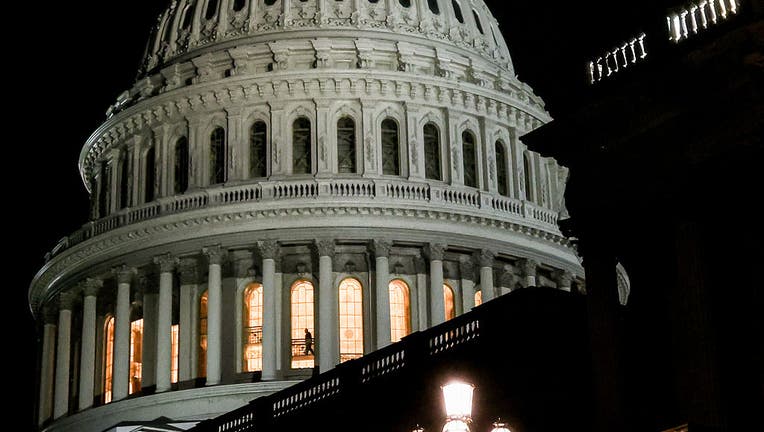
Photographer: Valerie Plesch/Bloomberg via Getty Images
WASHINGTON - On Sunday, the Senate moved to end the government shutdown after a group of moderate Democrats agreed to move forward without a guaranteed extension of health care subsidies, sparking anger among colleagues who insist Americans want them to keep fighting.
In a test vote that is the first in a series of required procedural maneuvers, the Senate voted 60-40 to move toward passing compromise legislation to fund the government and hold a later vote on extending Affordable Care Act tax credits that expire Jan. 1. Final passage could be several days away if Democrats object and delay the process.
What they're saying:
Senate Majority Leader John Thune endorsed the deal Sunday night and called an immediate vote to begin the process of approving it.
"The time to act is now," Thune said.
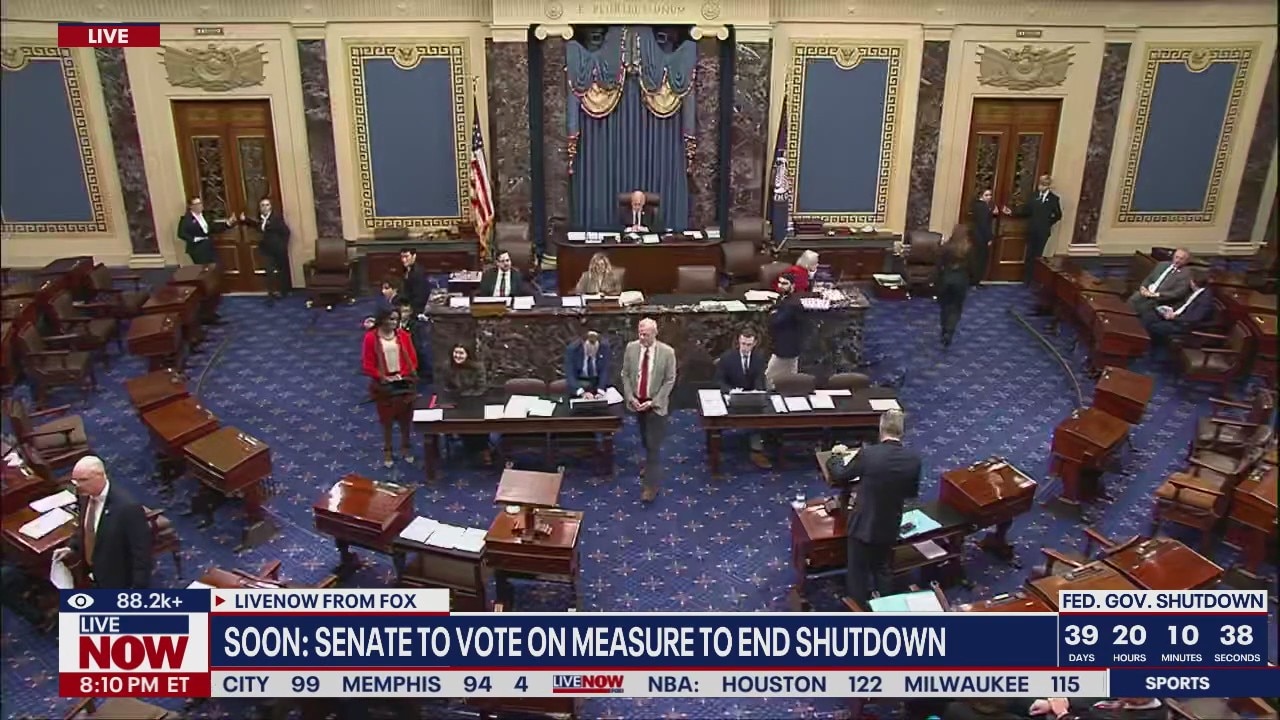
Senate leaders weigh in on procedural shutdown vote
Ahead of voting on a measure that would extend government funding and carve a path towards ending the shutdown, key Senators spoke on the floor. Sen. Jerry Moran (R-KS), Sen. Susan Collins (R-ME), Sen. Bernie Sanders (I-VT), Senate Minority Leader Chuck Schumer (D-NY) and Senate Majority Leader John Thune (R-SD) weighed in ahead of the measure being called to a vote.
"We must not delay any longer," Senate Appropriations Committee Chairwoman Susan Collins said in a Senate floor speech, adding that she is "relieved" that the shutdown appeared headed toward an end.
Returning to the White House on Sunday evening after attending a football game, Trump did not say whether he endorsed the deal. But he said, "It looks like we’re getting close to the shutdown ending."
Dig deeper:
The agreement does not guarantee the Affordable Care Act subsidies will be extended, as Democrats have demanded for almost six weeks. Senate Democratic leader Chuck Schumer of New York voted against moving ahead with the package, along with all but eight of his Democratic colleagues.
Republicans needed five Democratic votes to reopen the government. In addition to Shaheen, King and Hassan, Democratic Sen. Tim Kaine of Virginia, home to millions of federal workers, also said he would support the agreement.
The other side:
After Democrats met for over two hours to discuss the proposal, Senate Democratic leader Chuck Schumer said he could not "in good faith" support it.
"America is in the midst of a Republican-made health care crisis," Schumer said on the floor just ahead of the expected votes. He said Americans would "suffer immensely" and that the crisis would only get worse.
"Democrats have sounded the alarm," Schumer said, and "will not give up the fight."
What's next:
Final passage of the legislation could take several days if Democrats object and draw out the process. Independent Sen. Bernie Sanders of Vermont, who caucuses with the Democrats, said that giving up the fight was a "horrific mistake."
Republicans have been working with the group of moderates as the shutdown continued to disrupt flights nationwide, threaten food assistance for millions of Americans and leave federal workers without pay. But many Democrats have warned their colleagues against giving in, arguing that they can't end the fight without an agreement to extend the health subsidies
RELATED: Government shutdown latest: Senators working through the weekend; 1,000 flights canceled
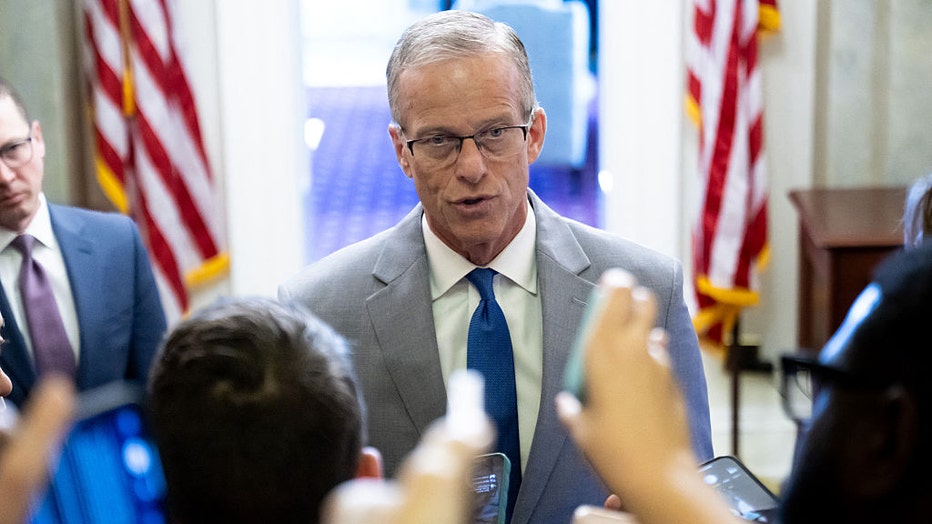
US Senate Majority Leader John Thune, Republican of South Dakota, speaks to reporters on day 37 of the government shutdown, at the US Capitol in Washington, DC, November 6, 2025. (Photo by SAUL LOEB / AFP) (Photo by SAUL LOEB/AFP via Getty Images)
The backstory:
Republicans have been working with the group of moderates as the shutdown continued to disrupt flights nationwide, threaten food assistance for millions of Americans and leave federal workers without pay. But many Democrats have warned their colleagues against giving in, arguing that they can't end the fight without an agreement to extend the health subsidies.
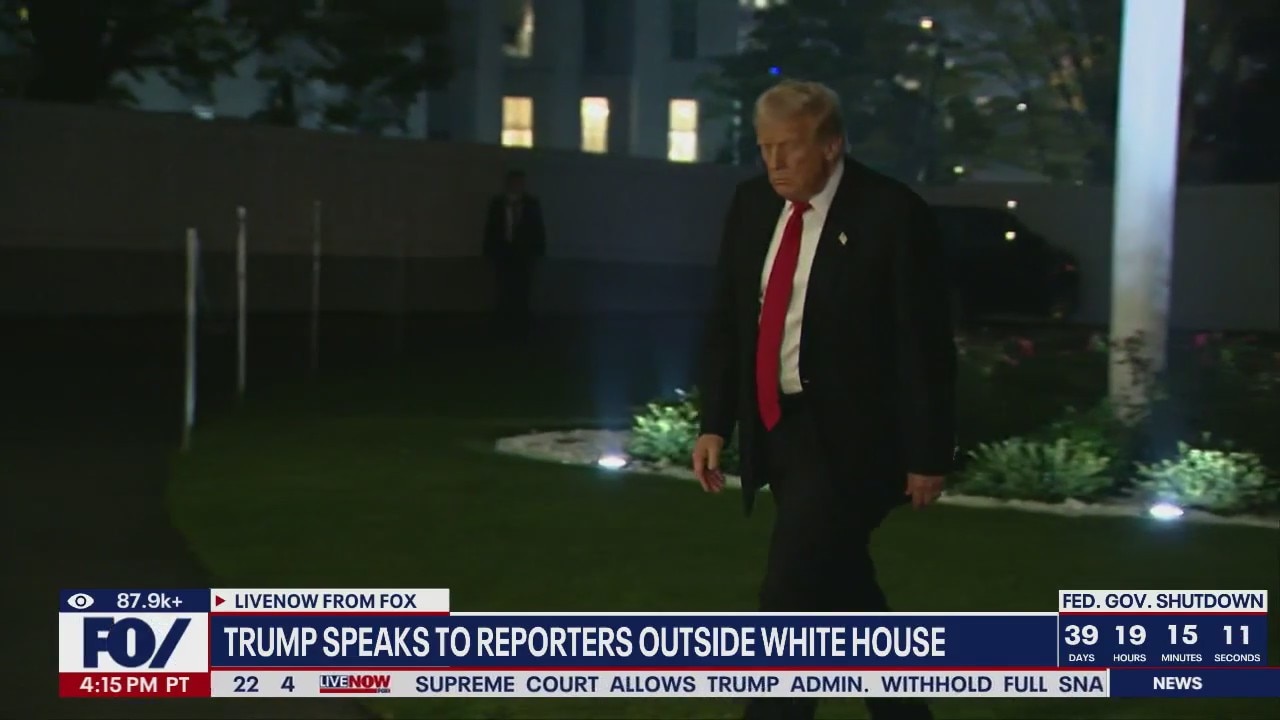
Trump says end of shutdown is 'very close'
While briefly speaking to reporters Sunday evening, President Trump said that it "looks like we’re getting very close to the shutdown ending." The Senate is expected to convene late Sunday for a test vote that could pave the way to ending the shutdown.
Democrats have now voted 14 times not to reopen the government as they demand the extension of tax credits that make coverage more affordable for health plans offered under the Affordable Care Act. Republicans have refused to negotiate on the health care subsidies while the government is closed, but they have so far been supportive of the proposal from moderate Democrats as it emerged over the last several days.
For those enrolled in health exchanges under that law, also known as "Obamacare," premiums on average are expected to more than double next year if Congress allows the enhanced subsidies to lapse.
Progressives slam emerging deal as too weak on health care
The other side:
Republicans only need five votes from Democrats to reopen the government, so a handful of moderate senators could end the shutdown with only the promise of a later vote on health care. Around 10 to 12 Democrats have been involved in the talks, and the three people familiar with the agreement said they had enough votes to join with Republicans and pass the deal.
Many of their Democratic colleagues are saying the emerging deal is not enough.
"I really wanted to get something on health care," said Michigan Sen. Elissa Slotkin. "I'm going to hear about it right now, but it doesn't look like it has something concrete."
House Democrats were also chiming in against it. Texas Rep. Greg Casar, the chairman of the Congressional Progressive Caucus, said a deal that doesn't reduce health care costs is a "betrayal" of millions of Americans who are counting on Democrats to fight.
RELATED: Trump administration tells states to ‘undo’ full SNAP payouts
"Accepting nothing but a pinky promise from Republicans isn’t a compromise — it’s capitulation," Casar said in a post on X. "Millions of families would pay the price."
Rep. Angie Craig of Minnesota posted that "if people believe this is a ‘deal,’ I have a bridge to sell you."
Even if the Senate were to move forward with funding legislation, getting to a final vote could take several days if Democrats who oppose the deal draw out the process. The first vote, which could come as soon as Sunday evening, would be to proceed to consideration of the legislation.
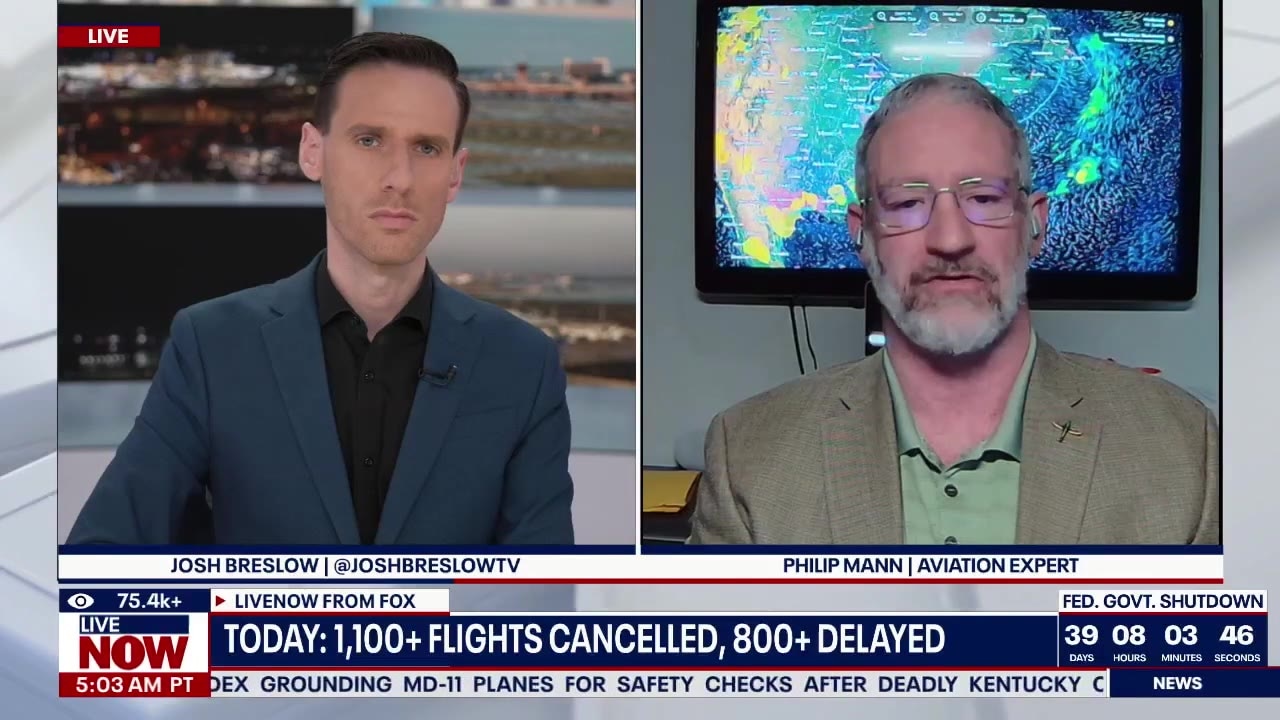
1,200+ flights cancelled, hundreds delayed amid shutdown
More than 1,100 flights were cancelled and hundreds more were delayed Sunday morning as the federal government remained shut down for a 40th day. On Friday, the Federal Aviation Administration instructed airlines to cut 4 percent of flights at 40 major U.S. airports due to staffing shortages caused by the shutdown. Aviation expert at Embry-Riddle Aeronautical University Philip Mann joined LiveNOW from Fox's Josh Breslow to discuss the implications.
Proposed agreement funds key programs, sets up December health care vote
Dig deeper:
Senate Democratic leader Chuck Schumer, D-N.Y., made a public offer to Republicans on Friday to reopen the government and extend expiring health care subsidies for a year. But Republicans immediately rejected it, with Thune calling it a "nonstarter."
The agreement would fund parts of government — food aid, veterans programs and the legislative branch, among other things — and extend funding for everything else until the end of January. And it would take up Republicans on their longstanding offer to hold a future vote on the health care subsidies, with that vote occurring by the middle of December.
It would also include language to reverse some of the Trump administration's mass firings of federal workers that have happened since the shutdown began on Oct. 1.
Alongside the funding fix, Republicans released final legislative text of three full-year spending bills Sunday. That legislation keeps a ban on pay raises for lawmakers but boosts their security by $203.5 million in response to increased threats. There’s also a provision championed by Sen. Mitch McConnell, R-Ky., to prevent the sale of some hemp-based products.
The other side:
There is no guarantee that the Affordable Care Act subsidies would be extended if Republicans agree to a future vote on health care. House Speaker Mike Johnson, R-La., has said he will not commit to a health vote.
Some Republicans have said they are open to extending the COVID-19-era tax credits as premiums could skyrocket for millions of people, but they also want new limits on who can receive the subsidies and argue that the tax dollars for the plans should be routed through individuals.
Other Republicans, including Trump, have used the debate to renew their yearslong criticism of the law and called for it to be scrapped or overhauled.
"THE WORST HEALTHCARE FOR THE HIGHEST PRICE," Trump said of the Affordable Care Act in a post Sunday.
The Source: The Associated Press contributed to this report. The information in this story comes from multiple sources familiar with the ongoing Senate negotiations, including three individuals who spoke on condition of anonymity because the agreement has not been made public. This story was reported from Los Angeles.