

Lubbock's iconic Buddy Holly crosswalks to be removed after Texas DOT mandate
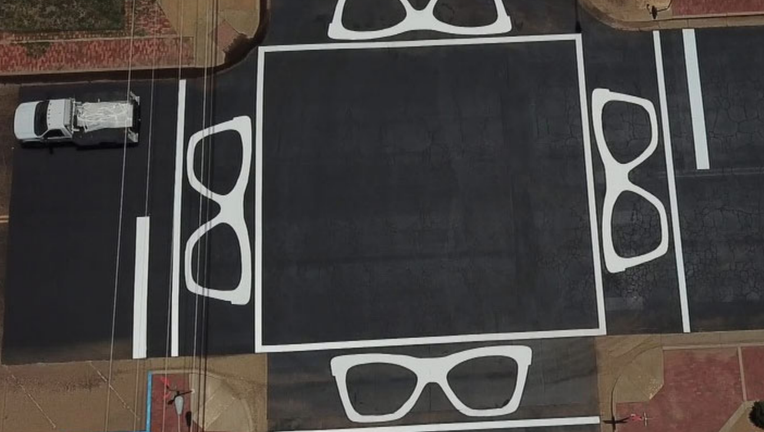
Buddy Holly crosswalks in the Art District in Lubbock (Source: City of Lubbock)
LUBBOCK, Texas - Lubbock city officials announced plans this month to remove decorative crosswalks, including the iconic Buddy Holly glasses design downtown, citing a state directive that enforces federal roadway standards prohibiting artwork and non-traffic-related markings.
The announcement, made during a City Council work session on Nov. 11, comes after the city received a sharply worded letter from the Texas Department of Transportation (TxDOT) on Oct. 8. The letter mandated that all cities and counties remove prohibited markings from roadways within 30 days or submit a removal plan, threatening to withhold or deny state and federal road funding for non-compliance.
Lubbock’s Interim Director of Public Works, David Bragg, explained to the council that the TxDOT mandate enforces a federal safety initiative that requires all markings on a roadway to serve only traffic purposes.
"The state and federal mandates are saying that we cannot have any artwork on the roadways," Bragg said.
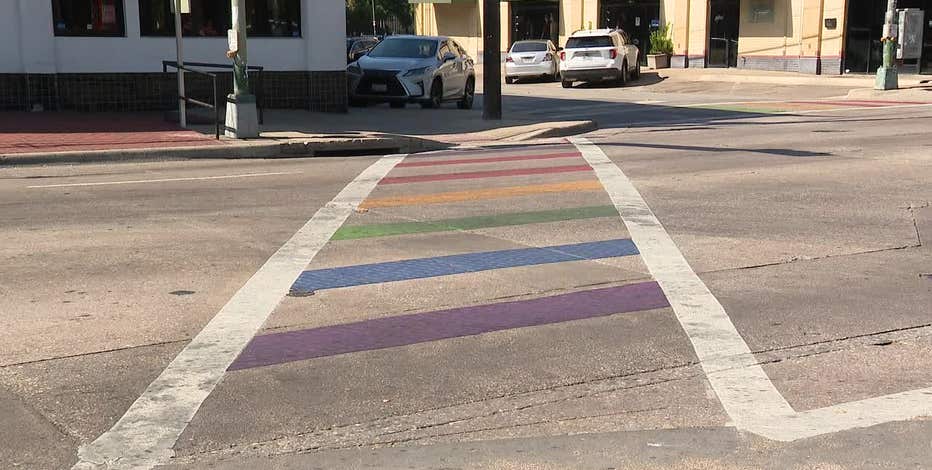
Dallas asks for exemption to order to remove rainbow crosswalks to keep road funding
In the exemption letter, the city manager wrote that the Oak Lawn rainbow crosswalks have not created any safety issues, removing them would require public money not included in the city's budget, and they're a form of self-expression that should be protected.
Federal and state pressure
The TxDOT directive follows a broader national push led by U.S. Transportation Secretary Sean P. Duffy. Secretary Duffy launched the SAFE ROADS (Safe Arterials for Everyone through Reliable Operations and Distraction-Reducing Strategies) initiative, which targets high-fatality arterial roads and calls for the removal of distractions.
"Roads are for safety, not political messages or artwork," Duffy said in a letter to governors, including Texas Gov. Greg Abbott. "I am calling on governors in every state to ensure that roadways, intersections, and crosswalks are kept free of distractions."
What they're saying:
Abbott echoed this sentiment in his own Oct. 8 directive to TxDOT.
"Texans expect their taxpayer dollars to be used wisely, not advance political agendas on Texas roadways," Abbott stated. "Any city that refuses to comply with the federal road standards will face consequences including the withholding or denial of state and federal road funding and suspension of agreements with TxDOT."
Lubbock officials noted they felt compelled to comply to avoid the possibility of TxDOT withholding future funding and to prevent potential liability issues.

Texas cities with 'political agendas' on roads could now be stripped of funding
While the directive does not specify the "political ideologies" that could yank road project funding from cities, the move comes days after a rainbow crosswalk was repainted in a prominent Texas "gayborhood."
Buddy Holly glasses must go
The decision means the removal of the three decorative crosswalks currently installed in Lubbock:
- The Buddy Holly Glasses: Installed in 2020 at 18th Street and Buddy Holly Avenue near the Buddy Holly Center.
- Polka Dots: Installed in 2021 on Mac Davis Lane.
- Mesquite Motif: Installed in 2023 at 23rd Street and Avenue V.

(Source: City of Lubbock) ( )
City officials noted that while they do not believe the mandate was "intended to go after, say, the Buddy Holly glasses," the broad wording of the federal directive leaves them no choice.
"It’s so unfortunate because it's such a tasteful cross-section and people like it," said Lubbock Mayor Pro Tem Christy Martinez-Garcia about the Buddy Holly design.
Featured
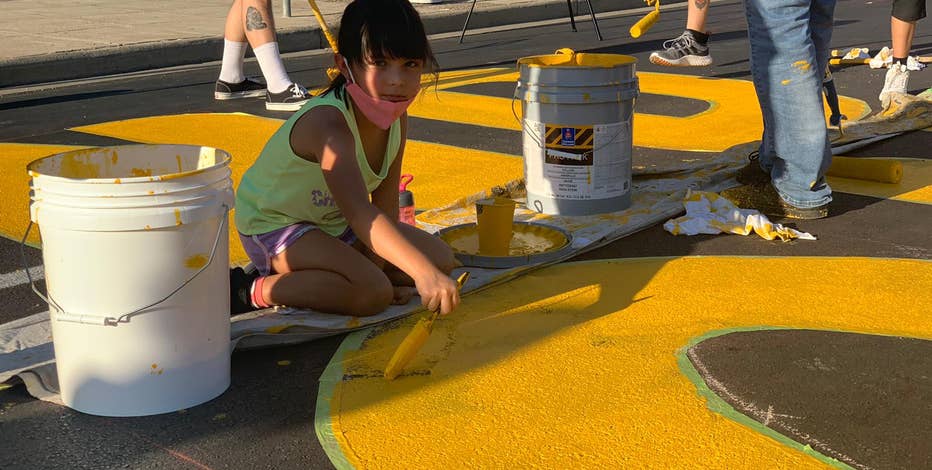
Texas city removes 'Defund the Wall' mural after Abbott's threat to pull road funds
The removal follows a letter to Laredo from the Texas Department of Public Safety, which said the city stood to lose $1.6 billion in funding if they refused to comply.
Lubbock has notified the state that the decorative crosswalks will be removed. City officials stated the work will be phased in over the next year as part of normal street maintenance to minimize costs to the city, which will bear the financial burden of the removal.
The city manager, while expressing regret, noted that the current removal plan is sufficient to meet the state's mandate. Officials also confirmed that the removal order applies only to public streets and does not impact artistic markings or mascots on private property, such as school driveways.
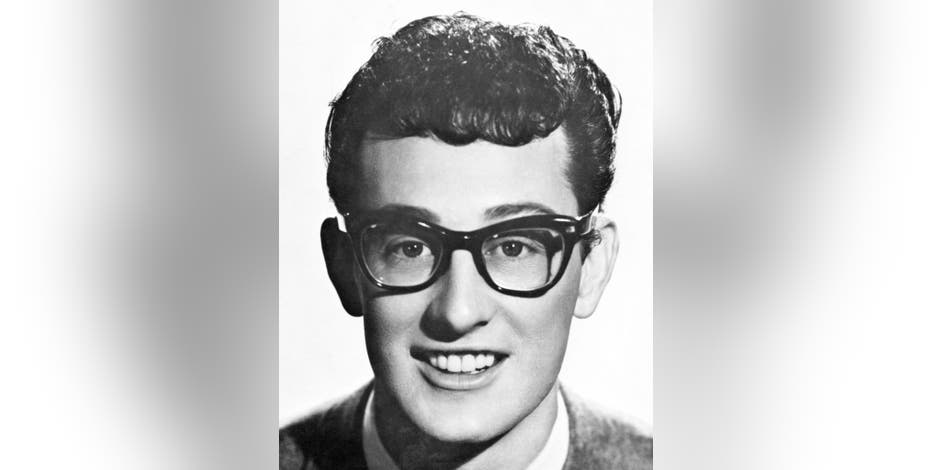
Feb. 3, 2025: 66 years since 'The Day the Music Died'
On February 3, 1959, 22-year-old Buddy Holly, 28-year-old Jiles Perry Richardson Jr., better known by his stage name The Big Bopper, and 17-year-old Ritchie Valens, died in a plane crash along with the pilot Roger Peterson, shortly after takeoff from Clear Lake, Iowa.
Buddy Holly
The Buddy Holly glasses crosswalk is at the intersection of Broadway and Crickets Avenue in Lubbock.
Buddy Holly was from Lubbock, Texas. He was born there in 1936 and spent his childhood and early musical career there.
On Feb. 3, 1959, 22-year-old Buddy Holly, 28-year-old Jiles Perry Richardson Jr., better known by his stage name The Big Bopper, and 17-year-old Ritchie Valens, died in a plane crash along with the pilot Roger Peterson, shortly after takeoff from Clear Lake, Iowa.
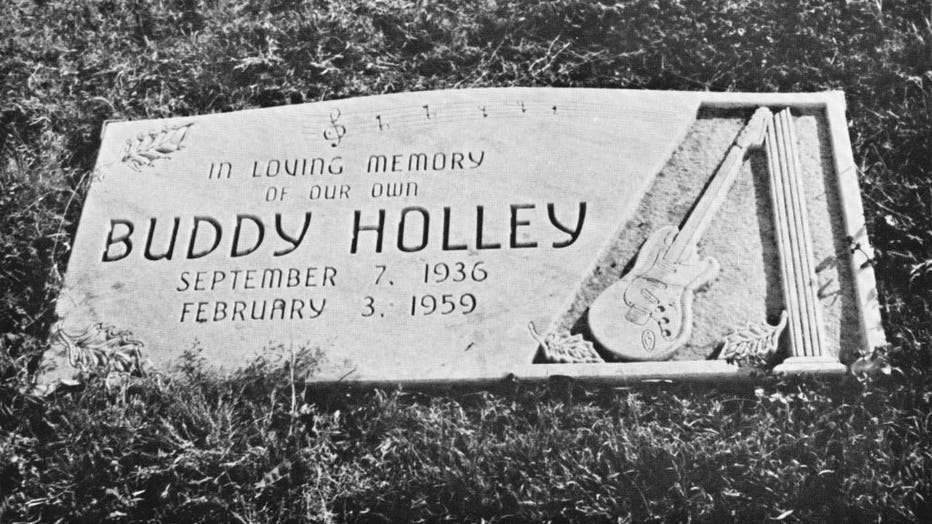
View of American rock and roll musician Buddy Holly's gravestone in Lubbock, Texas, 1975. The gravestone reads 'In loving memory of our own Buddy Holley, September 7, 1936 - February 3, 1959.' (Photo by Hulton Archive/Getty Images)
In 1997, the City of Lubbock purchased an abandoned historical building. The city renovated, restored and expanded it to open the Buddy Holly Center. It houses an extensive collection of Buddy Holly memorabilia, and showcases West Texas musicians. It is a destination spot for Buddy Holly fans from all over the world. There are events each year on Buddy Holly's birthday and on the anniversary of The Day the Music Died.
The music
In 1957, "That'll Be the Day" topped the singles charts in both the U.S. and the U.K. Its success was followed by another major hit, "Peggy Sue."
The Source: Information in this article is from The City of Lubbock, This Day in Music history, and previous FOX Digital coverage.