

Mount Everest guides accused of poisoning climbers to force fake rescues
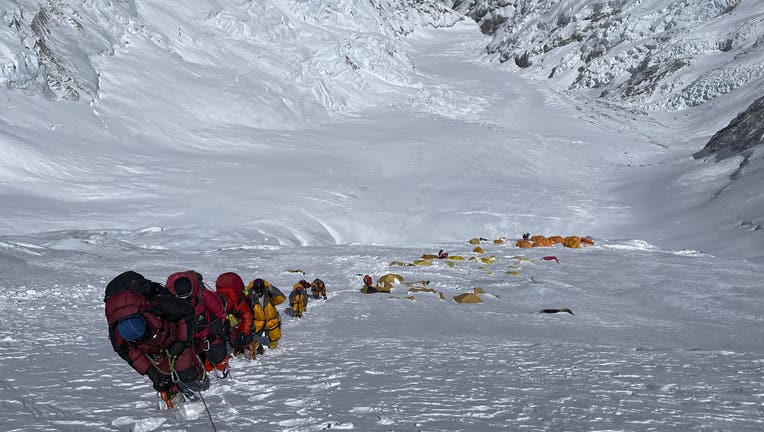
This photograph taken on May 31, 2021 shows mountaineers climbing a slope lined up during their ascend to summit Mount Everest in Nepal. (Photo by LAKPA SHERPA/AFP via Getty Images)
Nearly three dozen people are facing criminal charges for their roles in a sprawling $20 million insurance scam that targeted climbers on Mt. Everest.
In some cases, Nepali guides are accused of poisoning foreign tourists to force emergency evacuations from the world’s tallest mountain. Here’s what we know:
Scandal on Mt. Everest
Big picture view:
According to The Kathmandu Post, the scheme is simple, in theory: fake a medical emergency, call for a helicopter rescue, take the climber to the hospital, then file a false claim with foreign insurance companies that provide coverage to climbers.
But investigators found there were multiple methods for defrauding insurance companies, and some were more disturbing than others. For example, one of the scams involves lying to climbers about the mild altitude sickness they are feeling, telling them they could die unless they are immediately evacuated off the mountain. In some cases, guides gave the climbers pills and mixed baking soda into food to make them feel ill.
RELATED: Mount Everest, the world's tallest mountain, is still growing
Hospitals also took part, writing false medical reports to inflate insurance claims. Video footage from one hospital showed a foreign tourist reported as critically ill drinking beer at a cafe run by one of the doctors.
The people facing charges in the massive scheme include insurance agents and trekking guides, as well as people with ties to helicopter companies, three hospitals and more than a dozen trekking companies, reports say.
By the numbers:
Nearly 4,800 international climbers were targeted between 2022 and 2025, with false claims totaling nearly $20 million.
Dig deeper:
The Kathmandu Post points out that the scam is also not new: the media outlet first exposed it in 2018, which led to a government investigation and eventual reforms. But the reforms didn’t stop the fraud, The Post found. The scam only grew in size and scope in the years following the investigation.
Climbing Everest
The backstory:
Thousands of climbers come to Nepal every year to scale the highest Himalayan mountains, while tens of thousands more also come to hike the mountain trails leading up to the base camps of these high peaks.
RELATED: Who was the first person to climb Mt. Everest? Facts about conquering Earth's highest point
Every year several climbers die and hundreds are rescued suffering from extreme exhaustion, altitude sickness or other medical issues.
There are few roads and limited medical facilities in the mountains, so rescuers are often forced to charter expensive helicopter flights to transport patients to hospitals in Nepal’s capital Kathmandu.
High altitude climbers are required to show proof of insurance covering helicopter rescue before they are issued climbing permits.
The Source: This report includes information from The Kathmandu Post and The Associated Press.