

Islamic school exclusion from Texas voucher program is 'religious gerrymandering,' lawsuit alleges
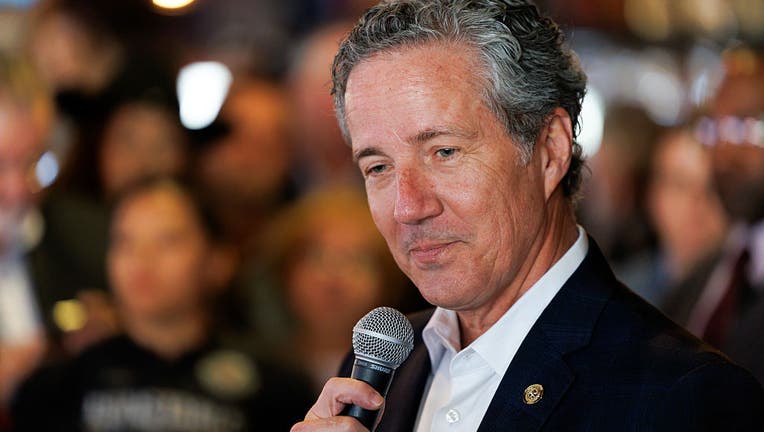
Kelly Hancock, acting Texas comptroller of public accounts, speaks during a Get Out The Vote rally with Texas Governor Greg Abbott, not pictured, at Cypress Trail Hideout in Cypress, Texas, US, on Tuesday, Feb. 17, 2026. Since first winning election
HOUSTON - A Muslim parent is suing a number of Texas officials, alleging they have categorically excluded Islamic private schools from the state's school voucher program.
The lawsuit names acting Comptroller Kelly Hancock, Attorney General Ken Paxton and state education commissioner Mike Morath.
Harris County parent Mehdi Cherkaoui claims the school where his two children attend, Houston Qur'an Academy Spring, is being blocked from the state program because of its "Islamic religious identity" and Hancock's "impermissible religious gerrymanders." The filing goes on to say the school meets the neutral requirements for inclusion in the voucher program.
The lawsuit claims the comptroller is using Gov. Greg Abbott's designation of the Council on American-Islamic Relations as a terrorist organization and a school having "Islamic ties" to deny the entry of any Islamic school to the Texas Education Freedom Accounts program.
What they're saying:
"HQA Spring has hosted or permitted use of its facilities for community events, including educational ‘Know Your Rights’ presentations open to parents and students regarding civil rights and legal protections available under U.S. law—the type of civic engagement and community service routinely hosted by religious institutions of all denominations," the lawsuit states.
Court documents state that no Islamic school had been approved as a school for the voucher program when the application process opened for parents on Feb. 4.
"The exclusion is not based on individualized findings of unlawful conduct by any specific school, but rather on categorical presumptions that Islamic schools are suspect and potentially linked to terrorism by virtue of their religious identity and community associations," court documents state.
The lawsuit names Hancock in his official role as comptroller since he administers the TEFA program. Paxton is named as a defendant because of a legal opinion in response to Hancock asking about exclusion authority. The lawsuit names Morath in his role as education commissioner because the office sets state standards for private schools.
Cherkaoui said he pays $17,910 per year for his children to attend the school and that his children's tuition would be covered if the school was accepted into the program, and he were eligible for the voucher program.
He's asking the court to order that the school's application to TEFA be processed "under the same neutral, non-discriminatory standards applied to non-Islamic private schools." The deadline for parents to enroll their children in the voucher program is March 17.
Texas lawmakers accuse comptroller of excluding Islamic schools
The lawsuit comes after Texas Democrats sent a letter to Hancock accusing the acting comptroller of using blanket exclusion to block Islamic schools from joining the program.
Hancock had previously asked Attorney General Ken Paxton for a legal opinion on the agency's authority to determine the eligibility of certain private schools in the program.
"The people of Texas deserve the highest assurance that no taxpayer dollars will be used, directly or indirectly, to support institutions with ties to a foreign terrorist organization, a transnational criminal network, or any adversarial foreign government," the request said.
In January, Paxton issued an opinion stating the Comptroller's Office has the full authority to prohibit schools under the "other relevant law[s]" provision of Senate Bill 2.
"Let me be crystal clear: Texans’ tax dollars should never fund Islamic terrorists or America’s enemies," Paxton said of the opinion. "The Comptroller’s Office has always possessed exclusive authority under the TEFA framework to stop any school illegally tied to terrorists or foreign adversaries from accessing taxpayer dollars, and this opinion affirms that authority. There is no question that the Comptroller’s Office is statutorily charged with ensuring that our school choice program is protected from abuse by terrorists or the Chinese Communist Party."
While the attorney general's opinions are not legally binding, they are used as guidance by state agencies.
Paxton's opinion came in response to Hancock's question over whether schools that had hosted events for the Council on American-Islamic Relations or had alleged ties to the Chinese government could be banned from the program.
Governor Greg Abbott designated CAIR as a terrorist organization in November. The group has since filed a lawsuit claiming the proclamation is based on "defamatory" and "provably false statements."
Lawmakers said multiple Islamic schools have been denied or removed from TEFA eligibility "despite having no affiliation with CAIR or any designated organization cited in generalized alligations."
School choice in Texas
The Texas Legislature passed Senate Bill 2 in April, carving out $1 billion for the program in its first year.
Most parents who qualify can receive up to nearly $10,500 each year in public money for their child to go to private school.
The program will be capped at 90,000 students statewide. The education savings accounts will be given on a priority scale, so lower-income households and students with special needs will get priority first for the funds.
Applications for students opened on Feb. 4. According to the Comptroller's Office, more than 100,000 students applied in the first two weeks.
The Source: Information in this article comes from filings in federal court in the Southern District of Texas. Backstory on the school voucher program comes from previous FOX Local reporting.