

What are portable, assumable mortgages?
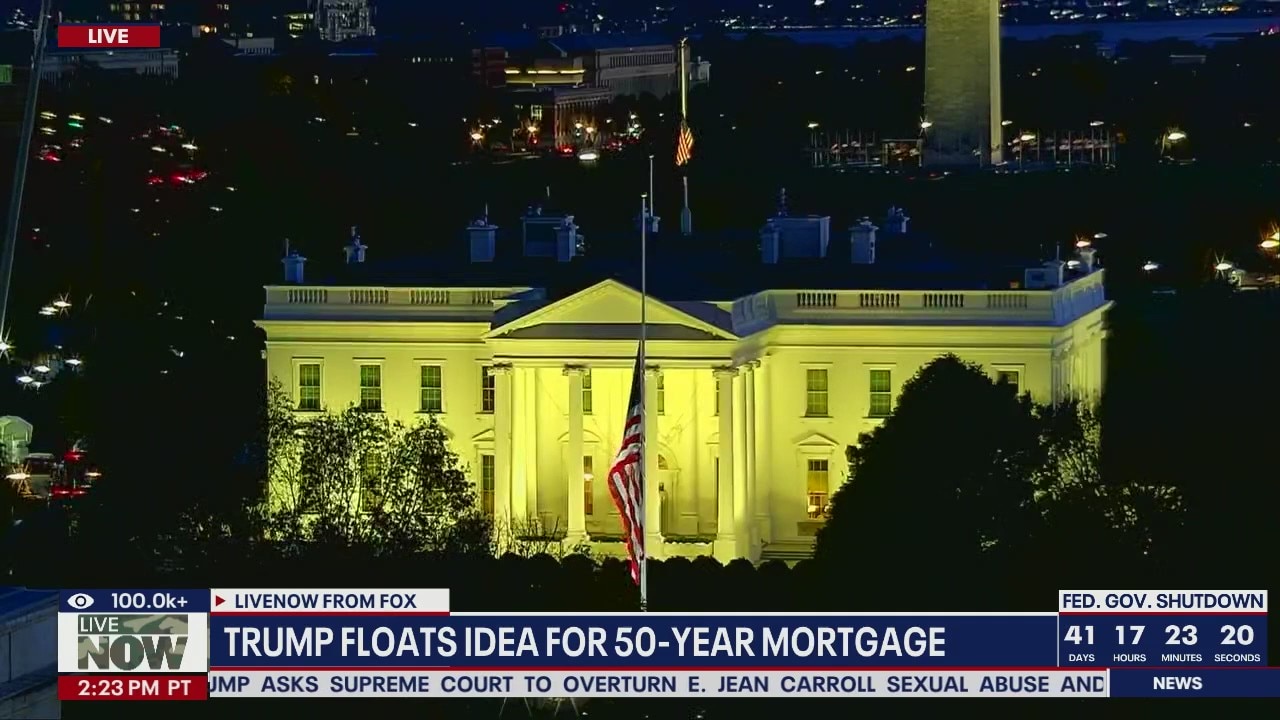
White House furious over 50-year mortgage blowback
White House officials show frustration towards Bill Pulte, the Federal Housing Finance Agency director, who talked President Trump into suggesting a 50-year mortgage plan. Politico reporter Cassandra Dumay joins LiveNOW's Mike Pache with more insight.
Most people who take out mortgages go with a 15 or 30-year term. But over the weekend, President Trump floated the idea of introducing a 50-year mortgage option for homebuyers, and William Pulte, the Federal Housing Finance Agency director, said the administration was also actively evaluating assumable and portable mortgages.
All the ideas aim to address the same problem: a housing market frozen by affordability pressures and a lack of mobility.
But what are portable and assumable mortgages, and would they make affording a home more attainable for some Americans?
What is a portable mortgage?
Big picture view:
With a portable mortgage, a homeowner can transfer their current mortgage to another property while keeping the same interest rate and overall terms. It means that when you move from one house to another, you can take the original house’s mortgage with you.
Right now, portable mortgages aren’t typically an option in the U.S. but are widely available in Canada.
One reason they work there is that their fixed-rate periods are much shorter – typically three or five years – so homeowners are incentivized to regularly renegotiate their loans, according to Realtor.com.
By the numbers:
While the idea sounds simple in theory, it gets more complicated in practice.
For example, suppose you have a $500,000 mortgage at a 4% interest rate and have built $300,000 in equity. If you buy a $400,000 home, you could transfer your existing loan to the new property and keep your 4% rate intact.
But if you’re purchasing a more expensive home – say, $750,000 – your portable mortgage would only cover the remaining balance of your original loan. You’d have to make up the $250,000 difference with cash or a second loan, likely at higher rates.
What they're saying:
According to Matt Schulz, a LendingTree finance analyst, a portable mortgage is a great option for someone whose current mortgage rate is far better than the rate they’d be able to get on a new mortgage.
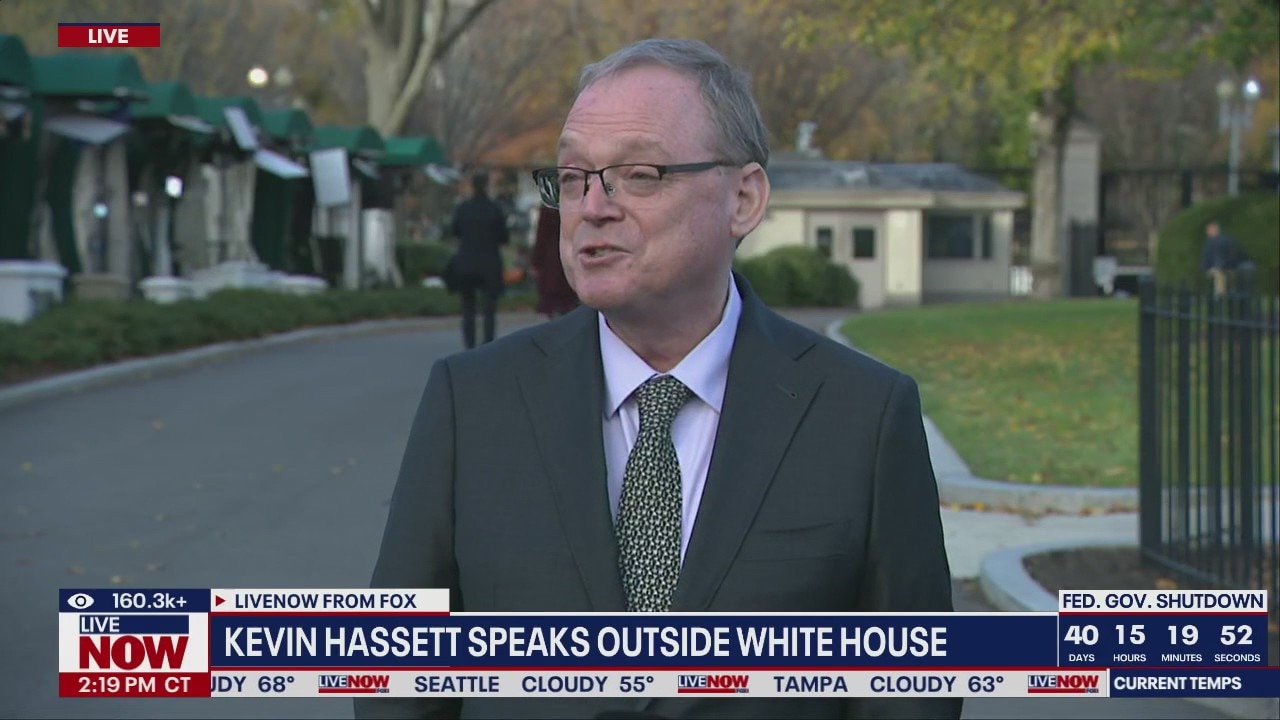
Trump admin. details 50-year mortgage idea
Kevin Hassett, an economic advisor to President Trump, spoke to reporters outside of the White House on Monday. Hassett was asked about several economic headlines, including Trump's 50-year mortgage idea.
"That’s surely the case for many Americans who’ve bought homes in recent years," Schulz said, adding, "Today’s higher rates have left people feeling locked into their current mortgages, afraid to jump back into the housing market because of high rates. If they could take their current rate with them, however, people might be less reluctant to move."
The other side:
Jake Krimmel, senior economist at Realtor.com, agreed: "There’s no doubt that, if magically implemented overnight, the portable mortgage would enable many families to move and thereby free up some more inventory as a result. And to be clear, getting the housing market more liquid again and letting families reoptimize their housing choices is no bad thing."
But he said all that magic comes with a price, and first-time homebuyers and the mortgage industry more broadly, are likely to be the first to pay.
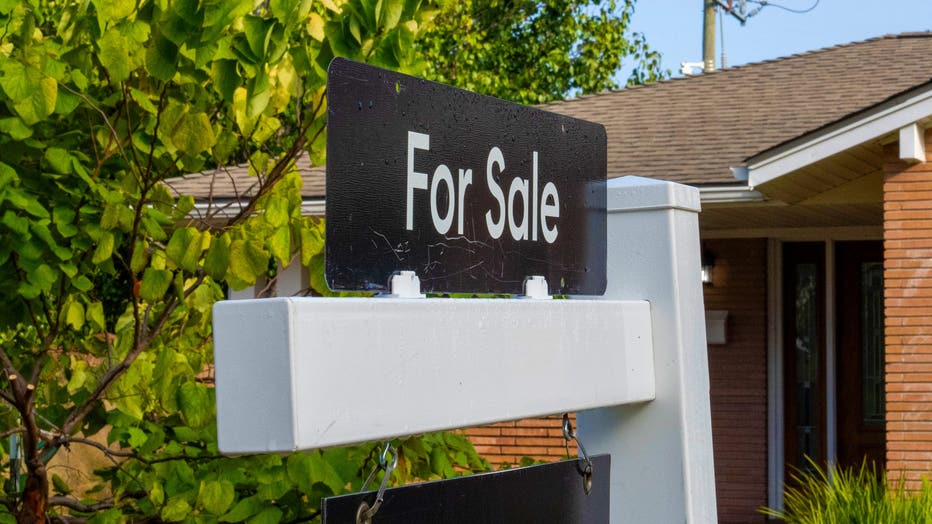
A for sale sign is seen in front of a house in a Spring Branch neighborhood in Houston, Monday, Oct. 27, 2025. (Credit: Kirk Sides/Houston Chronicle via Getty Images)
For one, Krimmel expects that the favorable financing of some would push home prices up for all by increasing buying power, much like what happened during the pandemic housing boom.
"Meanwhile, current renters or homeowners without a mortgage would still face today’s high rates – only with list prices higher than they are now due to the influx of cheap-financed demand," he added.
Mortgage-backed securities (MBS) would likely be hit hard, too. This financing tool allows banks to pool together groups of mortgages, then sell shares of that pool to investors. Banks then use that money to fund more mortgages.
RELATED: 50-year mortgage: Housing director calls Trump’s idea ‘complete game changer
"If a mortgage became portable, the collateral (and therefore the risk profile of the entire pool) could change midstream. That breaks the current models of securitization," Krimmel said.
And while investors and securitizers could presumably find workarounds, Krimmel says that higher risk typically carries higher interest rates. If borrowers can carry a single loan with a low rate far into the future, fewer loans would reset, fewer mortgages would be refinanced, and fewer new loans would enter the system.
What is an assumable mortgage?
Big picture view:
Meanwhile, with an assumable mortgage, someone who buys a home can take over the existing mortgage from the seller.
Conventional loans typically aren’t assumable in the U.S., but government-backed loans, such as an FHA or VA loan, might be, Schulz noted.
What they're saying:
"An assumable mortgage could be a great way for a seller to drum up more interest from buyers," Schulz explained. "If you’re able to deliver a well-below-market rate to a buyer, it can be a real differentiator. From the buyer’s perspective, if you’re able to purchase a home with a rate that’s a lot lower than today’s typical rates, it can be hard to pass up."
The other side:
But Schulz noted that one major downside of assuming a mortgage is that it might require a large down payment.
"That's because when you assume a mortgage, you typically need to pay the seller for their equity. If you don't have the cash available to do that upfront, it may require a second mortgage, and the rate on that mortgage may not be as good as the one you're assuming. Also, in many cases, the seller is still legally responsible for the mortgage that the buyer assumed," he said.
Trump administration addresses housing affordability
The backstory:
The administration stepped up efforts to address housing affordability this past week, with Pulte talking on social media about portable and assumable mortgages.
He responded to a suggestion to make mortgage rates assumable, saying, "At Fannie and Freddie, we are evaluating how to do assumable or portable mortgages, in a safe and sound manner." Fannie and Freddie refers to Fannie Mae, the Federal National Mortgage Association, and Freddie Mac, the Federal Home Loan Mortgage Corporation. Pulte oversees both agencies.
Big picture view:
The U.S. housing market has been in a slump since early 2022, when mortgage rates began to climb from pandemic-era lows. Home sales fell last year to their lowest level in nearly 30 years. They’ve remained sluggish so far this year, as elevated mortgage rates and rising prices keep would-be homebuyers on the sidelines.
The Source: The Source: Information in this article was taken from social media posts from President Donald Trump and William Pulte, Realtor.com, and LendingTree analysis statements. Background information was taken from sample amortization calculator, and previous FOX Television Station and Associated Press reportings on the housing market. This story was reported from Los Angeles.