

Cyclosporiasis in Texas: What to know and what you can do

Officials warn of Cyclosporiasis outbreak in Texas
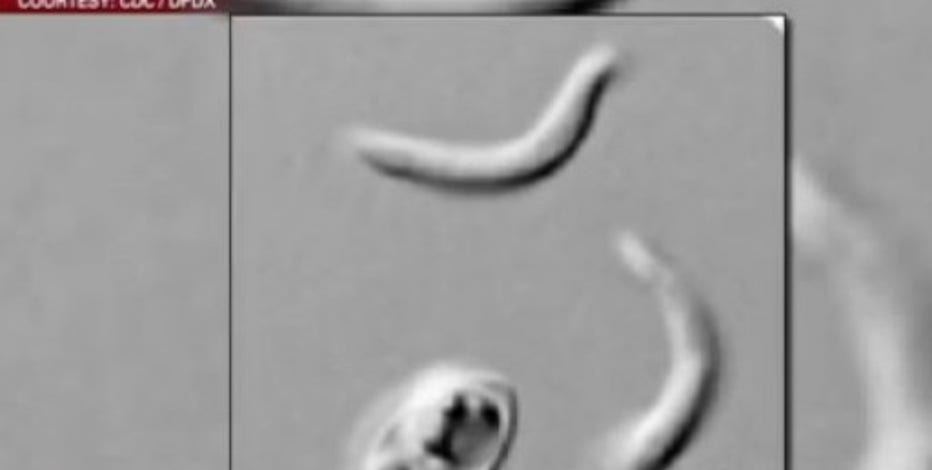
Texas is reporting dozens of cases of Cycloporiasis, which is a disease caused by a parasite that can result in explosive diarrhea.
TEXAS - Texas is reporting dozens of cases of Cyclosporiasis, which is a disease caused by a parasite that can result in explosive diarrhea.
By the numbers:
Texas is one of 17 states reporting cases.
The parasite is not new. There tend to be spikes in the summer, and it is mostly spread through produce contaminated by feces.
Featured

Cyclosporiasis in Texas: List of foods linked to some outbreaks
A Cyclosporiasis outbreak across the U.S. continues, and Texas is among more than a dozen states reporting cases of the parasite that can cause explosive diarrhea.
The Texas Department of State Health Services says as of July 6, there have been 48 cases of Cyclosporiasis reported since May 1. Most cases are in south and southeast Texas.
DSHS says there have been five hospitalizations throughout the state and no deaths.
What they're saying:
Heather Cooks-Sinclar is the epidemiology and disease surveillance unit manager at Austin Public Health.
"We've had a handful of cases that have been reported, most of which have been associated with travel to Central Mexico," she said.
Dr. Amanda Norwood is the medical director at Williamson County and Cities Health District.
"There are some parts of the country that are experiencing, from what I see, atypical rises in their cases. Here in Williamson County, we have not experienced a rise above our typical threshold for this time of the year. That's something that we're monitoring for closely," she said.
A produce source for the Texas cases has not been identified.
"It's really about the produce and what is happening when it is being grown. Is it being contaminated in the fields where they're being grown, and then being sent up north and so, that's why you see it in certain areas, but not others, because certain producers send their produce to certain locations in the United States," Cooks-Sinclair said.
What you can do:
Austin Public Health says in the past, the parasite has been found on cilantro, lettuce, and raspberries.
Make sure you're thoroughly washing your produce, as well as preparation surfaces. Cyclospora is microscopic, so you can't see it.
"We recommend washing all fresh produce, so that's your salads, your lettuce, cilantro, any fresh fruit, fresh vegetables. Wash it, even if it says it's been pre-washed, it never hurts to wash it again," Norwood said.
The parasite does not spread person-to-person. The parasite's life cycle is spent both inside and outside a human body.
"Once it's inside the person's body, it completes its life cycle. What will happen is when you have your diarrhea, it's usually the organism's way of releasing out the next stage of the cycle," Cooks-Sinclair said.
Featured
Cyclosporiasis outbreak being investigated by Austin Public Health
Officials say that they have yet to identify a single source for the Travis County outbreak.
Symptoms include frequent watery diarrhea that could last for weeks, nausea, and fatigue. If you have symptoms, go to your doctor. Doctors can test for the parasite, and it can be treated with antibiotics. Local health departments talk to patients to see if there's a common food source. They work with state and federal agencies, who then decide if any food needs to be banned.
Cooks-Sinclair says she worked on an outbreak in 2015, where cilantro was bringing the parasite to the U.S., and it was traced to an area in Mexico.
"They went to the fields and saw toilet paper in the fields, so it is more likely that it's being from a human contaminating the fields than it would be from an animal," she said.
The Source: Information from interviews conducted by FOX 7 Austin's Angela Shen