

Inside NASA's plan to explore underground lunar caves that one day could shelter astronaunts
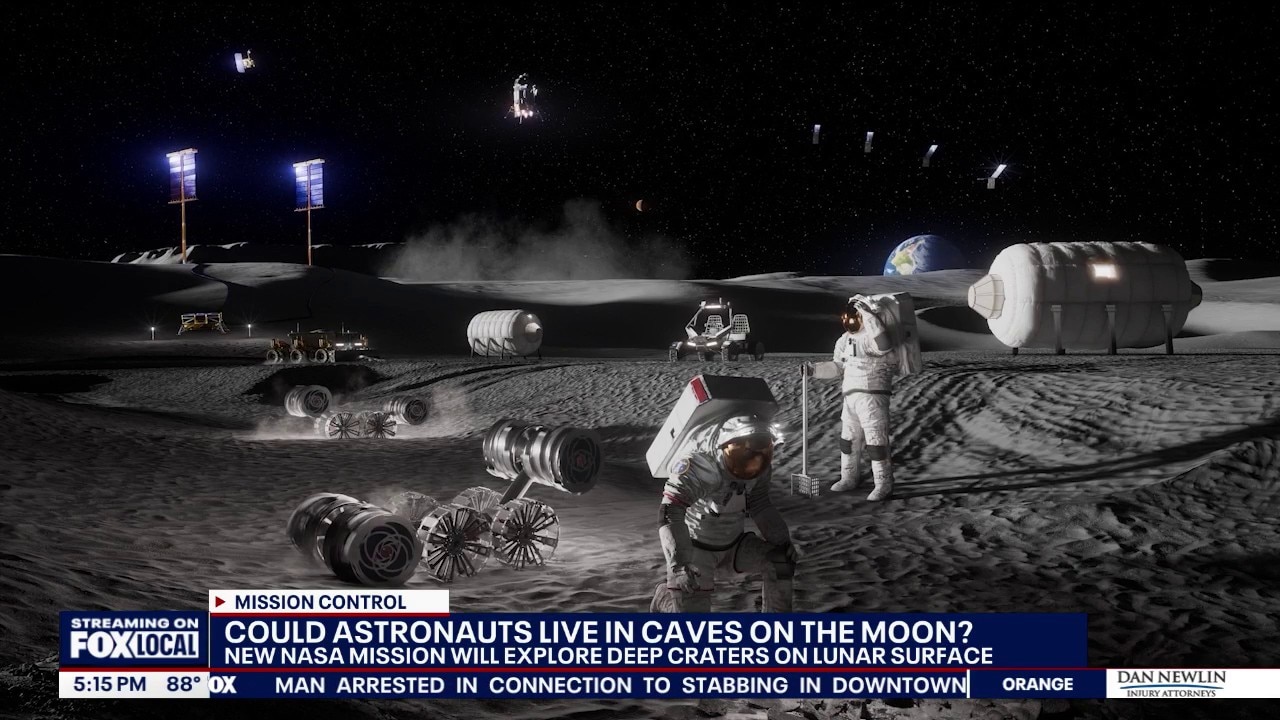
NASA wants to explore moon caves that one day could shelter astronaunts
NASA is planning a mission to investigate potential caves beneath the moon's surface that researchers say could eventually provide natural shelter for astronauts.
KENNEDY SPACE CENTER, Fla. - NASA is preparing to explore deep craters on the moon, known as the Marius Hills pit, to determine if ancient underground caves could provide shelter for future astronauts.
Lunar cave exploration
What we know:
NASA is targeting the Marius Hills pit on the lunar surface, where caves were formed billions of years ago by flowing lava. Because volcanic activity on the moon has ceased, the empty lava tubes could offer a safe space for astronauts to live and work.
According to Dr. Don Platt, director of the Spaceport Education Center at Florida Tech, underground caves could shield astronauts from dangerous radiation and fast-moving micrometeoroids landing on the surface.
"A cave could provide shelter or shielding if you will," said Platt.
Advanced lunar tools
The backstory:
NASA is collaborating with the Planetary Science Institute and Honeybee Robotics to develop specialized instruments for the mission. Researchers plan to use ground-penetrating radar, seismic sensors, a gravimeter, and specialized cameras to look beneath the surface and examine pit walls remotely before sending astronauts into the caves.
The investigation is connected to the broader moon base program, with NASA taking steps toward building out infrastructure as soon as next year.
Mission timeline details
What we don't know:
An official launch date for the cave exploration mission has not yet been announced. Officials have also not yet determined how deep the Marius Hills cave goes or if its internal environment is immediately suitable for human habitation.
The Source: The information in this story was gathered from a media release including information from NASA, the Planetary Science Institute, Honeybee Robotics. FOX 35 Reporter Esther Bower also conducted an interview with a Florida Tech space expert.