

Maps: New Orleans before & after Hurricane Katrina's floods
NEW ORLEANS - Hurricane Katrina swept through New Orleans 20 years ago, overpowering the city’s levees and seawalls in a matter of hours.
Thousands of people fled to higher ground or rooftops to escape the dangerous storm surge and, later, the sewage- and chemical-contaminated floodwaters.
Why you should care:
Ultimately, over 1,000 people died in Louisiana as a result of the storm. The scope of the flooding – and the days-long struggle of those caught in it – became a defining event for the first part of the century.
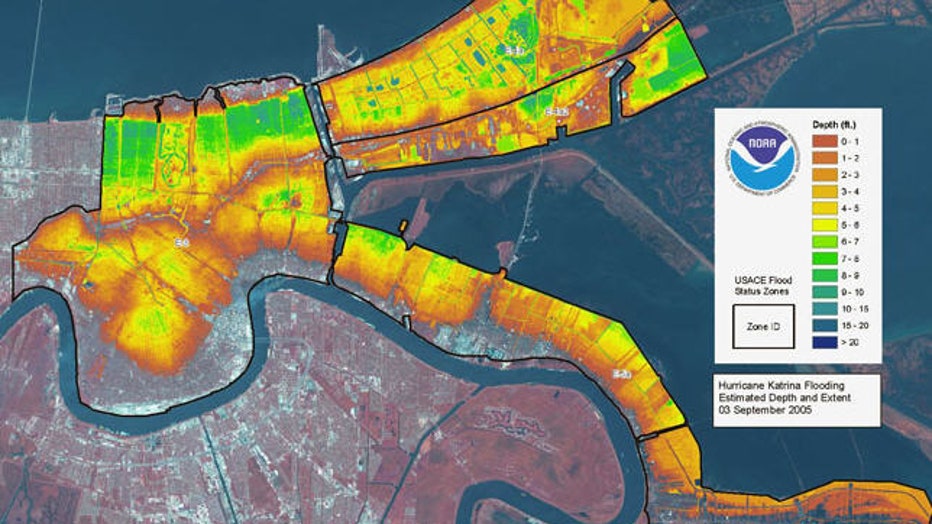
LIDAR map showing depth of New Orleans flooding caused by Hurricane Katrina, September 3, 2005. (NOAA)
Why did New Orleans flood?
Dig deeper:
New Orleans is famously below sea level, with Lake Pontchartrain to the north and the Mississippi River to the south. The water is held back mostly by levees, which are walls of earth.
When the storm eroded small sections of those levees along the shores and canals, "gravity took its course," as NASA later explained, and water flowed through the breaches for days.
Tap or slide to interact:
How badly did New Orleans flood?
By the numbers:
Roughly 80 percent of the city flooded, the EPA noted, with some areas under as much as 20 feet of water.
According to NOAA, 103,513 housing units had at least 2 feet of water in them, which is nearly half of the units in the city. Nearly 20,000 housing units were flooded by an astonishing 7 feet of water, or more.
RELATED: How hurricane forecasting has changed since Katrina
How did they get the water out?
Timeline:
Water was still flowing from Pontchartrain into New Orleans as of August 31, and many houses remained swamped up to their rooftops. To dry the city, the U.S. Army Corps of Engineers conducted emergency repairs to the levees – dropping giant sandbags from military helicopters – followed by weeks of pumping.
The first pumps were turned on September 5. Satellite images showed much of the city was still filled with dark floodwater on September 6. Two days later, imagery showed much of the water remained, but there was noticeable progress.
Even though Hurricane Rita reflooded almost 40 percent of the city in late September, dewatering was complete on October 11, 2005 – 43 days after the storm.
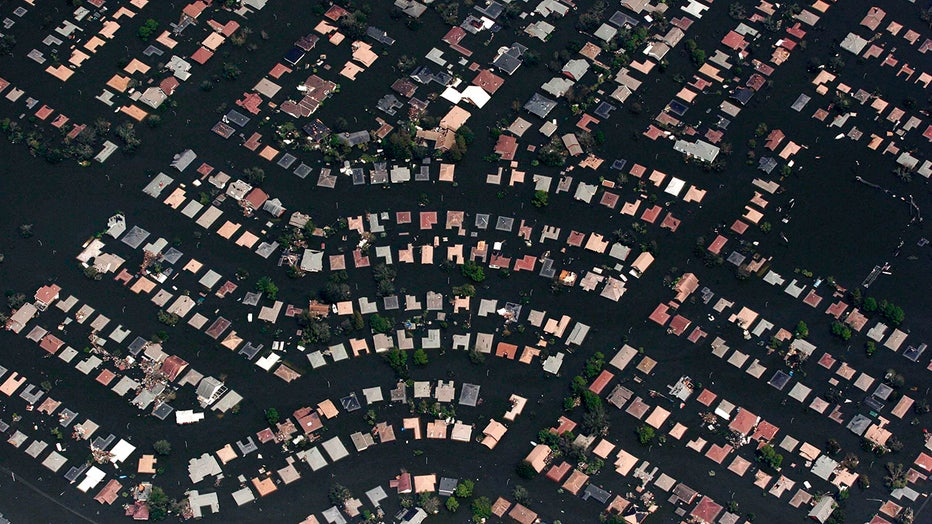
A neighborhood east of downtown New Orleans remains flooded August 30, 2005 in flight over Louisiana. (Photo by Dave Einsel/Getty Images)
RELATED: 20 years ago, the National Weather Service issued its most chilling warning ever
The Source: Information for this story came from post-storm reports by the EPA, the National Weather Service, and the city of New Orleans, along with satellite images interpreted by the USGS, NASA, and NOAA.