

Poll: Americans worry over gas and energy prices limited in early days of Iran war
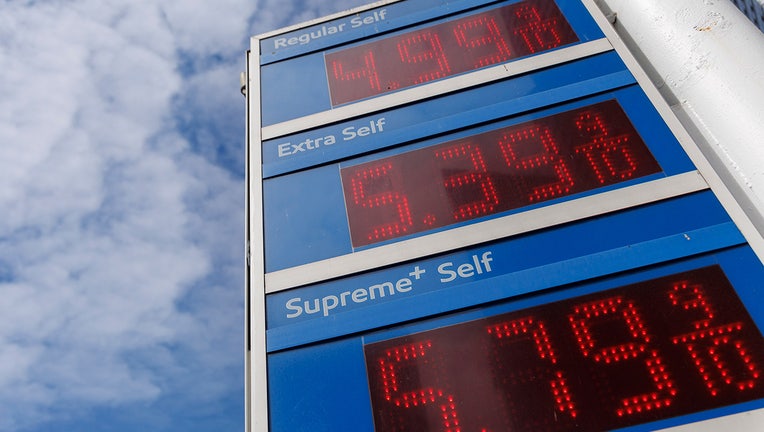
Prices are posted at a gas station in Downtown Brooklyn on March 18, 2026, in New York, United States. The war in the Middle East is influencing oil prices, reaching their highest level since 2023. This follows the closure of the Strait of Hormuz, a
A new poll finds Americans' concern about gas prices and whether energy would be available or affordable did not rise much during the early weeks of the Iran war.
Newly released Gallup numbers show the percentage of U.S. adults who said they worried "a great deal" about the availability and affordability of energy (35%) had not moved from the same time last year.
Additionally, the 43% of Americans who worried the nation faced a critical energy shortage in the next five years was lower than during other periods of high gas prices.
Big picture view:
The poll offers a glimpse of American sentiment during the early stages of the war. Gallup noted that the survey began two days after the United States and Israel went to war with Iran. Over the past month, the cost of gas has risen approximately one dollar per gallon and much of the shipping through the Strait of Hormuz has been disrupted.
Pollsters wrapped up their survey on March 18, meaning respondents were interviewed at some time during the first two and a half weeks of the conflict, and any reactions to the events of the past eight days would not be reflected.
RELATED: Trump administration waives gasoline regulations in bid to lower prices: What to know
Dig deeper:
The last time gasoline prices spiked in the U.S., nearly half of Americans acknowledged having a great deal of worry over energy costs and availability.
The 47% peak recorded at that time, in 2022, matched similar times drivers were experiencing pain at the pump, Gallup said, pointing to examples in 2006, 2008, and 2011. When gas prices are low, that number can fall below the 30% mark.
When researchers asked respondents what they thought was the most important problem facing the nation, only two percent said gas prices.
Gallup explained that this question is asked as an open-ended one, so it is meant to be a gauge of top-of-mind concerns.
While the two percent number is higher than the half-percent mark where gas prices had been trending, it is still very far behind the leading issues: government (15%), the economy (14%), immigration (14%), and inflation (10%).
What they're saying:
Noting how the concern about the United States’ energy situation has not risen to a similar degree to previous spikes in fuel costs, Gallup researchers postulated that "it is possible that many Americans expect the energy price disruptions to be temporary, so they are not concerned about any short-term impact."
"Those attitudes could change if prices remain higher for a sustained period, which likely depends on whether the U.S., Israel, and Iran find a quick resolution to the conflict that is now in its fourth week."
The Source: This story is written with information from Gallup. This story was reported from Orlando.