

Neighbors work to save 'Fairy Alley' from being repaved

Neighbors fight to save 'fairy alley'
Several spots are in jeopardy of being covered up in Austin as part of the state’s plan to get rid of all street artwork. A South Austin neighborhood street alley, known as Fairy Alley, is asking the state to make an exception and leave the fairies alone.
AUSTIN, Texas - Several spots are in jeopardy of being covered up in Austin as part of the state’s plan to get rid of all street artwork.
A South Austin neighborhood street alley, known as Fairy Alley, is asking the state to make an exception and leave the fairies alone.
What is Fairy Alley?
The backstory:
Fairy Alley is a place where neighbors go to express themselves or bring their children to play. While there is nothing political behind it, Fairy Alley is one of the places the state plans to pave over.
"I first bought this house in 1996, and at the time, this alley was quite dangerous, actually," said Suvi Aika, the artist behind Fairy Alley. "A lot of people did drugs there."
The outline of the vibrant street that exists today began to form about 20 years ago, when her son came into the picture.
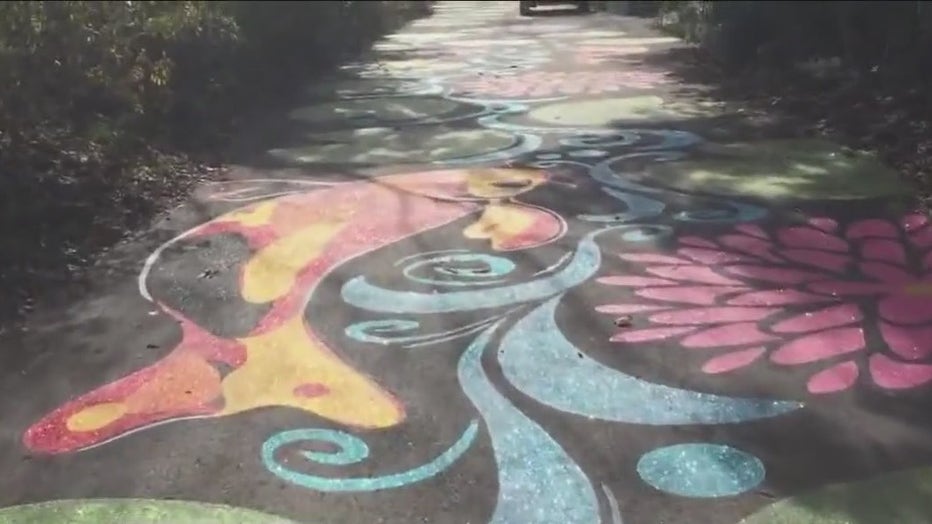
"I want him to grow up next to something beautiful," said Aika. "I just started slowly cleaning it up, and I did not have a master plan or anything. It just all came together little by little."
A friend gave Aika a fairy door, and it took off from there. People began adding other trinkets and decorations or bringing chalk to draw on the sidewalk.
"We've come and given it new life because it is a space that we value and want to support and keep alive," said Sophia DeLoretto-Chudy, a neighbor.
Dig deeper:
However, Fairy Alley could soon be erased along with more than a dozen other painted crosswalks and street murals, including "Texas" on the Drag and "Black Artists Matter" on East 11th.
"That's supposed to be our whole thing, keep Austin weird, and if we get rid of spaces like this, then what are we doing? You're just putting black asphalt over artwork, that is absolutely not the ethos of Austin," said DeLoretto-Chudy.
Transportation Secretary Sean Duffy announced the SAFE Roads Initiative to keep intersections "free from distractions." It includes political messages, artwork, or any other non-standard markings that could compromise safety.
"It is a city-approved project," said DeLoretto-Chudy. "It's not just graffiti by any means. And so, it's really confusing to us, especially because it isn't in a crosswalk. It doesn't have political significance."
The city paid to conduct a safety study. It found that places with street art have a 50% crash rate reduction involving pedestrians and a 17% reduction in crashes overall.
"I do think that if they black tar the entire thing, people will just automatically drive faster without really pausing to look for children," said Aika.
Paving over all identified locations in Austin is estimated to cost between $125,000 and $140,000. The money would come from the Austin Transportation and Public Works operating budget, which is funded mainly through the Transportation User Fee.
"I'm sure they don't realize the broken hearts they will leave behind of all the children who enjoy the space and adults," said Aika.
What's next:
Any jurisdictions that do not comply with the order could face losing federal funds.
Austin Transportation and Public Works submitted an official exception request to TxDOT two weeks ago. According to the city, it has not yet received a response.
The Source: Information from interviews conducted by FOX 7 Austin's Katie Pratt