

Texas leaders react after Supreme Court upholds birthright citizenship
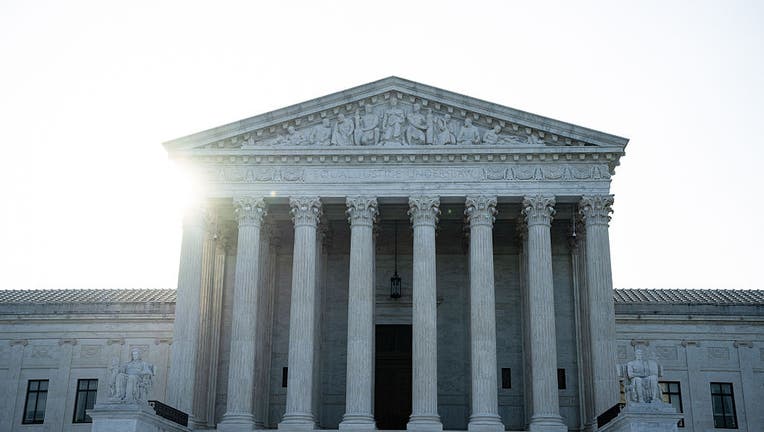
The US Supreme Court in Washington, DC, US, on Tuesday, June 30, 2026. The Supreme Court is expected to release opinions at 10am. Photographer: Graeme Sloan/Bloomberg via Getty Images
Texas lawmakers on both sides of the aisle are reacting after the U.S. Supreme Court on Tuesday ruled that President Donald Trump's 2025 executive order declaring that children born to parents who are in the United States illegally or temporarily are not American citizens.
In a 6-3 decision, the justices relied on a long-settled understanding of the 14th Amendment, adopted after the Civil War, and more recent federal laws in ruling that anyone born in the country, with very limited exceptions, is a citizen.
Texas Republicans react to Supreme Court ruling on birthright citizenship
Texas lawmakers took to social media Tuesday morning to express their opinions on the Supreme Court's ruling.
Gov. Greg Abbott called the decision a "missed opportunity to restore the original meaning of the 14th Amendment."
What they're saying:
"Birthright citizenship has become a powerful magnet for illegal immigration that will forever change our nation if left unaddressed. Automatic citizenship for children born to parents in the United States illegally or only temporarily is an absurdity that was never contemplated by our Constitution nor agreed to by the American people," Abbott said. "Congress must clarify that American citizenship means something and does not extend automatically to children whose parents are in this country unlawfully or temporarily. The American people and the sovereignty of our nation deserve nothing less."
Sen. Ted Cruz called the decision a "travesty" while calling on Congress to "clarify federal law."
"The Fourteenth Amendment was written to overturn Dred Scott and guarantee citizenship to freed slaves—not to create automatic citizenship for the children of those who violate our immigration laws or are only temporarily in the United States. This decision will only invite further exploitation of our immigration system," Cruz said on X. "The Court adopted an interpretation that departs from the original meaning of the Constitution and incentivizes illegal immigration."
Sen. John Cornyn used the decision to call for an end to "birth tourism."
"One thing we know for sure: foreign nationals are exploiting our laws and undermining our nation’s sovereignty," Cornyn said.
Congressman Chip Roy said the court "failed the American people, the Constitution, and the rule of law."
What they're saying:
"The 14th Amendment to the U.S. Constitution in no way stands for the proposition that we must permit a dangerous cottage industry of traveling to our soil to manufacture United States citizenship," Roy said. "That's insane. The Court today should have said so explicitly and ended this damaging exploitation of our laws."
Roy called on Congress to make laws that citizenship would be tied to the citizenship of the parent and restrict funding to government agencies that provide "documentation and status" to non-citizens.
Rep. Keith Self agreed with Roy that the Supreme Court "failed."
"Disastrous ruling for every actual American citizen, our national sovereignty, and the future of our country," Self said. The 14th Amendment was clearly never meant to reward illegal aliens with the invaluable gift of U.S. citizenship for breaking American law."
Rep. Randy Weber said the court got Tuesday's decision wrong.
"The 14th Amendment was never intended to be exploited by people who enter our country illegally," Weber said. "END BIRTHRIGHT CITIZENSHIP NOW!"
Texas Democrats react to Supreme Court's ruling upholding birthright citizenship
Those on the other side of the aisle saw Tuesday's decision differently.
Rep. Jasmine Crockett took to X to celebrate the decision.
The other side:
"The Supreme Court just reaffirmed what the Constitution has always said: birthright citizenship is a constitutional right," Crockett said. "The President took an oath to uphold the Constitution — not rewrite it whenever it doesn't serve him."
Rep. Sylvia Garcia said she was "relieved the Court rejected this unconstitutional power grab."
"Citizenship is not a favor handed out by a president. Donald Trump cannot erase that right with a Sharpie and an executive order simply because he does not like who a child’s parents are," Garcia said. "I am relieved the Court rejected this unconstitutional power grab. But the fact that such an extreme attack reached the Supreme Court should concern everyone who values equal protection under the law."
The Texas House Democratic Caucus called the decision a "victory for the Constitution."
"No president has the authority to rewrite the Constitution with the stroke of a pen," state Rep. Gene Wu said. "Our rights do not change because a politician wants them to. In America, the Constitution is the highest law of the land, and every public official – in Washington and right here in Texas – take an oath to uphold it, not ignore it."
Ramon Romero, Jr., the Mexican American Legislative Caucus Chair, said the Supreme Court "got this one right."
"For families across Texas and our nation, they can breathe a sigh of relief knowing the rights guaranteed by our Constitution remain," Romero said. "Those rights should have never been in question."
Rep. Greg Casar warned that "none of our rights are safe" in the wake of the decision.
"While we won the birthright citizenship case today, we also got a grave warning about the future," Casar said. "Four far-right Supreme Court justices ruled against a right that is clearly written in the Constitution."
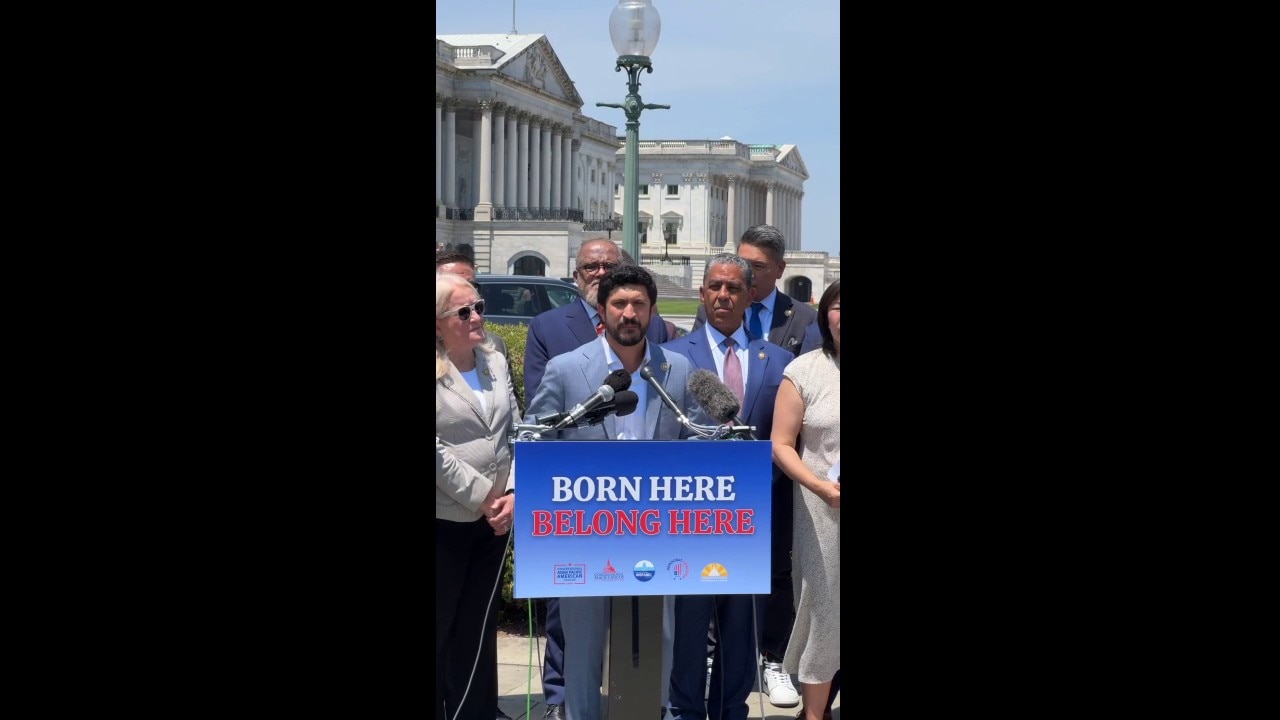
Rep. Greg Casar speaks after SCOTUS ruling
Rep. Greg Casar speaks after the Supreme Court ruled in favor of birthright citizenship.
"Today’s Supreme Court decisions underscore what’s at stake for our democracy and our constitutional rights," the Texas Democratic Party said. "While we continue reviewing the rulings in full, we remain committed to protecting the rights of every American, defending the rule of law, and ensuring our government works for the people."
How the Supreme Court justices voted on birthright citizenship
The Supreme Court ruled 6-3 to uphold birthright citizenship, with Chief Justice John Roberts writing the majority opinion. He was joined by the Court's three liberal justices — Sonia Sotomayor, Elena Kagan, and Ketanji Brown Jackson, as well as conservative Justice Amy Coney Barrett. Justice Brett Kavanaugh agreed with the majority but wrote in a separate opinion that his judgment was based on federal law rather than the Constitution.
Justices Clarence Thomas, Samuel Alito, and Neil Gorsuch all dissented.
Chief Justice Roberts’ majority opinion upholding birthright citizenship
What they're saying:
"Citizenship, then and now, was the right to have rights — to freely participate in our political community. The Framers of the Fourteenth Amendment extended that promise to ‘every free-born person in this land,’" Chief Justice John Roberts wrote for the court, citing congressional debate over the amendment. "We keep that promise today."
Birthright citizenship case
The backstory:
On Trump’s first day of his second term in office, he signed an order that attempted to end the birthright citizenship guarantee extended in the Constitution.
His order upended more than 125 years of understanding that the 14th Amendment confers citizenship on everyone born on American soil. Narrow exceptions were in place for the children of foreign diplomats and those born to a foreign occupying force.
The first sentence of the 14th Amendment was enshrined soon after the Civil War, and was intended to ensure that Black people, including those who had been enslaved, had citizenship.
During arguments in April, both conservative and liberal justices questioned the order’s legality in a momentous case that was magnified by Trump’s unprecedented attendance in the courtroom.
The case framed another test of Trump’s assertions of executive power that defy long-standing precedent for a court with a conservative majority and a robust view of presidential power that has largely ruled in his favor. In the notable exceptions when the court has not, Trump has responded with starkly personal criticisms of the justices.
Dig deeper:
The order was part of his Republican administration’s broad crackdown on immigration, and it faced multiple challenges before its spring hearing in front of the Supreme Court.
It was the first Trump immigration-related policy to reach the court for a final ruling, and has not taken effect anywhere in the country in the meantime.
The Source: Information in this article comes from comments made by Texas lawmakers on social media. Backstory on the Supreme Court's ruling comes from previous FOX Local reporting.