

1 million! Austin hits population milestone and becomes 12th largest city in U.S.
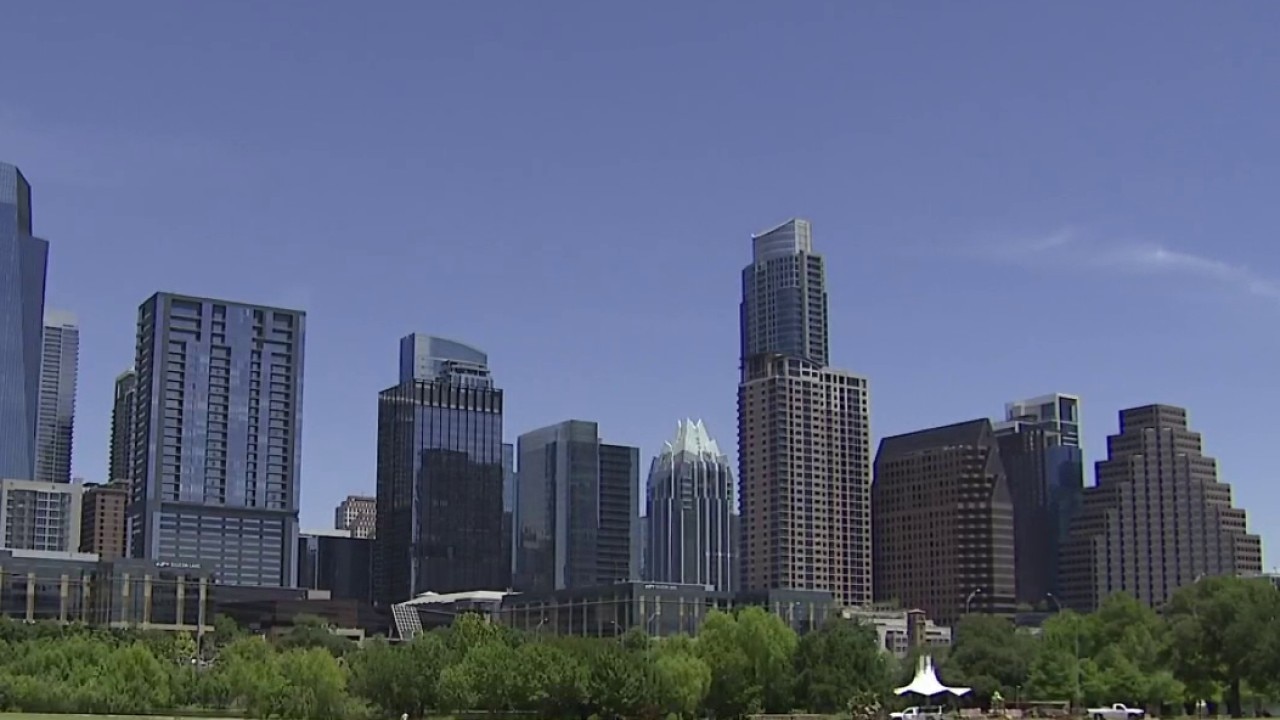
Austin's population surpasses 1 million
The latest data from the United States Census Bureau confirms that Austin broke the seven-figure mark in 2025.
AUSTIN, Texas - New data from the U.S. Census Bureau shows that Austin has hit a big population milestone.
What they're saying:
"This is a historic moment for Austin, and one that my predecessor Edwin Waller probably didn’t even think about when he surveyed the site that would eventually become our beloved city back in 1839," said Mayor Kirk Watson in a news release.
"There’s no denying now that Austin is a big city, and we have big challenges. But we also still have small town heart, and that’s part of what makes it the best place in the country to raise a family or to seek out new opportunities," Watson adds.
"Crossing the threshold of one million residents is an exciting milestone that underscores Austin’s role as the region’s principal city, but it’s not surprising," City Demographer Lila Valencia said in the same news release. "The latest estimates from the Census Bureau bear out what we have been seeing in our internal estimates since 2020."
By the numbers:
The U.S. Census Bureau reveals that in 2025, 1,002,632 called the "Live Music Capital of the World" home.
Officials say that number reflected a 4,025 increase in residents since July 1, 2024.
The 0.4% year-over-year growth helped push Austin into the 12th most populous city in the U.S. position.
Housing numbers
The U.S. Census Bureau’s population estimates release also included housing unit estimates at the national, state, and county levels. The estimates indicate Travis County had the 7th greatest increase in housing stock among counties nationwide.
Between July 2024 and July 2025, Travis County added 16,197 housing units, growing at a rate of 2.4%.
During this time, counties in the Austin metro area added a total of 31,897 housing units. 51% of these units were added in Travis County, 24% in Williamson, 17% in Hays, 6% in Bastrop, and 2% in Caldwell County.
Hays County ranked 9th among counties adding units at the highest rate.
Austin’s city limits lie primarily within Travis County but also extend into Hays and Williamson counties as well.
Dig deeper:
Valencia says while the region saw a decline in international migration, the drop in Austin was not as steep as in some other cities.
Migration from other parts of Texas and the rest of the country combined with stable natural increase, or the difference between births and deaths, to maintain steady growth in Austin, Travis County and the metro.
Valencia says job growth, which has outperformed expectations, and housing costs, which have fallen from their pandemic-era peaks, are two factors that help existing Austinites remain in the city while drawing in new residents.
City of Austin data
Valencia explained in an interview that the U.S. Census Bureau's number is likely an undercount.
"We found that in 2020 the Census Bureau undercounted the City of Austin's population by around 40,000 residents or so. They use typically the decennial census as the base or the launching pad for their population estimates," she said.
The city appealed the count in 2020, but they lost the appeal. They want to make sure the count in 2030 will be accurate.
Valencia says the city believes Austin reached a million residents in 2020.
The city's demographic hub shows the recent population estimated to be 1,035,002. That data is from 2024. Data for 2025 will be available in September.
The median age is 34.8, and the average household size is two. Maps still show more people of color living east I-35, and a large white population living west I-35.
Of course, population growth means infrastructure will have to keep up.
"It's very important for the City of Austin and really the region as a whole to really continue to plan for that growth and make sure that we have sufficient housing stock available to people who are moving into the area, making sure that our water supplies are adequate, our transit system allows for flows of people into area for work," Valencia said.
She says the suburbs are growing slightly faster than Austin.
"Hutto grew a lot faster. Hutto was among one of the nation's fastest-growing cities. Other places like Round Rock and Georgetown actually added more residents between that same time period than Austin did," she said.
Austin residents react to growth
"It doesn't bother me. I think this city is going to be going strong for a long time. I'm happy it's booming, and it's kind of the place to be," Doug Canter said.
Bianca Andelmi, who lives in Round Rock and works in Austin, says she likes the growth, but traffic is a challenge.
"Overall, I'm really happy for the city, because I like seeing new people and all of that, but I can see how challenging it is," she said. "Most of the time I take I-35. There's no other route and especially with the renovations it becomes a little bit of a hazard."
Why you should care:
The newly released data helps determine how the federal government proportionately distributes billions of dollars in grants and program funding for social services, community development, and the construction of schools, roads and hospitals.
The data also plays a central role in redrawing boundaries for representative districts for the U.S. Congress, Texas Legislature and Austin City Council.
The Source: Information from City of Austin.