

Look up tonight to see November's Supermoon illuminate the sky
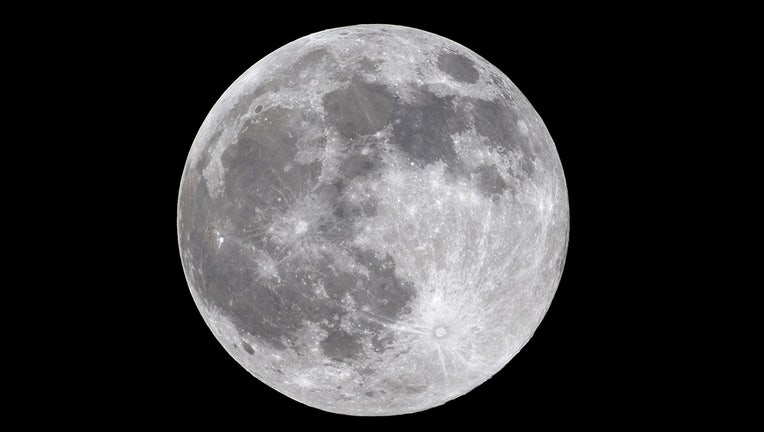
The first Supermoon of the year rises over Austin, Texas on October 06, 2025. The harvest supermoon is the first of three supermoons for 2025. (Photo by Rick Kern/Getty Images)
As we near the end of November, a Supermoon, dubbed the Full Beaver Moon, will illuminate the sky Tuesday night.
The Full Beaver Moon will be best viewed around sunset on the eastern horizon with the moon appearing up to 14 percent larger and 30 percent brighter than the faintest Moon of the year.
What is a Supermoon?
A Supermoon occurs because the Moon’s orbit of Earth is not a perfect circle but elliptical.
During its 27-day orbit, the Moon reaches its closest point to Earth, about 226,000 miles known as perigee, and its farthest point, or apogee, about 251,000 miles from Earth.
When perigee coincides with the full Moon, we have a Supermoon. According to NASA, this term isn’t an astronomical definition but is usually used to describe a full Moon within at least 90% of its closest point in orbit to Earth.
During the Moon's elliptical path, full moons can occur at any point, but when a full moon occurs at or near the perigee, it looks slightly larger and brighter than a typical full moon. Thus, the term "Supermoon."
Upcoming Supermoons
The next Supermoon this year will occur on Christmas Eve, December 24.
In 2027, there will be two Supermoons, on January 22 and February 20.
The Source: This article includes information from NASA and previous FOX Local reporting. This story was reported from Orlando.