

Lead from Army detonation in Iowa town could pose health risks
FILE-A close-up view of a 'U.S. ARMY' branch tape and a Private First Class (PFC) rank insignia on a soldier's camouflage uniform. Photo by Artur Widak/NurPhoto via Getty Images)
The U.S. Army is detonating a large amount of lead azide on Nov. 20 in Middletown, Iowa.
KWCQ reported that lead azide is a sensitive explosive and a lead compound, which means the blast may pose environmental and public health hazards.
RELATED: Veterans granted over 1M toxic exposure claims under PACT Act
According to the Des Moines Register, military officials discovered a large cache of lead azide that was stored at the Iowa Army Ammunition Plant for over 20 years. Lead azide cannot be transported because of the danger of it detonating while being transported.
What are the possible health risks from the Army detonating lead azide?
Why you should care:
Lead is a toxic metal that is harmful if inhaled or swallowed and can pose serious health risks. Environmental Protection Agency (EPA) officials said on their website that although most children in the U.S. have low levels of lead in their blood, some situations can increase their exposure and their blood lead levels.
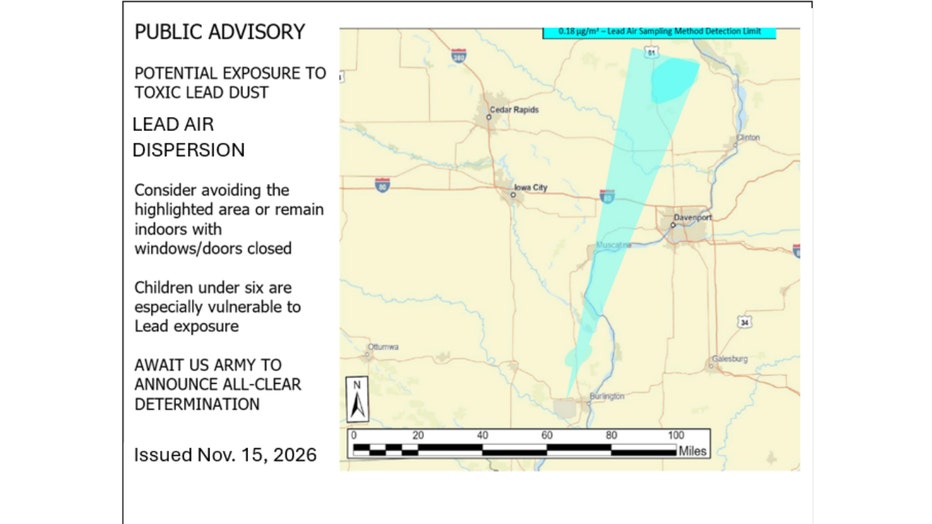
The Iowa Army Ammunition Plant released maps describing the level of toxic lead dust that might be released from their detonation of 68 lead azide barrels. (Photo courtesy of the Iowa Army Ammunition Plant)
According to the Des Moines Register, some schools have already canceled classes on Nov. 21 in anticipation of the lead azide detonation.
The Iowa Army Ammunition Plant released maps describing the level of toxic lead dust that might be released from their detonation of 68 lead azide barrels.
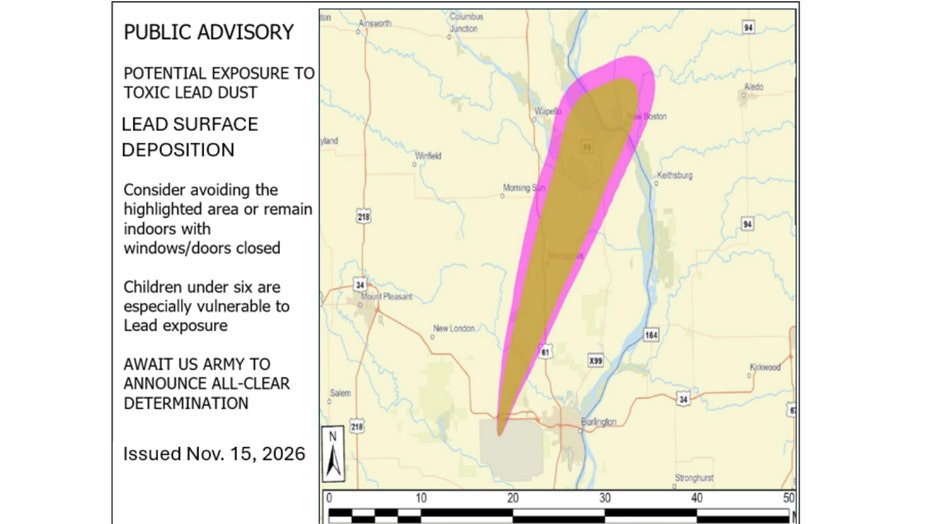
The Iowa Army Ammunition Plant released maps describing the level of toxic lead dust that might be released from their detonation of 68 lead azide barrels. (Photo courtesy of the Iowa Army Ammunition Plant)
Meanwhile, the Army tells KWOC that officials are working with the EPA to lower lead exposure during and after the detonation.
The Source: Information for this story was provided by KWCQ in Iowa and the Des Moines Register. This story was reported from Washington, D.C.