

Time's running out for those Thanksgiving leftovers: Here's when they should be tossed out
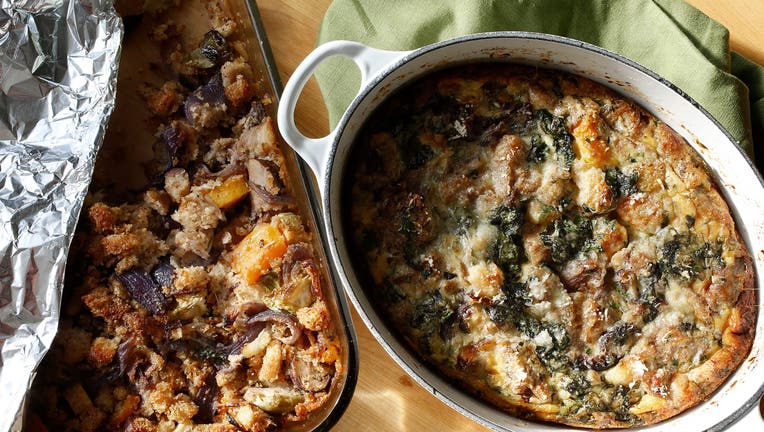
Stuffing strata from Thanksgiving leftovers in San Francisco, California, on Tuesday, November 10, 2015. (Photo By Liz Hafalia/The San Francisco Chronicle via Getty Images)
If you’re still savoring those Thanksgiving leftovers from Thursday’s big feast, you should get your fill while you can before it’s time to throw out what’s left, food safety experts say.
Big picture view:
The U.S. Department of Agriculture says refrigerated leftovers are safe for up to four days in refrigerators operating at 40 degrees or below. That means that the Monday after Thanksgiving is the last day you should dip into any remaining Thanksgiving favorites.
For leftovers you aren’t ready to part with, you can freeze them, the USDA says. Frozen foods that are properly sealed can last for a long time in the freezer, though after two to six months, they begin to lose their quality.
Otherwise, after Monday, it’s time to toss those leftovers.
Two types of bacteria in your fridge
The USDA Food Safety and Inspection Service and the Centers for Disease Control and Prevention say there are two types of bacteria operating in your refrigerated foods.
The first is normal spoilage bacteria. That’s the kind that breaks down food naturally, creating visible changes from sour smells to slimy textures or flavors that are a bit "off." This type of bacteria usually does not cause severe illness if you eat those leftovers.
However, the second type falls into a class of disease-causing bacteria. They include Listeria monocytogenes, Yersinia enterocolitica and some strains of Clostridium botulinum, the last of which causes botulism poisoning. Since they usually do not change the appearance or smell of leftovers, you’re less likely to be aware that they’re there. But they’re much more likely to make you sick.
The danger zone still applies
During big meals like Thanksgiving, the USDA reminds families to keep food out for no more than two hours after it is removed from the oven.
After those two hours, the food enters what the experts call the "Temperature Danger Zone," when food reaches between 40 and 140 degrees. At that temperature, bacteria can multiply quickly and cause the food to become unsafe.
If the food is exposed to temperatures over 90 degrees, it’s only safe to leave out of the refrigerator for one hour.
Reheating reminders
Dig deeper:
When you do reheat those final leftovers, make sure you’re using a food thermometer. It’s the safest way to make sure leftovers’ internal temperature reaches 165 degrees, the point that kills most bacteria.
When you reheat food to that temperature, leave it out for no longer than two hours, or it reaches the Danger Zone and the risk starts all over again.
The Source: Information from this story came from the U.S. Department of Agriculture's Food Safety and Inspection Service and the CDC. This story was reported from Orlando.