

Supreme Court allows wounded veteran's lawsuit against Texas-based company to move forward
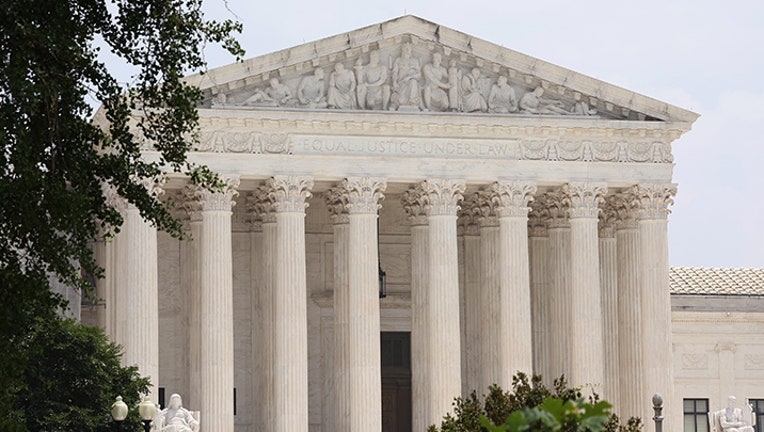
The U.S. Supreme Court is pictured on June 30, 2023 in Washington, DC. (Credit: Kevin Dietsch/Getty Images)
WASHINGTON - The U.S. Supreme Court on Wednesday ruled that an Irving-based company does not get a blanket shield from a lawsuit by a veteran wounded by a suicide bomb just because the incident happened during wartime.
In a 6-3 decision, the court ruled in favor of former Army Spc. Winston Hencely, who was wounded when stopping a man on his way to detonate an explosive vest at a Veterans Day weekend 5K race at Bagram Airfield in 2016. The opinion was written by Justice Clarence Thomas, who was joined by justices Sonya Sotomayor, Elena Kagan, Neil Gorsuch, Amy Coney Barrett and Ketanji Brown Jackson.
Ahmad Nayeb detonated the vest, killing five and wounding 17 others. Hencely suffered severe, permanent damage from the attack, including a fractured skull and brain injuries.
Hencely sued Fluor Corporation under state laws after the Army's investigation said Fluor failed to supervise Nayeb, an Afghan worker with prior Taliban involvement. Fluor had hired Nayeb under the military's "Afghan First" program, which pushed contractors to hire Afghans. Nayeb built the vest on the job site inside the base, according to court documents.
Fluor argued they could not be sued under state law because they were a government contractor operating in a combat zone.
The court disagreed with Flour, stating there is no constitutional provision or federal statute that would erase the lawsuit. The court argued that the combatant-activities exception preserves the government's immunity, but does not apply to federal contractors.
Additionally, the court ruled that contractors are protected only when the government directs the contractor to do what they are being sued for.
What they're saying:
"Hencely, by contrast, sued Fluor for conduct that was not authorized by the military and was allegedly contrary to federal instructions," Thomas wrote.
The other side:
Justices Samuel Alito, John Roberts and Brett Kavanaugh dissented.
In Alito's dissent, he argued that the lawsuit could invade areas of federal power like wartime decision-making and foreign affairs, including the implementation of the Afghan First policy.
The Source: Information in this article comes from an opinion from the U.S. Supreme Court.