

Texas Supreme Court declines to hear cities’ ‘Death Star’ law challenge
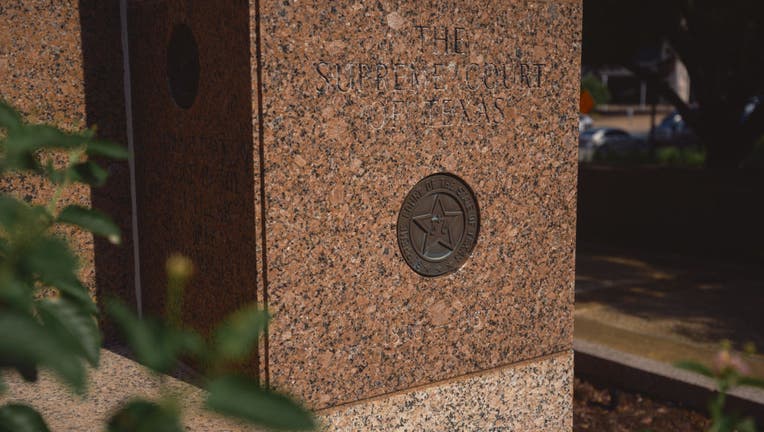
Signage outside the Supreme Court of Texas in Austin, Texas, US, on Friday, Aug. 23, 2024. Each of the five Texas business court divisions already has two judges appointed by Abbott, a prospect that all but guarantees the first jurists will reflect h
The Texas Supreme Court declined to hear a lawsuit over the Texas Regulatory Consistency Act, sometimes called the "Death Star Bill."
On Friday, the court denied a petition from the cities of Houston, El Paso and San Antonio asking for a review of their lawsuit challenging the constitutionality of House Bill 2127.
The law, passed in 2023, prohibits a municipality or county from adopting, enforcing, or maintaining a law going against certain Texas state codes.
The cities of Houston, San Antonio and El Paso filed a lawsuit challenging the bill in 2023. A Travis County judge declared the law unconstitutional, but did not issue an accompanying injunction that would have rendered it ineffective.
Texas appealed that ruling to the Texas Third District Court of Appeals, which overturned the decision last July.
What they're saying:
"No amount of repleading will show that the State of Texas is a proper defendant. Therefore, we hold that the Cities’ live pleadings affirmatively negate the Cities’ standing to sue," the Third District Court of Appeals opinion said.
The supreme court's decision to not hear the case will leave the appeals court's decision in place.
What is the ‘Death Star Bill?'
The backstory:
The reason enforcing these ordinances may be considered a waste of tax dollars is House Bill 2127, better known as the "Death Star Bill," which passed in 2023.
The bill prohibits a municipality or county from adopting, enforcing, or maintaining a law going against certain Texas state codes. The bill's text says it is meant to "provide statewide consistency by returning sovereign regulatory powers to the state where those powers belong in accordance with Section 5, Article XI, Texas Constitution."
Critics at the time feared that the bill would prevent the adoption of local solutions to local problems.
Dallas sued under Death Star Bill
Big picture view:
A lawsuit filed last October by a nonprofit on behalf of Dallas taxpayers claims that over 130 city ordinances are out of line with the law.
The lawsuit was filed by the Texas Public Policy Foundation (TPPF) on behalf of Haley Kyles, Daniel Rodriguez and Tamara Brown, who claim to have been "injured" by the "unlawful" enforcement of 133 Dallas ordinances.
This damage was caused by the use of taxpayer money to enforce ordinances that are preempted by state law, the lawsuit claims. According to the document, the list of 133 ordinances was drawn generally from a memorandum presented in 2023 by Dallas to Rep. Rafael Anchia while the "Death Star Bill" was in discussion.
The city is said to have presented these ordinances at the time as those that would be preempted by the bill if it were to pass. The bill was passed and signed by Gov. Greg Abbot in 2023. Therefore, the suit says, the use of tax dollars to enforce the ordinances the city already admitted would be preempted by state law is illegal.
A Denton County judge dismissed the claims in April 2026. The decision was appealed to the Texas 15th Court of Appeals.
The Source: Information about the Texas Supreme Court declining to hear the Death Star Bill case comes from opinions filed on Nov. 20, 2026.