

Global ocean temperatures hit record high for this time of year

Men are surfing during sunset as daily life at Manhattan Beach of Los Angeles in California, United States on August 05, 2024. (Photo by Tayfun Coskun/Anadolu via Getty Images)
Global sea surface temperatures have climbed to their highest levels ever recorded for this time of year, according to new data released jointly by the Copernicus Climate Change Service (C3S) and the Copernicus Marine Service (CMEMS), surpassing previous records set in 2023 and 2024.
By the numbers:
C3S reported that daily global sea surface temperatures reached 20.86°C (69.55°F) on June 21, narrowly exceeding the 20.83°C (69.49°F) recorded during the same period in both 2023 and 2024.
RELATED: Paris deputy mayor blames the United States' carbon emissions for deadly heat wave
Independent observations from the Copernicus Marine Service also registered a new record of 21.0°C (69.8°F) on the same day, 0.1°C (0.18°F) higher than previous highs.
Why you should care:
Scientists said the milestone was anticipated following the onset of El Niño conditions in the equatorial Pacific, which the World Meteorological Organization (WMO) announced on June 2. The emerging climate pattern, combined with unusually warm ocean temperatures across several regions in recent months, is expected to influence global weather, climate and marine ecosystems.
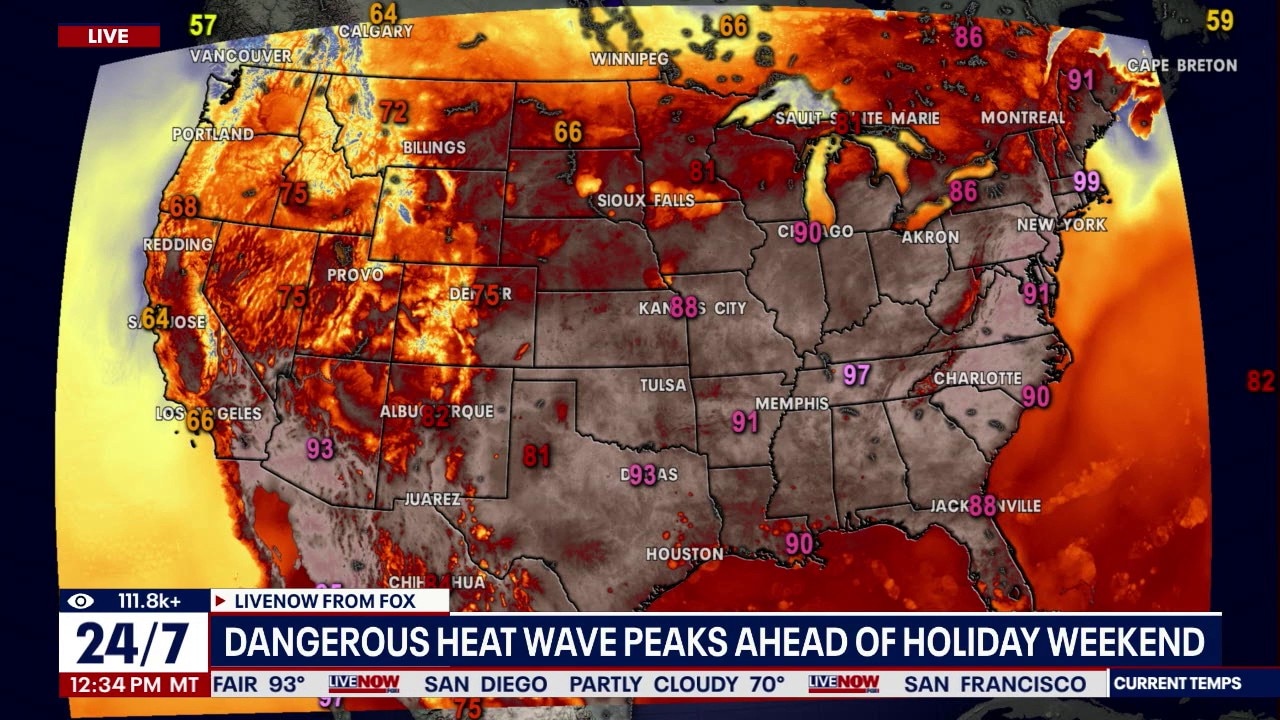
Life-threatening "heat dome" expands across East Coast
A life-threatening heat dome is building over the central and eastern U.S. through the July 4 holiday weekend and is expected to bring days of extreme and record-breaking temperatures to more than 230 million people. Dr. Heather Hinshelweood of the Fraum Center for Restorative Health joined LiveNOW from FOX's Stephanie Coueignoux to discuss the best ways to protect your health in the heat.
Over the past three years, ocean temperatures outside the polar regions—between 60°N and 60°S latitude—have remained between 0.35°C and 0.73°C (0.63°F to 1.31°F) above the long-term average. In June, those temperature anomalies reached record levels for this time of year.
RELATED: France-Paraguay set to be hottest World Cup match yet
The European Centre for Medium-Range Weather Forecasts (ECMWF), which operates the Copernicus Climate Change Service, and Mercator Ocean International, which implements the Copernicus Marine Service, said the warming reflects both long-term climate change and the emergence of what seasonal forecast models suggest could become one of the strongest El Niño events in decades.
What they're saying:
"Current conditions could indicate the beginning of a new phase, leading, once more, to uncharted territory. With ocean temperatures at these levels and El Niño on the horizon, we are likely to see more temperature records fall in the coming months. That Copernicus Marine data reaches the same conclusion through independent methods speaks to the strength of European science — and to why open, robust data matters now more than ever," said Carlo Buontempo, Director of the Copernicus Climate Change Service at ECMWF.
Pierre-Yves Le Traon, Scientific Director of the Copernicus Marine Service at Mercator Ocean International, said sustained monitoring is critical to understanding the changing ocean.
"Continuous monitoring of the ocean by the Copernicus Marine Service helps public authorities, scientists and decision-makers understand how the ocean is changing and supports policies to protect the marine environment. One of the key strengths of the EU Copernicus programme is the close cooperation between the Copernicus Climate Change Service and the Copernicus Marine Service: C3S provides the broader Earth-system climate perspective while Copernicus Marine delivers detailed ocean analyses and forecasts, from the physical environment to marine ecosystems."
What's next:
Researchers cautioned that it remains unclear whether the latest record will prove temporary or signal persistently higher temperatures in the months ahead.
However, they said the increase is consistent with the onset of El Niño—declared by the WMO and later by the U.S. National Oceanic and Atmospheric Administration (NOAA) on June 11—as well as exceptionally warm conditions that have persisted across the northern Pacific.
The current situation differs from June 2024, when global sea surface temperatures also reached record levels for the date but occurred as El Niño conditions were fading and the climate system was returning to neutral.
Big picture view:
Scientists warned that warmer oceans have far-reaching consequences. Elevated sea surface temperatures keep the atmosphere warmer for longer, provide additional energy for storms, and increase evaporation, raising the likelihood of extreme rainfall and flooding. Ocean warming also contributes to sea level rise, accelerates ice melt and places additional stress on marine ecosystems.
Higher sea surface temperatures are also linked to more frequent and intense marine heatwaves, which can disrupt marine ecosystems and fisheries, affect coastal economies and intensify heat extremes over nearby land.
El Niño itself is an additional source of atmospheric warming, increasing global temperatures and altering weather patterns around the world, researchers said.
The Source: The information comes from a joint announcement by the European Union's Copernicus Climate Change Service (C3S), implemented by the European Centre for Medium-Range Weather Forecasts (ECMWF), and the Copernicus Marine Service (CMEMS), implemented by Mercator Ocean International. This story was reported from Los Angeles.