

Can Texas' power grid handle the meteoric rise of AI data centers?
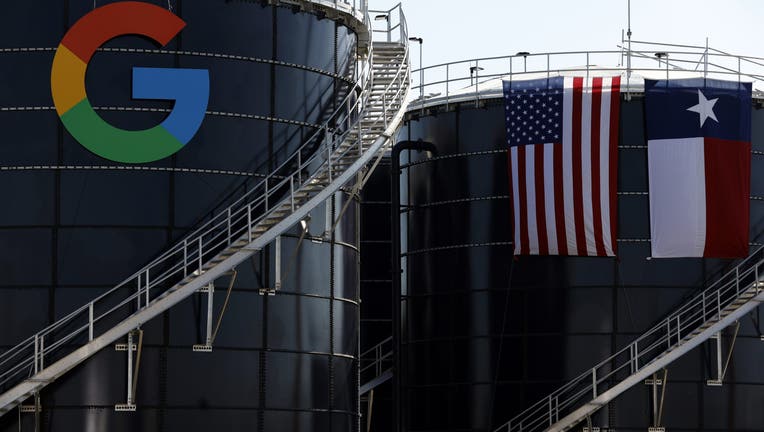
MIDLOTHIAN, TEXAS - NOVEMBER 14: A general view of the Google Midlothian Data Center where Texas Gov. Greg Abbott and Alphabet and Google CEO Sundar Pichai are scheduled to speak on November 14, 2025 in Midlothian, Texas. Google announced today that
HOUSTON - Last week, the Electric Reliability Council of Texas (ERCOT) presented a six-year forecast of how much power demand they expect in the near future. When the numbers showed a quadrupled peak demand by 2032, the Public Utility Commission of Texas (PUCT) sent them back to the drawing board.
As they work to compile a more desirable plan for the future, a look at what they expect to happen in Texas can still attempt to answer the question of how data centers might change the state's electricity landscape.
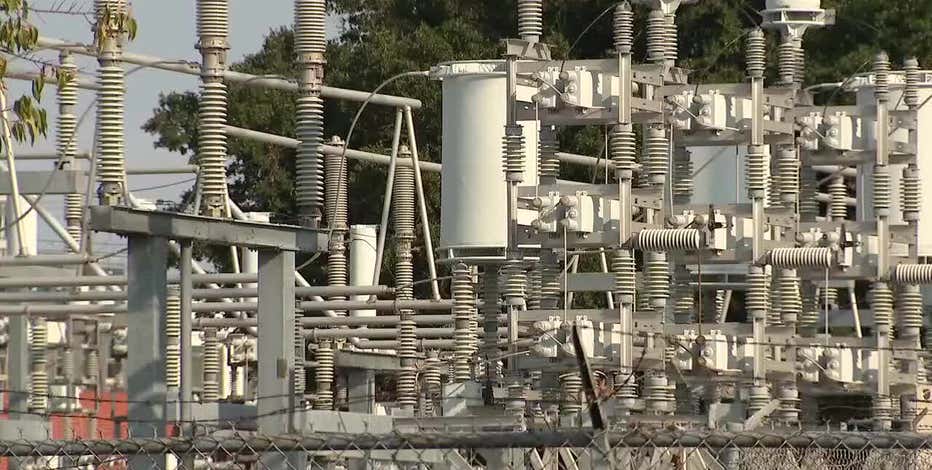
ERCOT sent back to drawing board after predicting quadrupled power demand by 2032
The people who run the power grid in Texas, the Electric Reliability Council, or ERCOT, this week said the state should prepare for a surge in power demand over the next six years. They predict numbers that are nearly quadruple what we currently use.
ERCOT load forecast
By the numbers:
In the presentation given on Friday, ERCOT's first slate of numbers gives a more conservative estimate of use that's based solely on "core components," excluding projected large (75 megawatts or more) and medium (25–74.9 MW) loads on their radar. As a start, they imagine this summer may see a peak demand of 90,500 to 98,000 MW, exceeding the highest recorded peak of 85,508 MW in summer 2023.
By 2032, again ignoring new loads that haven't yet been built, they expect the peak to grow by increments of a few thousand MW per year until a high of around 111,000. This is based on economic growth, EV and PV adoption, crypto growth in existing mining facilities, and large loads that are already operational.
Having trouble viewing this table? Click here
ERCOT load forecast + data centers
The chart that caused the PUCT to balk, however, includes the previously omitted large and medium loads on the horizon. The bars below represent the first graph along with projects that have been requested but have not yet been built.
By the numbers:
According to these numbers, the demand on the grid could more than double within two years. Two years after that, it would be tripled. By 2032, Texas could see a peak demand of more than 367,000 MW; over quadruple what the state expects to see this summer.
As shown in the next graph, the largest contributors to these potential spikes would be non-crypto data centers.
Having trouble viewing this table? Click here
Planned data center loads
By the numbers:
Of that quadrupled number in 2032, more than 235,000 MW are expected to be taken up by data centers. Another chart in the presentation gives a look at the 2025 version of submitted plans versus those submitted in 2026.
Having trouble viewing this table? Click here
ERCOT to change forecast
After presenting these predictions, the PUCT told ERCOT to draft a more reasonable look at the future of the state's power demand. Even before the presentation, the energy council's president and CEO, Pablo Vegas, said in a statement that the numbers were likely an overestimate.
What they're saying:
"Texas is experiencing exceptional growth and development, which is reshaping how large load demand is identified, verified, and incorporated into long-term planning," said Vegas on April 15. "As a result of a changing landscape, we believe this forecast to be higher than expected future load growth. We look forward to working with the PUCT on potential adjustments to refine how ERCOT ascertains the most accurate information for load forecasting and ensuring the system reliably and efficiently serves Texans."
On the side of the PUCT, they expect any changes to the predictions to be in alignment with developing state legislation, keeping large loads within the bounds of the grid's capacity and maintaining the reliability of the system.
"The PUCT and ERCOT continue to implement Senate Bill 6, creating the necessary rules and procedures to ensure new large power users can connect to the ERCOT grid, while maintaining grid reliability and ensuring residential consumers aren’t footing the bill for new infrastructure costs," a Friday statement from the commission says in part.
Featured
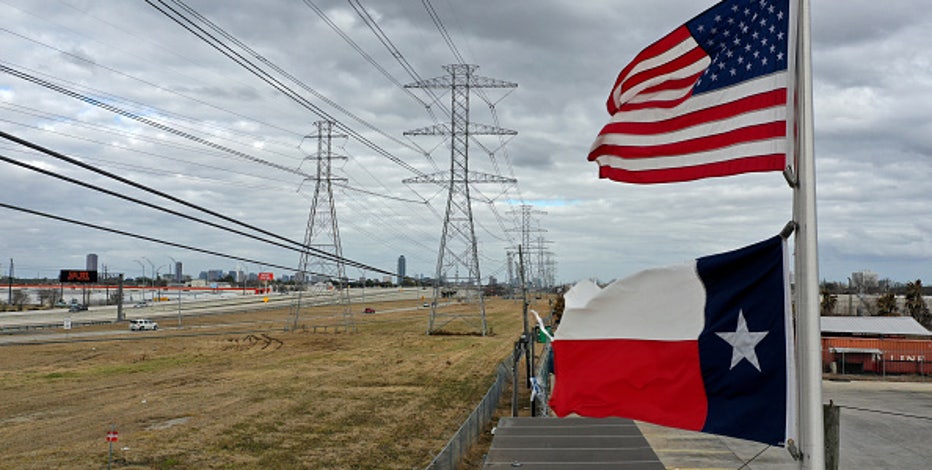
ERCOT ranked D- for Texas power grid planning, among nation's worst according to report
A new report has issued the Texas power grid a "D-" grade, citing ERCOT's failure to connect with neighboring states and a reactive planning approach that struggles to keep pace with soaring demand from data centers and industry.
How the Texas grid has improved
Big picture view:
Along with their promise for continued grid trustworthiness, the PUCT said in an email to FOX Local that the state's electricity system is "more reliable than it has ever been," which is due to changes they and ERCOT have made since the deadly winter storm of 2021.
Among those changes, their statement says, are better weatherization, lower price caps, generator capacity improvements, better reliability standards, updated data systems and response protocol, and voter-approved funding for more energy production.
AI data centers on the rise
Dig deeper:
While ERCOT has been told to revise their forecast, the fact remains that their initial stab at the project was based on requests for new large-scale projects that will have to rely on the same grid as Texas' nearly 32 million residents. If the numbers are even close to accurate, the taxpayers who fund maintenance and upgrades to the grid can expect some level of increased demand in coming years.
To date, there are over 400 data centers either operating, under construction or in the planning stages in Texas. The state is set to overtake Virginia as the U.S. leader in data centers within the decade. In recent months, Google announced a $40 billion data center investment in Texas, and OpenAI and Oracle have launched projects as well. The final demands on the grid these and similar projects will produce are not yet known.
Environmental experts say Texas data centers come with uncertainty
Texas is home to approximately 400 data centers — some currently operational, others still under construction and a number that are still in the planning stages. Experts say the boom comes with a lot of uncertainty.
How it affects your wallet
Why you should care:
There's a chance that the taxpayer could avoid bearing all the costs of meeting those demands. As a boom in data center construction looms on the horizon, there are plans in the works to make those centers grid partners rather than power drains.
President Donald Trump signed the Ratepayer Protection Pledge in March, which requires hyperscalers and AI companies to build, bring, or buy all the energy needed for building and operating data centers. This pledge, however, operates as a voluntary agreement between companies and utility systems, which can be backed out of. A federally enforceable version of such a requirement could be required down the road to keep taxpayers off the hook for infrastructure expansion.
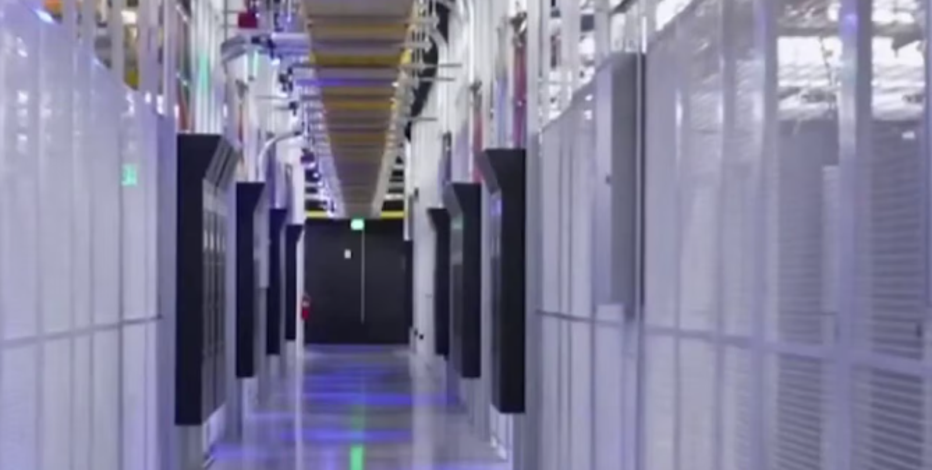
Data centers: Texas lawmakers explore new regulations
Texas lawmakers are looking for a way to balance the booming tech industry with the reality of finite resources.
Additionally, renewable energy and alternative power generation, such as gas-fired plants and nuclear power, could be a key component in bolstering the grid as demand rises. FOX Local has reached out to energy leaders with plans for such projects to see how ERCOT's projections could affect their outlook, but they had not responded by the time of publishing.
The bottom line:
At the end of the day, the future of Texas' grid, infrastructure and data center landscape is largely theoretical and dependent on changes to policy and cooperation between massive, profit-driven entities as the situation develops. Once ERCOT returns with their amended plans, the extent to how much adaptation will be required will become clearer.
The Source: Information in this article comes from ERCOT, the Public Utility Commission of Texas, and previous FOX Local coverage.